


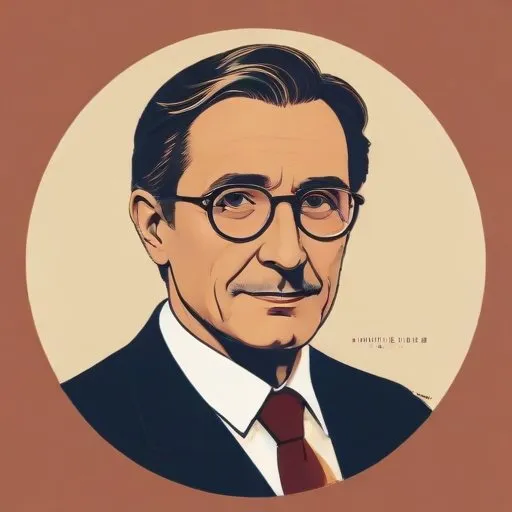
Discovered cosmic rays, a type of high-energy radiation that bombards the Earth from space, earning a Nobel Prize in Physics in 1936.
Victor Francis Hess, an Austrian-American physicist, is renowned for his groundbreaking discovery of cosmic rays, a finding that revolutionized our understanding of the universe. His pioneering work in the field of physics earned him the Nobel Prize in Physics in 1936, cementing his place among the most influential scientists of the 20th century.
Born on June 24, 1883, in Waldstein Castle, near Peggau, Austria, Hess was the son of Vinzenz Hess, a royal forester, and Serafine Edle von Grossbauer-Waldstätt. He attended the Graz Gymnasium from 1893 to 1901 and later pursued higher education at the University of Graz, where he earned his undergraduate degree in 1905.
Hess received his PhD from the University of Vienna in 1910 and went on to work as an assistant to Stefan Meyer at the Institute for Radium Research, Viennese Academy of Sciences. During this period, he began his research on radiology and radiation, laying the foundation for his future discoveries.
In 1920, Hess married Marie Bertha Warner Breisky, and the couple relocated to the United States in 1938 to escape Nazi persecution. He became a professor of physics at Fordham University and later a naturalized United States citizen in 1944.
Between 1911 and 1913, Hess conducted a series of experiments using balloon-borne detectors to measure radiation levels at high altitudes. His findings revealed the existence of high-energy radiation penetrating the Earth's atmosphere, which he termed "Höhenstrahlung" or "altitude radiation." This breakthrough discovery led to the understanding of cosmic rays, a fundamental aspect of modern astrophysics.
Hess's contributions to physics were recognized with several prestigious awards, including the Lieben Prize in 1919, the Austrian Decoration for Science and Art in 1951, and the Nobel Prize in Physics in 1936, which he shared with Carl Anderson.
A practicing Roman Catholic, Hess wrote extensively on the relationship between science and religion. In his 1946 article "My Faith," he expressed his beliefs on the coexistence of scientific inquiry and religious faith.
Hess's wife, Marie, passed away in 1955, and he later married Elizabeth M. Hoenke. He retired from Fordham University in 1958 and passed away on December 17, 1964, in Mount Vernon, New York, due to complications from Parkinson's disease.
Hess's pioneering work on cosmic rays has had a lasting impact on our understanding of the universe, inspiring generations of scientists and researchers. His legacy continues to influence the field of physics, ensuring his place as one of the most prominent scientists of the 20th century.
Born in 1867
A pioneering scientist who pioneered radioactivity research, discovering elements polonium and radium, and paving the way for breakthroughs in medicine and energy.
Born in 1885
A pioneer in quantum mechanics, he introduced the concept of wave-particle duality, revolutionizing our understanding of atomic structure. His philosophical approach to science also explored the nature of reality and human understanding.
Born in 1879
A brilliant physicist who developed the theory of relativity and is considered one of the most influential scientists of the 20th century, known for his groundbreaking work in physics and mathematics.
Born in 1901
A pioneer in nuclear physics, known for leading the team that developed the first nuclear reactor and playing a crucial role in the development of the atomic bomb.
Born in 1918
A brilliant physicist and engineer who pioneered quantum mechanics and famously explained complex concepts in simple terms, making science accessible to all.
84 Years Old
A brilliant mind who unraveled the mysteries of black holes and the universe, making complex physics accessible to all through bestselling books.
97 Years Old
A pioneer in particle physics, discovering subatomic particles like quarks and gluons, and developing the theory of quantum chromodynamics.
