


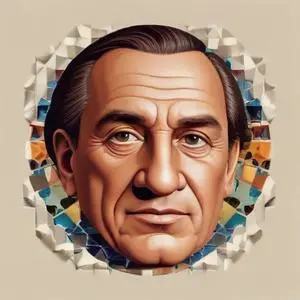
A pioneer of Op Art, creating mesmerizing patterns and shapes that play with perception, influencing modern design and art.
Known as the grandfather and leader of the Op art movement, Victor Vasarely was a Hungarian-French artist who revolutionized the art world with his mesmerizing and thought-provoking works. His iconic piece, "Zebra," created in 1937, is considered one of the earliest examples of Op art, showcasing his pioneering role in this innovative art movement.
Born as Gyz Vásárhelyi on April 9, 1906, in Pécs, Hungary, Vasarely grew up in Piešťany and Budapest. In 1925, he began his medical studies at Eötvös Loránd University, but soon abandoned medicine to pursue his passion for art. He enrolled at the private Podolini-Volkmann Academy to learn traditional academic painting, and later attended Sándor Bortnyik's private art school, Mhely, where he focused on applied graphic art and typographical design.
In 1929, Vasarely married his fellow student, Claire Spinner, and they had two sons, André and Jean-Pierre. Jean-Pierre, who later became an artist, used the professional name Yvaral. During the 1930s, Vasarely worked as a graphic designer and poster artist in Budapest, combining patterns and organic images in his unique style. His talent soon took him to Paris, where he settled in 1930 and worked as a graphic artist and creative consultant at various advertising agencies.
Vasarely's innovative use of geometric shapes, colors, and patterns created a sense of movement and optical illusions, characteristic of Op art. His work challenged the traditional notions of art, inviting viewers to participate and engage with the artwork. Throughout his career, Vasarely continued to experiment and push the boundaries of Op art, creating mesmerizing pieces that still inspire and fascinate art lovers today.
Vasarely's pioneering work in Op art has inspired generations of artists, designers, and architects. His innovative style has influenced the development of graphic design, advertising, and fashion. Today, his work can be found in museums and private collections around the world, a testament to his enduring legacy in the art world.
Vasarely's philosophy, as expressed in his own words, "Art for all, everywhere, and always" reflects his commitment to making art accessible to everyone, regardless of background or social status. His legacy continues to inspire and influence artists, designers, and art lovers, ensuring that his work remains relevant and thought-provoking for generations to come.
Vasarely passed away on March 15, 1997, at the age of 90, leaving behind a remarkable body of work that continues to inspire and fascinate art lovers worldwide. Throughout his life, he remained dedicated to his craft, always pushing the boundaries of art and innovation.
As we reflect on Vasarely's remarkable legacy, we are reminded of the power of art to inspire, provoke, and transform. His work continues to captivate and inspire us, a testament to the enduring impact of this Op art pioneer.
Born in 1881
A pioneering artist who transformed modern art with pioneering Cubist works, creating a new visual language that continues to inspire and influence art, design, and culture.
Born in 1904
A renowned surrealist master of bizarre, dream-like paintings and sculptures that blur reality and fantasy, known for iconic works like "The Persistence of Memory" and "The Elephants".
Born in 1869
A pioneering artist who revolutionized modern art with bold, expressive, and colorful works that blurred the lines between painting and sculpture, creating a new language of form and color.
Born in 1893
A renowned Spanish artist, famous for his vibrant, dreamlike paintings and sculptures that blended abstraction and surrealism, creating a unique visual language. His works often featured bold colors, biomorphic forms, and a sense of playfulness.
Born in 1887
A dreamlike painter and poet who blended fantasy and reality, creating vibrant, emotive works that explored Jewish culture and the human experience.
Born in 1885
A pioneer of Orphism, a style of abstract art that emphasizes geometric shapes and vibrant colors, creating dynamic and expressive works that explore the emotional potential of color. 42
Born in 1881
A pioneer of Cubism, this artist's bold, geometric works blended modernity with ancient forms, influencing generations of artists and designers.
Born in 1878
A Ukrainian painter and theorist who founded the Suprematist movement, creating geometric abstract works that explored the emotional and spiritual properties of color. They're most known for their iconic "Black Square" painting.
