


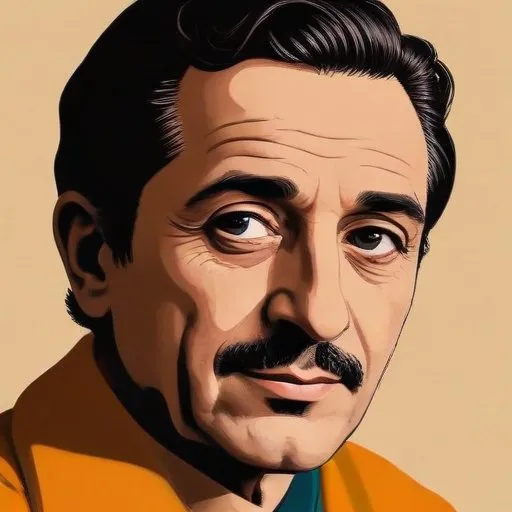
An Italian philosopher, publicist, and politician who advocated for Italian unification and wrote influential works on philosophy, politics, and history. He's known for his concept of "primato" or Italian primacy in civilization.
Globerti's early life was marked by tragedy, losing his parents at a young age. At 16, he was admitted among the clerics of the court and went on to study theology at the University of Turin, where he obtained his doctorate. His education was further enriched by the fathers of the Oratory, with a view to the priesthood, and he was ordained in 1825.
Globerti's intellectual and political outlook was deeply influenced by prominent figures such as Giuseppe Mazzini and Alessandro Manzoni. In 1828, he embarked on a journey through Lombardy, where he befriended Manzoni, and subsequently became acquainted with Mazzini's ideas. This exposure had a profound impact on Gioberti, instilling in him a deep-seated desire for Italian independence and the emancipation of the Italian people from foreign rule and oppressive ideologies.
Globerti's growing popularity and private influence caught the attention of the king, who appointed him as one of his chaplains. However, his perceived threat to the ruling clerical party and the court of Piedmont led to his sudden arrest on a conspiracy charge in 1833. Following a four-month imprisonment, Gioberti was banished without trial, forcing him to flee to Paris and later to Brussels, where he remained until 1845.
Globerti's period in exile was marked by intense intellectual activity, during which he penned numerous works of philosophical significance. His writings, characterized by their nuanced exploration of the relationship between faith and reason, provided a powerful critique of the prevailing ideologies of the time. Notable among his works are Del primato morale e civile degli italiani (On the Moral and Civil Primacy of the Italians) and Il gesuita moderno (The Modern Jesuit), which showcased his commitment to liberal Catholicism and the Italian unification movement.
In 1848, Gioberti's reputation as a champion of liberal Catholicism and Italian independence earned him an appointment as the Prime Minister of Sardinia, a position he held until 1849. Although his tenure was marked by controversy and eventual resignation, Gioberti's contributions to the Italian unification movement remained undiminished. He continued to write and engage in public discourse, remaining a prominent figure in Italian politics until his death on October 26, 1852.
Globerti's intellectual and political legacy is inextricably linked to the tumultuous period of Italian unification and the struggle for independence from foreign rule. His philosophical contributions, characterized by their emphasis on liberal Catholicism, provided a powerful intellectual foundation for the Risorgimento movement. Today, Gioberti is remembered as one of the leading figures of the Italian unification movement, and his ideas continue to influence contemporary debates on the relationship between faith, reason, and politics.
Born in 1805
A leading figure in the Italian unification movement, he advocated for a unified Italian republic and inspired similar movements across Europe. His ideas influenced modern nationalism and democracy.
Born in 1499
Reigned from 1559 to 1565, this Pope oversaw the final session of the Council of Trent, shaping Catholic doctrine and practice for centuries to come. He also commissioned the construction of the Sistine Chapel's dome.
Born in 1810
The first pope to fully embrace modernity, he issued the groundbreaking encyclical Rerum Novarum, which addressed social justice and workers' rights, shaping the Catholic Church's stance on social issues.
Born in 1785
Wrote influential novels that helped shape the modern Italian language and identity, particularly with his iconic work "I Promessi Sposi" (The Betrothed).
