


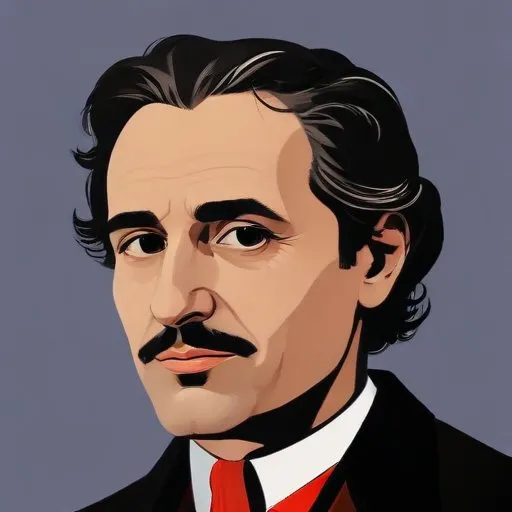
A 17th-century poet celebrated for his lyrical and patriotic verses, particularly his odes that expressed strong feelings about the Turkish threat to Italy.
Vincenzo da Filicaja was a renowned Italian poet and politician, celebrated for his lyrical verse and esteemed as a member of the Accademia della Crusca. His poetry, often compared to that of Petrarch, earned him royal patronage and recognition throughout the Grand Duchy of Tuscany.
Born in Florence on December 30, 1642, Vincenzo da Filicaja came from a prominent aristocratic family. His parents, enjoying easy circumstances, provided him with a liberal education, first under the Jesuits of Florence and then at the University of Pisa, where he studied law.
After five years in Pisa, Filicaja returned to Florence, where he married Anna, daughter of the senator and marquis Scipione Capponi. He then withdrew to a small villa at Al Filicaja, where he devoted himself to literary pursuits, focusing on Italian and Latin poetry. The premature death of a young lady he had been attached to led him to abjure amatory poetry, redirecting his creative energies towards more literary pursuits.
As a member of the esteemed Accademia della Crusca, Filicaja befriended fellow luminaries such as Lorenzo Magalotti, Benedetto Menzini, Gori, and Francesco Redi. The latter, author of Bacchus in Tuscany, played a crucial role in securing Filicaja's access to court patronage, transmitting his verses to foreign princes whose noble deeds were praised.
The deliverance of Vienna from the Turks in 1683 sparked Filicaja's poetic genius, and he was farther inspired by his rural surroundings. Although his rural seclusion was largely due to limited means, his poetry flourished, fueled by the beauty of the Tuscan countryside.
Filicaja served as governor of Volterra and Pisa, successively, and later became a member of the Tuscan Senate. His poetic legacy, marked by its lyricism and depth, continues to be celebrated, ensuring his place as one of Tuscany's most revered poets.
Filicaja's poetry and legacy have inspired generations of writers and poets, solidifying his position as a leading figure in Italian literature. His association with the Accademia della Crusca and his connections with royalty have contributed to his enduring influence on Tuscan culture and beyond.
Born in 1544
A 16th-century poet and educator who wrote influential epic poems, particularly "Jerusalem Delivered", which showcased his mastery of Italian language and style.
Born in 1474
Renowned for epic poems, particularly "Orlando Furioso", which masterfully blended chivalric romance and Renaissance humanism, influencing literature for centuries.
Born in 1304
A 14th-century Italian poet and scholar who pioneered the Renaissance humanist movement, revitalizing interest in classical Greek and Roman literature, and inspiring a new era of artistic and intellectual exploration.
Born in 1798
A leading figure of the Italian Romantic movement, known for his poignant and introspective poetry that explores themes of love, nature, and the human condition.
Born in 1778
A leading figure of Italian Romanticism, known for his passionate and patriotic poetry, which often explored themes of love, beauty, and the struggle for Italian independence.
Born in 1785
Wrote influential novels that helped shape the modern Italian language and identity, particularly with his iconic work "I Promessi Sposi" (The Betrothed).
