


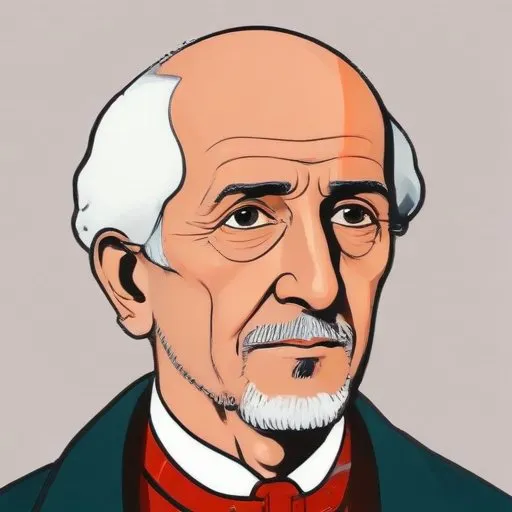
A 17th-century philosopher who wrote about the nature of reality, arguing that the universe is composed of indivisible, eternal atoms, and that human knowledge is limited. He also explored the concept of nothingness and the void.
Lorenzo Magalotti, a 17th-century Italian philosopher, author, diplomat, and poet, is best known for his pivotal role as the secretary of the Accademia del Cimento, a pioneering scientific society that paved the way for modern scientific inquiry. Through his work with the Accademia, Magalotti played a crucial part in shaping the course of scientific discovery, leaving an indelible mark on the annals of history.
Born on October 24, 1637, in Rome, Magalotti hailed from an aristocratic family. His uncle, Lorenzo Magalotti, was a member of the Roman Curia, while his cousin, Filippo, served as the rector of the University of Pisa. Magalotti's early education took place at the Collegio Romano, where he spent four years, followed by three years at the University of Pisa. Initially, he studied law and medicine, but his fascination with mathematics led him to switch to the discipline under the guidance of Vincenzo Viviani.
On June 19, 1657, Magalotti became an integral part of the Accademia del Cimento, a group of philosophers and amateurs founded by a coterie of Galileo Galilei's pupils. This esteemed institution sought to advance scientific knowledge through experimentation and observation, drawing inspiration from the works of Plato, Democritus, Aristotle, Heinsius, Robert Boyle, and Pierre Gassendi. Magalotti's tenure saw the Accademia achieve a groundbreaking milestone – the first sustained confirmation of Christiaan Huygens' discovery of Saturn's rings.
As Magalotti's interests shifted, he gradually lost enthusiasm for science and turned his attention to travel, diplomacy, and poetry. He translated John Milton's Paradise Lost and John Philips' Cyder into Italian, showcasing his mastery of languages. This multifaceted individual's creative pursuits often intersected with his scientific endeavors, demonstrating his remarkable adaptability and intellectual curiosity.
In 1660, Magalotti replaced Segni as the secretary of the Accademia del Cimento and authored the institution's sole publication, the Saggi di Naturali Esperienze (Essays on Natural Experiments). This seminal work encapsulated the Accademia's scientific pursuits and cemented Magalotti's status as a trailblazer in the scientific community.
The Accademia del Cimento boasted an impressive roster of members, including luminaries such as Alessandro Marchetti, Marcello Malpighi, Antonio Vallisneri, Vincenzo da Filicaja, Benedetto Menzini, Francesco Redi, Viviani, Giovanni Alfonso Borelli, and Carlo Renaldini. These visionaries regularly convened at the Palazzo Pitti in Florence, fostering an environment of intellectual collaboration and innovation.
Lorenzo Magalotti's contributions to the Accademia del Cimento's scientific endeavors have left an indelible mark on the development of modern science. His tireless efforts, along with those of his contemporaries, paved the way for future generations of scientists, philosophers, and thinkers. Today, Magalotti's legacy serves as a testament to the power of human curiosity and the importance of interdisciplinary collaboration.
Born in 1564
Pioneering astronomer, physicist, and mathematician who played a major role in the Scientific Revolution, making key discoveries that challenged Aristotelian views and laid the foundation for modern science.
Born in 1608
Developed the mercury barometer, a device that measures atmospheric pressure, and made significant contributions to the study of vacuums and fluids.
Born in 1626
An Italian physician who pioneered the study of parasites and disproved spontaneous generation, making significant contributions to the field of biology.
Born in 1608
Italian physiologist and physicist who studied the movement of animals and developed the concept of animal mechanics, applying mathematical and physical principles to understand biological systems.
Born in 1622
A 17th-century Italian polymath who made significant contributions to mathematics, astronomy, and physics, particularly in the fields of geometry and optics. He's also known for being a student of Galileo Galilei.
