


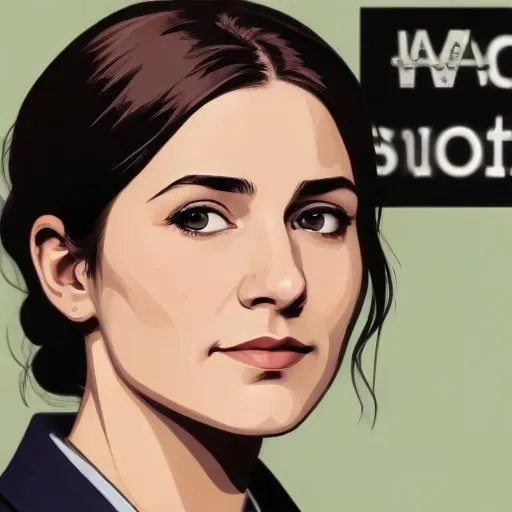
A pioneering figure in the women's suffrage movement, fighting for women's right to vote through lawsuits and activism. Known for taking her case to the Supreme Court in 1875.
Virginia Minor is best remembered as the plaintiff in the landmark Supreme Court case, Minor v. Happersett (1875), where she argued that the Fourteenth Amendment to the United States Constitution granted women the right to vote. This courageous stand made her a prominent figure in the women's suffrage movement, paving the way for future generations of activists.
Born on March 27, 1824, in Caroline County, Virginia, Minor grew up in a time when women's rights were severely limited. She married her distant cousin, Francis Minor, a lawyer, in 1843, and the couple settled in St. Louis, Missouri, in 1844. This union would later become instrumental in her fight for women's suffrage.
During the American Civil War, Minor was an active member of the St. Louis Ladies Union Aid Society, which provided support to soldiers and their families. This experience fueled her passion for social justice, leading her to co-found the Women's Suffrage Association of Missouri in 1867. This organization, the first of its kind, focused specifically on enfranchising women. Minor's leadership as the association's first president marked the beginning of her dedicated fight for women's voting rights.
In 1869, Minor, with the support of her husband Francis, drafted and circulated pamphlets arguing that the Fourteenth Amendment granted women the right to vote. This bold stance led to her attempt to register to vote in St. Louis on October 15, 1872. When election registrar Reese Happersett denied her request, Minor, represented by Francis, filed suit in the Missouri state courts. The case eventually reached the United States Supreme Court, which unanimously ruled against Minor in 1875.
Although the Supreme Court's decision was a setback, Minor's courage and determination sparked a wave of activism across the country. Her case highlighted the need for a constitutional amendment granting women the right to vote, paving the way for future generations of suffragists.
Virginia Minor's unwavering commitment to women's suffrage has inspired countless individuals to fight for social justice and equality. Her bravery in the face of adversity has made her a powerful symbol of resistance and a testament to the power of grassroots activism. Today, Minor's legacy continues to inspire women and marginalized communities to demand their rights and challenge the status quo.
Virginia Minor's remarkable life and tireless advocacy for women's suffrage have left an indelible mark on American history. Her pioneering spirit continues to inspire generations of activists, scholars, and citizens committed to fighting for equality and justice.
Born in 1820
Pioneering figure in the women's suffrage movement, fighting for women's right to vote and own property. Her tireless efforts led to significant advancements in women's rights.
Born in 1815
Pioneering women's rights activist who led the women's suffrage movement, fighting for women's right to vote and own property.
Born in 1885
A pioneering figure in the women's suffrage movement, fighting for equal rights and voting privileges through nonviolent protests and strategic lobbying. Her legacy continues to inspire feminist activism today.
Born in 1859
Founded the League of Women Voters and International Alliance of Women, a pioneering figure in the women's suffrage movement, fighting for women's right to vote and equality.
Born in 1880
First woman elected to Congress, serving two non-consecutive terms, and a lifelong pacifist who voted against both World War I and World War II.
Born in 1879
A pioneering birth control activist who advocated for women's reproductive rights and founded the American Birth Control League, precursor to Planned Parenthood.
Born in 1884
A humanitarian and politician who championed human rights, women's empowerment, and social justice, leaving a lasting impact on American politics and international relations.
Born in 1913
Refused to give up her seat on a Montgomery, Alabama bus to a white person, sparking the Montgomery Bus Boycott, a pivotal event in the Civil Rights Movement.
