


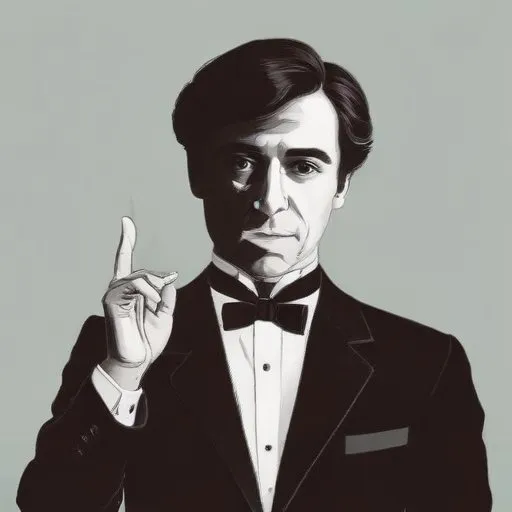
A renowned Italian maestro, he led prominent orchestras and composed operas, earning acclaim for his interpretations of Mozart and Verdi. His critiques and writings also shaped music appreciation.
Vittorio Gui, an Italian conductor, composer, musicologist, and critic, left an indelible mark on the world of classical music, primarily known for his exceptional skill in conducting opera and symphonic masterpieces.
Born in Rome on September 14, 1885, Gui graduated in humanities from the University of Rome. He pursued his passion for music at the Accademia Nazionale di Santa Cecilia, where he studied composition under the guidance of renowned composers Giacomo Setaccioli and Stanislao Falchi.
Gui's professional conducting debut took place in 1907 at the Teatro Adriano in Rome, where he led Ponchielli's La Gioconda as a substitute conductor. This marked the beginning of a long and illustrious career, with invitations to conduct in Naples and Turin soon following.
In 1911, Gui met Claude Debussy in Turin, an encounter that would have a lasting impact on his musical style, which blended Italian traits with impressionistic elements.
In 1923, Arturo Toscanini invited Gui to conduct Richard Strauss's Salome as the season opener at La Scala in Milan. This prestigious engagement solidified Gui's reputation as a master conductor, leading to his appointment as the conductor of the Teatro Regio in Turin from 1925 to 1927.
Gui's compositional skills shone through in works like the opera Fata Malerba, premiered in Turin in 1927, and the cantata Cantico dei cantici (Song of Songs) from 1921. His symphonic poem Giulietta e Romeo, with voices, dates back to 1902.
In 1928, Gui founded and conducted the Orchestra Stabile, which he eventually developed into the Maggio Musicale Fiorentino (Florence May Music Festival) in 1933. He led the festival until 1943, introducing innovative productions, including Verdi's Luisa Miller, Spontini's La vestale, Cherubini's Medea, and Gluck's Armide.
Gui's expertise earned him invitations to conduct at prestigious festivals, including the Salzburg Festival in 1933, where he was guest conductor, and the Royal Opera House at Covent Garden in 1936, where he became a regular conductor. During World War II, he found refuge in Britain.
In 1948, Gui made his debut with the Glyndebourne Festival company, leading Mozart's Così fan tutte in the Carl Ebert production at the Edinburgh Festival. He served as the festival's Musical Director from 1951 to 1963 and as its artistic counselor from 1963 to 1965, leaving a lasting impact on the institution.
Vittorio Gui's contributions to the world of classical music remain unparalleled, with a legacy that continues to inspire generations of musicians and music lovers alike.
Born in 1867
A renowned conductor who led the NBC Symphony Orchestra and was known for his intense performances and perfectionism, shaping the sound of classical music in the 20th century.
Born in 1886
A renowned German conductor and composer, he was a dominant figure in the Berlin Philharmonic, known for his intense and expressive performances of Beethoven, Brahms, and Bruckner. He was also a composer of symphonies and other works.
Born in 1908
A renowned maestro who led the Berlin Philharmonic for over three decades, elevating its reputation through precise and dramatic performances. He's also famous for his numerous recordings and charismatic stage presence.
Born in 1918
A renowned musician who blended jazz, classical, and Broadway styles, creating iconic works like West Side Story, and inspiring generations with his charismatic performances and innovative compositions.
Born in 1912
A renowned maestro who led the Chicago Symphony Orchestra to international acclaim, known for his intense performances and numerous recordings of operas and symphonies.
Born in 1914
A renowned Italian maestro, he led world-class orchestras, including the Chicago Symphony and LA Philharmonic, with a distinctive style blending passion and precision. His interpretations of Verdi and Mozart remain iconic.
85 Years Old
A renowned maestro, he led prestigious orchestras, including the Chicago Symphony Orchestra, and is celebrated for his interpretive insights and passionate performances. His dedication to promoting classical music education has inspired generations of musicians.
93 Years Old
Renowned for his expressive and nuanced interpretations of symphonic and operatic works, he led some of the world's most prestigious orchestras, including the Berlin Philharmonic.
