


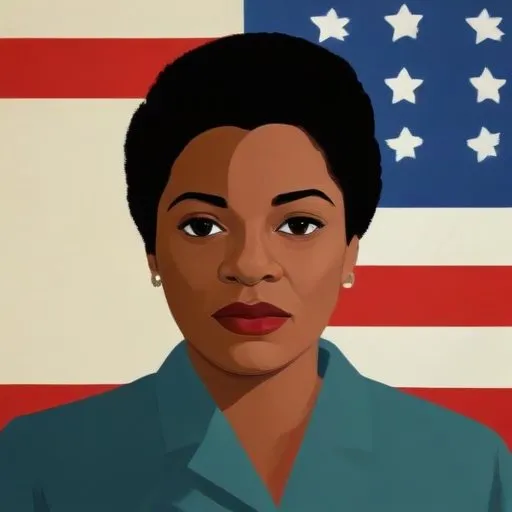
One of the first African Americans to attend the University of Alabama, she bravely faced racism and violence to integrate the institution, paving the way for others.
Vivian Malone Jones, a name synonymous with courage and determination, was one of the first two black students to enroll at the University of Alabama in 1963, thereby breaking the segregation barrier. This historic moment was marked by a dramatic standoff between Jones and Governor George Wallace, who attempted to block her and James Hood from registering at the all-white institution.
Born on July 15, 1942, in Mobile, Alabama, Jones was the fourth of eight children to parents who instilled in her the importance of education and social activism. Her parents, both employed at Brookley Air Force Base, encouraged their children to attend college, with her older brothers attending Tuskegee University. The family was actively involved in local civil rights movements, participating in meetings, donations, and activities promoting equality and desegregation.
Malone attended Central High School, where she was a member of the National Honor Society. She later enrolled in Alabama Agricultural and Mechanical University (Alabama AM) in 1961, earning a bachelor's degree in business education. However, her goal was to pursue a degree in accounting, which Alabama AM didn't offer at the time. This limitation led her to seek opportunities elsewhere, eventually leading her to the University of Alabama.
In June 1963, Jones and James Hood applied to the University of Alabama, sparking a heated debate and confrontation with Governor Wallace. On June 11, 1963, Wallace symbolically blocked the entrance of the university, refusing to let Jones and Hood register. This event, known as the "Stand in the Schoolhouse Door," was a defining moment in the Civil Rights Movement. Despite the initial resistance, Jones and Hood eventually registered, marking a significant milestone in the desegregation of the institution.
Jones's courage and perseverance paved the way for future generations, earning her a place in history as a pioneer of desegregation. She went on to graduate from the University of Alabama in 1965, becoming the institution's first black graduate. Her accomplishments inspired countless individuals to fight for equality and social justice, solidifying her legacy as a true icon of the Civil Rights Movement.
The "Stand in the Schoolhouse Door" incident sparked widespread controversy and debate, with many opposing the desegregation of the university. However, Jones's determination and resilience in the face of adversity earned her widespread recognition and acclaim, cementing her place as a hero of the Civil Rights Movement.
"I'm not afraid of anything. I'm not going to let anything stop me from getting an education." - Vivian Malone Jones
Jones's accomplishments came during a tumultuous period in American history, when the Civil Rights Movement was gaining momentum. Her bravery and determination inspired countless individuals to fight for equality and social justice, solidifying her place as a true icon of the movement.
Jones's legacy extends far beyond her own achievements, inspiring generations to strive for equality and social justice. Her courage and perseverance paved the way for future generations, ensuring that her impact on modern society will be felt for years to come.
Jones was posthumously awarded the University of Alabama's highest honors, including the Honorary Doctor of Humane Letters and the induction into the University of Alabama's College of Commerce Hall of Fame.
97 Years Old
A prominent leader in the civil rights movement, advocating for racial equality and social justice through nonviolent means, leaving a lasting impact on American history.
Born in 1913
Refused to give up her seat on a Montgomery, Alabama bus to a white person, sparking the Montgomery Bus Boycott, a pivotal event in the Civil Rights Movement.
Born in 1880
Led a powerful miners' union, fighting for workers' rights and fair wages, and was a key figure in shaping America's labor movement. Known for his charismatic leadership and militant tactics.
94 Years Old
A prominent civil rights leader and diplomat who served as a key advisor to Martin Luther King Jr. and later became the first African American to hold a top post in an American presidential administration.
Born in 1912
A pioneering figure in the struggle for racial and gender equality, she dedicated her life to empowering African American women and promoting education and social justice.
85 Years Old
A prominent figure in the Civil Rights Movement, advocating for Black Power and self-defense, and famously coining the term "Black Power" in 1966. Known for his radical approach to achieving racial equality.
Born in 1912
A pioneering civil rights activist who played a key role in organizing the 1963 March on Washington, where Martin Luther King Jr. delivered his iconic "I Have a Dream" speech.
86 Years Old
A prominent civil rights leader and vocal advocate for social justice, known for his work as a founding member of the Student Nonviolent Coordinating Committee (SNCC) and his long tenure in the Georgia State Legislature.
