


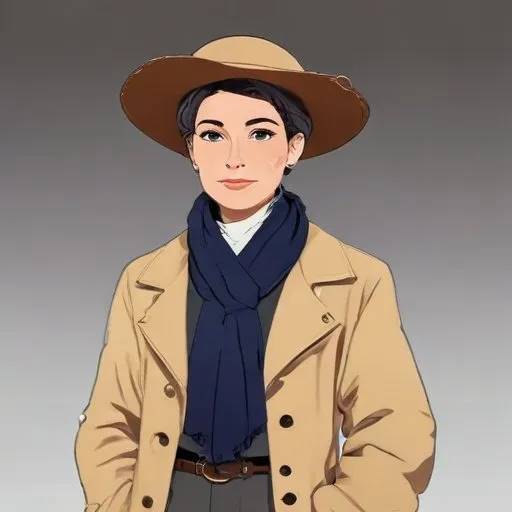
A British travel writer and adventurer who explored remote regions, documenting her journeys and cultural encounters in vivid detail, inspiring others to venture off the beaten path.
Vivienne de Watteville is best remembered for her extraordinary bravery and determination, taking charge of an expedition in the Congo and Uganda at the tender age of 24, after her father's tragic death by a lion attack. This remarkable feat was only the beginning of her trailblazing journey as a travel writer and adventurer, leaving behind a legacy that continues to inspire generations.
Vivienne Florence Beatrice de Watteville was born on August 17, 1900, to Bernard Perceval de Watteville, a Swiss-French naturalist and artist, and his English wife, Florence Emily Beddoes. Her mother's untimely passing due to cancer when Vivienne was just nine years old left a profound impact on her life. She spent her childhood holidays with her father in remote parts of Norway and the Alps, where she developed a taste for adventure and the great outdoors.
In 1923, Vivienne accompanied her father on an eighteen-month safari through Kenya, Uganda, and the Belgian Congo. The expedition aimed to collect fauna for the Natural History Museum of Bern, Switzerland, without the aid of a professional hunter. During this journey, they encountered marauding lions, which Bernard shot to protect their camp. One fateful day, a lion attacked and killed Vivienne's father. Undaunted, she took charge of the expedition, demonstrating remarkable courage and resourcefulness.
Vivienne's experiences on the safari inspired her to write two books: "Out in the Blue" (1927) and "Speak to the Earth" (1935). These works not only showcased her literary talent but also cemented her reputation as a fearless adventurer. Her writing style, marked by vivid descriptions and witty observations, has been praised for its ability to transport readers to the heart of Africa.
Vivienne de Watteville's remarkable journey has inspired countless individuals, particularly women, to pursue careers in exploration, science, and writing. Her determination and resilience in the face of adversity serve as a beacon of hope, encouraging others to push beyond their limits. Through her work, Vivienne continues to bridge the gap between adventure and literature, leaving behind a legacy that will endure for generations to come.
Vivienne de Watteville's life and work embody a spirit of fearlessness, determination, and a deep connection with nature. Her writing conveys a profound respect for the African wilderness and its inhabitants, encouraging readers to appreciate the beauty and complexity of the natural world. Through her adventures, Vivienne demonstrates that even in the face of adversity, one can find the strength to overcome and thrive.
Vivienne de Watteville's trailblazing journey has paved the way for women in exploration, science, and literature. Her writing has inspired generations of adventurers, writers, and scientists, demonstrating that women can excel in traditionally male-dominated fields. Her legacy serves as a testament to the power of determination, courage, and perseverance.
Born in 1868
Pioneering archaeologist and spy who mapped and excavated ancient Mesopotamian sites, shaping Middle Eastern politics and cultural understanding.
Born in 1862
A trailblazing explorer and writer who ventured into uncharted African territories, documenting her experiences and shedding light on the continent's cultures and customs.
Born in 1821
A 19th-century explorer who ventured into uncharted territories, mapping Africa's Nile River and uncovering hidden cities, earning a reputation as a daring adventurer and scholar.
Born in 1813
A Scottish missionary and explorer who traversed Africa, mapping its rivers and discovering Victoria Falls, while fighting against the slave trade. He embodied courage, compassion, and curiosity.
