


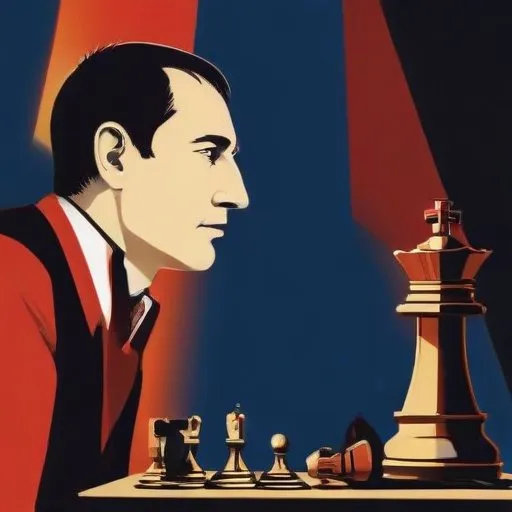
A renowned Russian chess grandmaster and coach, known for his exceptional endgame skills and contributions to chess theory.
Vladimir Simagin, born on June 21, 1919, in Moscow, was a Russian chess grandmaster celebrated for his significant contributions to chess openings and his role in training Vasily Smyslov to the World Championship. He was a three-time Moscow champion, winning the title in 1947, 1956, and 1959.
Simagin's journey in chess began during the tumultuous years of World War II, which halted most chess competitions in the Soviet Union. Despite this, he continued to hone his skills and eventually received the International Master title in 1950, the year FIDE implemented the title. He earned the Grandmaster title in 1962, solidifying his position as a prominent figure in the chess world.
Simagin's contributions to chess openings were significant, and his influence extended beyond the Soviet Union. He was an esteemed teacher and mentor, helping to shape the skills of world-class players, including Vasily Smyslov. Simagin's dedication to chess and his passion for the game inspired a generation of players, cementing his legacy as one of the most important figures in Soviet chess history.
Tragically, Simagin's life was cut short when he died of a heart attack while playing in the Kislovodsk tournament on September 25, 1968. His untimely passing shocked the chess community, leaving behind a legacy of achievements and contributions to the world of chess.
Simagin's journey was marked by perseverance and determination. Despite the challenges he faced, he remained committed to his craft, achieving numerous milestones and accolades throughout his career. His dedication to chess and his pursuit of excellence continue to inspire generations of players and enthusiasts alike.
Vladimir Simagin's legacy is a testament to the enduring power of passion, dedication, and hard work. His contributions to chess will forever be remembered, and his impact on the game will continue to be felt for generations to come.
63 Years Old
A Russian chess grandmaster and writer, renowned for being the world's top-ranked player for most of the 1980s and 1990s, and for his advocacy of democracy and human rights.
75 Years Old
A Soviet chess grandmaster who dominated the game for over a decade, winning numerous championships and earning a reputation as one of the greatest players of all time.
51 Years Old
A Russian chess grandmaster who dominated the game for over a decade, becoming the undisputed World Chess Champion in 2006. He's renowned for his strategic and positional playing style.
56 Years Old
A world chess champion, holding the title five times, and known for his creative and attacking playing style. He's a global icon in the chess world, inspiring millions of players.
44 Years Old
An Armenian chess grandmaster who has been one of the world's top-ranked players, known for his creative and attacking playing style. He has won numerous tournaments and awards, including four World Chess Cup titles.
Born in 1901
A Dutch chess grandmaster, mathematician, and author who made significant contributions to chess theory and was a world chess champion from 1935 to 1937. He's also known for his books on chess strategy.
Born in 1921
A renowned chess grandmaster and seventh World Chess Champion, known for his strategic and positional playing style, which earned him the title of "Chess Philosopher".
Born in 1911
A Soviet chess grandmaster and engineer who dominated the game from the 1940s to 1960s, winning six World Chess Championships and developing the first chess-playing computer program.
