


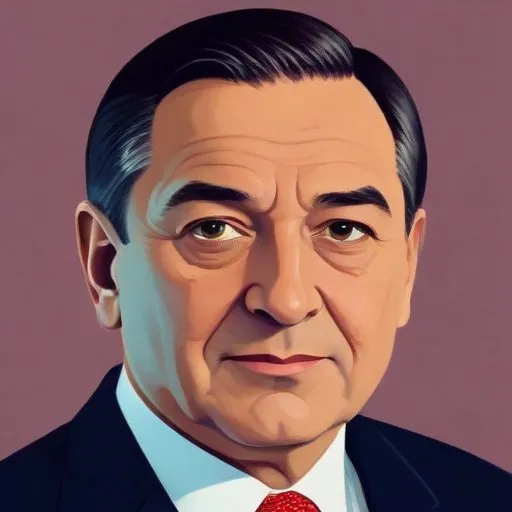
Vojislav Kotunica is a name synonymous with Serbian politics, particularly during the tumultuous period of the late 1990s and early 2000s. He is best known for serving as the last president of FR Yugoslavia from 2000 to 2003 and later as the prime minister of Serbia from 2004 to 2008.
Kotunica's political career began in the early 1990s, when he co-founded the Democratic Party of Serbia. His big break came in 2000, when he won the Yugoslav presidential election as a candidate of the Democratic Opposition of Serbia (DOS), a broad alliance of parties opposed to Slobodan Milošević's regime. This victory marked a significant shift in Serbian politics, leading to the overthrow of Milošević and the eventual withdrawal of international sanctions against Yugoslavia.
Kotunica is known for his strong stance against cooperating with the International Criminal Tribunal for the former Yugoslavia (ICTY). This stance led to his party leaving the coalition government in protest at the decision to extradite Milošević to the ICTY. Additionally, he was a vocal opponent of signing the Stabilisation and Association Agreement (SAA) with the European Union during his second government (2007-2008), a move that ultimately led to the fall of his government.
Kotunica played a crucial role in shaping Serbia's modern political landscape. He was instrumental in the adoption of the country's first constitution after independence and declared Serbia a neutral country. His influence extends beyond politics, with his party's nationalist stance resonating with many Serbians.
Kotunica's political ideology is rooted in nationalism and a strong desire for Serbian independence. He has consistently opposed what he perceives as external interference in Serbia's affairs, whether from the EU or the ICTY. This stance has earned him both praise and criticism from various quarters.
Kotunica's impact on modern Serbian society is undeniable. His leadership has shaped the country's political trajectory, and his party's nationalist stance has resonated with many Serbians. While opinions about his legacy may be divided, his influence on Serbian politics remains significant to this day.
Vojislav Kotunica's eventful career has left an indelible mark on Serbian politics. Love him or hate him, Kotunica's contributions to Serbia's independence and his unwavering commitment to his principles have made him a household name in the country. As Serbia continues to navigate its complex political landscape, Kotunica's legacy serves as a reminder of the power of conviction and the importance of political leadership.
68 Years Old
A Serbian psychologist and politician who served as the 16th President of Serbia, known for his efforts to reform the country's education system and promote democratic values. He played a key role in Serbia's transition from a one-party to a multi-party system.
74 Years Old
The 4th President of Serbia, serving from 2012 to 2017, known for his efforts to strengthen Serbia's economy and improve relations with the European Union. He also played a key role in normalizing ties with Kosovo.
60 Years Old
A Serbian journalist and politician who served as the 95th Prime Minister of Serbia, known for his leadership during a tumultuous period in the country's history. He implemented economic reforms and navigated Serbia's path towards EU membership.
74 Years Old
A Serbian philosopher and politician who served as the 6th Prime Minister of Serbia, known for his efforts to reform the country's economy and politics during a tumultuous period. He played a key role in shaping Serbia's transition from socialism to democracy.
72 Years Old
A Serbian lawyer and politician who served as Deputy Prime Minister of Serbia, known for his nationalist and far-right views, as well as his involvement in the Yugoslav Wars.
