


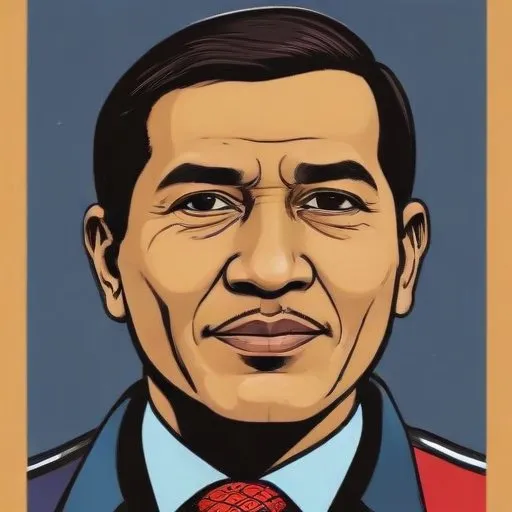
A Filipino politician who served as the Governor of Basilan province and was a key figure in the country's peace process with the Moro National Liberation Front. He's known for his efforts to bring peace and development to the region.
Wahab Akbar was a Filipino politician who served three terms as governor of Basilan, earning notoriety for his uncompromising approach to dealing with kidnappers and terrorists in the province, often referred to as an "eye for an eye, tooth for a tooth" policy. His unyielding stance on security earned him both admiration and criticism, making him a divisive figure in Filipino politics.
Wahab Akbar was born on April 16, 1960, in Lantawan, Basilan, where his father, Hadji Mohtamad Salajin, served as the town's first mayor. At a young age, Akbar joined his father in the mountains, fighting against government forces. However, after three years, Salajin was persuaded to join the government and was appointed mayor of Lantawan by President Ferdinand Marcos. Akbar pursued higher education, studying agriculture at Gregorio Araneta University (now De La Salle Araneta University), although he did not complete his degree.
Akbar's entry into politics began in 1998 when he was elected governor of Basilan, a position he held for three consecutive terms until 2004. During his tenure, he developed a reputation for his tough stance on security, which some praised as effective in reducing lawlessness in the province, while others condemned as brutal and extrajudicial. In 2007, Akbar was elected as congressman for the lone district of Basilan in the House of Representatives.
Akbar's political career was marred by allegations of ties with the Islamic extremist group, Abu Sayyaf, which was linked to Al Qaeda. Some reports even claimed that he was a founding member and commander of the group until a falling out. Akbar's critics accused him of using his position to protect and promote the interests of the group, allegations that he consistently denied.
Akbar was a polygamist, married to five wives: Jum Jainnudin, Cherry Lyn Santos, Nurin Akbar, Marietta Zamoranos, and a Syrian wife. His family life was marked by political ambition, with one of his wives succeeding him as governor of Basilan and another serving as mayor of Isabela City.
On November 13, 2007, Akbar's life was cut short when he was killed in a bomb attack at the Batasang Pambansa, the Philippine House of Representatives. The attack, which also claimed the lives of three others, was suspected to be the work of political opponents. Akbar's death was met with shock and outrage, with many Filipinos lamenting the loss of a controversial yet influential figure in the country's political landscape.
Wahab Akbar's legacy is complex and multifaceted. While his tough stance on security earned him admiration from some, his alleged ties to extremist groups and human rights abuses tarnished his reputation. Nevertheless, his impact on Filipino politics and the province of Basilan cannot be ignored. Love him or hate him, Wahab Akbar remains a significant figure in the country's modern political history.
Born in 1917
A Filipino leader who ruled with an iron fist, implementing martial law and amassing wealth, leaving a legacy of controversy and economic turmoil.
93 Years Old
First female president of the Philippines, led the People Power Revolution, and restored democracy after decades of authoritarian rule.
93 Years Old
A Filipino journalist and politician who led the opposition against Ferdinand Marcos' regime, known for his courageous fight for democracy and human rights. Assassinated in 1983, his death sparked the People Power Revolution.
89 Years Old
The 13th President of the Philippines, a former actor turned politician, is known for his populist appeal and controversial presidency marked by corruption allegations and an eventual impeachment trial. He's also remembered for his efforts to address poverty and inequality.
79 Years Old
The 14th President of the Philippines, a prominent figure in Southeast Asian politics, known for her economic reforms and controversial tenure marked by allegations of corruption and human rights abuses.
81 Years Old
The 16th President of the Philippines, known for his controversial and populist leadership style, and his war on drugs that has resulted in thousands of extrajudicial killings.
81 Years Old
A trailblazing Filipino judge and politician who championed anti-corruption efforts and advocated for human rights, earning her a nomination for the Nobel Peace Prize. She was a strong voice for justice and reform in her country.
98 Years Old
The 12th President of the Philippines, a decorated war hero and leader who implemented economic reforms and brought stability to the country after a tumultuous era. He's known for his efforts to modernize the Philippines and promote national unity.
