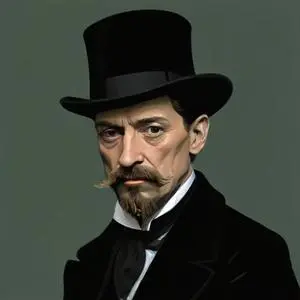
Walter Sickert: The Maverick Painter of the Camden Town Group
A Cosmopolitan and Eccentric: Defining the Artistic Style
Walter Sickert was a German-born British painter and printmaker who left an indelible mark on the art world with his unique blend of Post-Impressionism and avant-garde techniques. As a member of the Camden Town Group, Sickert's work continues to inspire generations of artists, art historians, and enthusiasts alike.
Early Life and Training: A Path Unfolding
Born on May 31, 1860, in Munich, Kingdom of Bavaria, Sickert was the eldest son of Oswald Sickert, a Danish artist, and Eleanor Louisa Henry, an Englishwoman. Following the German annexation of Schleswig-Holstein, the family settled in England, where Oswald's work was highly regarded by prominent art circles. Sickert's early education took him to University College School and later to King's College School, where he developed a passion for the arts. Though he initially pursued a career in acting, Sickert eventually turned to art, studying at the Slade School before becoming a pupil of the renowned
James Abbott McNeill Whistler.
Artistic Influences and Milestones
Sickert's artistic journey was shaped by his association with Whistler, whose emphasis on tone and atmosphere greatly influenced Sickert's early work. As he honed his craft, Sickert's paintings began to reflect his fascination with urban landscapes, everyday life, and the human condition. His distinctive style, characterized by bold brushstrokes, vivid colors, and a sense of drama, earned him recognition within the British art establishment.
Portraits and the Power of Observation
One of Sickert's most significant contributions to the art world lies in his portraits of prominent personalities, including famous actors, politicians, and socialites. His ability to capture the essence of his subjects, often with a sense of psychological depth, has been praised by art historians and critics. Sickert's portraits, such as "Ennui" (c. 1914) and "Lady Martin Harvey" (c. 1903), continue to be celebrated for their complexity and emotional resonance.
Urban Landscapes and the Camden Town Group
Sickert's fascination with urban life led him to focus on scenes of everyday life in London, particularly in the Camden Town area. His paintings of storefronts, streets, and buildings, often depicted at dawn or dusk, evoke a sense of melancholy and nostalgia. As a founding member of the Camden Town Group, Sickert played a crucial role in shaping the group's aesthetic, which emphasized the beauty in the mundane and the importance of capturing the spirit of modern urban life.
Contact with Modernism
Sickert's work bridged the gap between Impressionism and Modernism, paving the way for future generations of artists. His innovative use of color, light, and composition influenced the development of avant-garde movements, including Expressionism, Fauvism, and Cubism.
Controversy and Speculation: The Jack the Ripper Theory
In the decades following Sickert's death, some researchers and authors speculated that he might have been the infamous London-based serial killer Jack the Ripper. While this theory has largely been discredited, it remains a fascinating footnote in Sickert's intriguing life story.
Legacy and Impact
Walter Sickert's artistic legacy continues to inspire artists, art historians, and enthusiasts around the world. His innovative style, emphasis on urban landscapes, and captivating portraits have cemented his place as a prominent figure in the transition from Impressionism to Modernism. As we reflect on Sickert's life and work, we are reminded of the power of art to shape our understanding of the world and ourselves.
Notable Works
- "Ennui" (c. 1914)
- "Lady Martin Harvey" (c. 1903)
- "The Old Bedford" (c. 1903-1904)
- "Gatti's Hungerford Palace of Varieties" (c. 1914)
- "The Raising of Lazarus" (c. 1929)
Awards and Honors
- Elected Associate of the Royal Academy (1924)
- Elected Royal Academician (1934)
Timeline of Key Events
- 1860: Born in Munich, Kingdom of Bavaria
- 1868: Family settles in England
- 1881: Begins studying art under James Abbott McNeill Whistler
- 1911: Co-founds the Camden Town Group
- 1942: Dies on January 22nd at the age of 81
FAQ
What style of painting did Walter Sickert practice?
Walter Sickert was a prominent figure in the Impressionist and Post-Impressionist movements, known for his bold and expressive brushstrokes. His paintings often featured urban landscapes and atmospheric scenes, showcasing his unique perspective on modern life.
What was Walter Sickerts role in the Camden Town Group?
Walter Sickert was a founding member of the Camden Town Group, a collective of artists who sought to challenge traditional art forms and push the boundaries of British art. He played a significant role in shaping the groups aesthetic and promoting its work.
How did Walter Sickerts travels influence his art?
Walter Sickerts travels to Europe and the Middle East had a profound impact on his artistic style. He was inspired by the vibrant colors and textures of different cultures, which he incorporated into his paintings to create a unique visual language.
What is the significance of Walter Sickerts Ennui series?
Walter Sickerts Ennui series is a collection of paintings that showcase his fascination with the human psyche. These works explore themes of boredom, alienation, and modernity, offering a poignant commentary on the human experience.
How did Walter Sickerts art reflect his views on modernity?
Walter Sickerts art reflects his ambivalence towards modernity. While he was fascinated by the excitement and energy of urban life, he also critiqued the alienating effects of industrialization and urbanization. His paintings often portrayed the tensions between tradition and modernity, highlighting the complexities of modern life.