


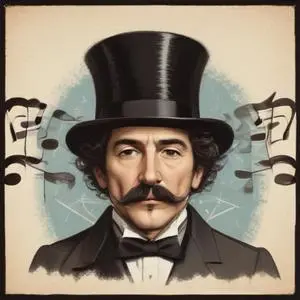
A pioneering artist of the Aesthetic Movement, known for his iconic paintings and prints that explored the boundaries of art and beauty, particularly his famous "Whistler's Mother" portrait.
James Abbott McNeill Whistler, the enfant terrible of the art world, is renowned for his iconic nocturnes, innovative etchings, and rebellious disregard for the conventions of Victorian art. His bold, avant-garde style not only revolutionized the way artists approached their craft but also influenced generations to come.
Born on July 11, 1834, in Lowell, Massachusetts, Whistler's life was marked by restless energy, creative experimentation, and a passion for innovation. After a brief stint in the US Army, Whistler abandoned his military career to pursue art, studying at the Pennsylvania Academy of Fine Arts and later in Paris.
Whistler's early success came with his etchings, which were praised for their technical skill and innovative approach. However, his 1875 painting, Nocturne in Black and Gold: The Falling Rocket, sparked controversy when art critic John Ruskin accused Whistler of "flinging a pot of paint in the public's face." The ensuing lawsuit, which Whistler won, cemented his reputation as a bold and unapologetic artist.
Whistler's artistic philosophy was rooted in his belief that art should be an emotional and intuitive experience, rather than a literal representation of reality. He advocated for the importance of the artist's inner life, arguing that true artistry lay in capturing the essence of a subject rather than its physical appearance.
Whistler's artistic innovations extended to his use of color, composition, and technique. His nocturnes, characterized by their dreamy, ethereal quality, were inspired by the Impressionist movement and exemplified his ability to capture the fleeting effects of light.
Whistler's pioneering spirit and artistic innovations influenced a wide range of modern artists, from the Impressionists to the Abstract Expressionists. His emphasis on the emotional and expressive qualities of art paved the way for the development of modern art movements, including Fauvism, Cubism, and Surrealism.
Whistler's personal life was marked by drama, romance, and a penchant for controversy. His relationships with women, including his mother, Anna McNeill Whistler, and his mistress, Maud Franklin, were often tumultuous and passionate. Whistler's wit and humor, however, were legendary, earning him the nickname "the great butterfly" among his friends and contemporaries.
Whistler's philosophical contributions extended beyond the realm of art to encompass his views on beauty, morality, and the human condition. He believed that art should be a reflection of the artist's inner life, rather than a mere representation of reality.
"Art should be independent of all clap-trap – should stand alone, and appeal to the artistic sense of eye or ear, without confounding this sense with any other!" - James Abbott McNeill Whistler
Whistler's oeuvre includes some of the most iconic works of modern art, including:
Whistler's contributions to modern art were recognized during his lifetime, with numerous awards and honors, including:
Whistler's influence on modern art is immeasurable, with his innovative approaches to color, composition, and technique inspiring generations of artists. His rebellious spirit and commitment to artistic expression paved the way for the development of modern art movements, cementing his place as one of the most important artists of the modern era.
"There are two men inside the artist, the poet and the craftsman. One is born of a woman and the other of a tradition." - James Abbott McNeill Whistler
Did you know that Whistler was a prolific letter writer, penning over 10,000 letters during his lifetime? Or that he was known for his love of fine dining, particularly oysters and champagne?
As we reflect on Whistler's remarkable life and artistic achievements, we are reminded of his own words: "The vast possibilities of art were revealed to me, and I vowed to devote my life to its service."
Born in 1840
A founder of Impressionism, capturing fleeting light and color in dreamy landscapes and water scenes, revolutionizing modern art.
Born in 1841
A pioneer of Impressionism, creating vibrant, intimate portraits and landscapes that capture the beauty of everyday life. His works evoke a sense of joy and warmth, celebrating the human experience.
Born in 1830
A Danish-French Impressionist painter who captured the beauty of landscapes and cityscapes with vivid colors and bold brushstrokes, influencing the development of modern art.
Born in 1832
A pioneering figure in Impressionism, he bridged the gap between Realism and Impressionism with his bold, expressive brushstrokes and everyday subjects.
Born in 1839
A landscape painter who captured the essence of rural France and England through his Impressionist works, often focusing on the fleeting effects of light and atmosphere.
Born in 1841
A pioneering Impressionist artist, capturing intimate, everyday moments of women's lives in delicate, dreamy paintings. Her works often blurred the lines between domesticity and artistry.
Born in 1844
An American Impressionist painter and educator, she created intimate, tender portraits of women and children, capturing the quiet beauty of everyday life. Her artwork often explored the complexities of motherhood and femininity.
Born in 1856
A renowned portrait painter, capturing the essence of high society with his stunning watercolors and oils, leaving an indelible mark on the art world.
