


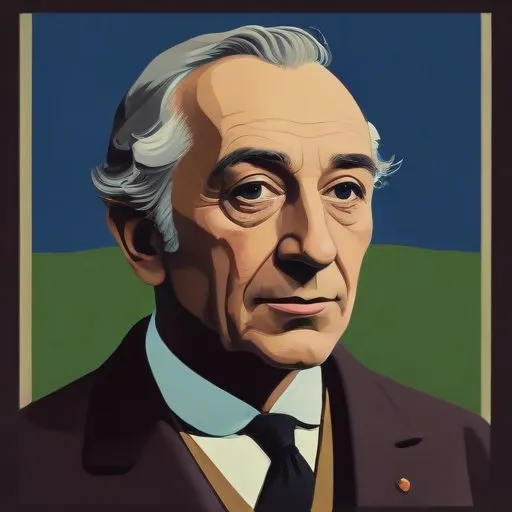
A landscape painter who captured the essence of rural France and England through his Impressionist works, often focusing on the fleeting effects of light and atmosphere.
Alfred Sisley, a French painter of British descent, is renowned for his captivating landscapes that embody the essence of Impressionism. Born on October 30, 1839, Sisley's artistic passion propelled him to dedicate his life to painting en plein air, capturing the fleeting effects of natural light with remarkable precision.
Sisley's early life was marked by a strong cultural heritage, with his British father, William Sisley, engaged in the silk business and his mother, Felicia Sell, a connoisseur of music. In 1857, at the age of 18, Sisley was sent to London to pursue a career in business. However, his artistic inclinations soon took over, and he returned to Paris in 1861 to study art at the École des Beaux-Arts.
At the École des Beaux-Arts, Sisley met fellow artists Frédéric Bazille, Claude Monet, and Pierre-Auguste Renoir, with whom he formed a close-knit group. Together, they revolutionized the art world by introducing the concept of en plein air painting, which involved capturing landscapes in their natural settings. This innovative approach led to the development of Impressionism, a movement that would forever change the face of art.
Sisley's artistic focus was unwaveringly fixed on landscape painting, which he executed with unparalleled mastery. His works, characterized by tranquility and soft, feathery brushstrokes, evoke a sense of serenity and connection with nature. From the River Thames to the landscapes of Moret-sur-Loing, Sisley's paintings are a testament to his ability to capture the subtleties of light and color.
Throughout his career, Sisley's artistic prowess continued to grow, with his later works showcasing increased power, expression, and color intensity. Despite facing numerous rejections from the Salon, the prestigious art exhibition in France, Sisley's determination and passion for his craft never wavered.
Sisley's contributions to Impressionism are immeasurable, and his influence can be seen in the works of numerous artists who followed in his footsteps. Today, his paintings are celebrated for their beauty, subtlety, and ability to evoke a sense of calm. As an artist who remained true to his vision, Sisley's legacy continues to inspire generations of artists and art enthusiasts alike.
Born in 1840
A founder of Impressionism, capturing fleeting light and color in dreamy landscapes and water scenes, revolutionizing modern art.
Born in 1841
A pioneer of Impressionism, creating vibrant, intimate portraits and landscapes that capture the beauty of everyday life. His works evoke a sense of joy and warmth, celebrating the human experience.
Born in 1830
A Danish-French Impressionist painter who captured the beauty of landscapes and cityscapes with vivid colors and bold brushstrokes, influencing the development of modern art.
Born in 1839
A post-Impressionist pioneer, he's famous for his still-life compositions and landscapes that laid the groundwork for Cubism, influencing 20th-century art.
Born in 1841
A pioneering Impressionist artist, capturing intimate, everyday moments of women's lives in delicate, dreamy paintings. Her works often blurred the lines between domesticity and artistry.
Born in 1844
An American Impressionist painter and educator, she created intimate, tender portraits of women and children, capturing the quiet beauty of everyday life. Her artwork often explored the complexities of motherhood and femininity.
Born in 1834
A master of capturing the beauty of movement and everyday life, this artist is renowned for their stunning Impressionist paintings, sculptures, and illustrations of dancers, horses, and Parisian scenes.
