


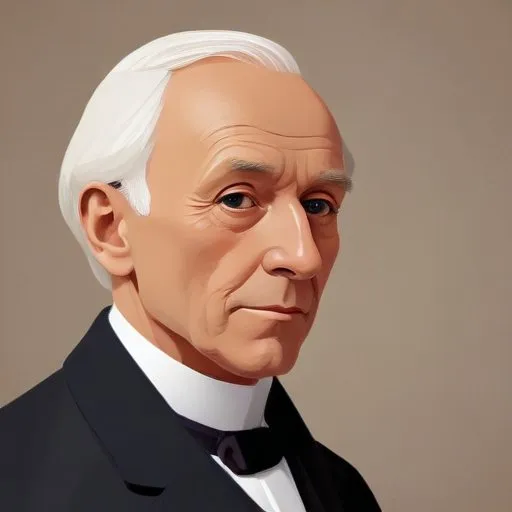
A philosopher who explored the nature of consciousness, reality, and mysticism, and served as a civil servant in the British government. He's known for his work on the philosophy of mind and his critique of materialism.
Walter Terence Stace, a British civil servant, educator, and philosopher, is renowned for his groundbreaking work in the philosophy of mysticism, moral relativism, and epistemology. His influential books, Mysticism and Philosophy (1960) and Teachings of the Mystics (1960), have shaped the study of mysticism, despite being criticized for their methodological limitations and perennialist assumptions.
Born on November 17, 1886, in Hampstead, London, Walter Terence Stace came from an English military family. His father, Major Edward Vincent Stace, served in the Royal Artillery, and his mother, Amy Mary Watson, was a daughter of Rev. George Augustus Frederick Watson. Stace's great-grandfather, William Stace, was Chief Commissary of the Royal Artillery during the Battle of Waterloo.
Instead of pursuing a military career, Stace chose a religious and philosophical path. He was educated at Bath College (1895-1901), Fettes College in Edinburgh, Scotland (1902-1904), and later at Trinity College Dublin, Ireland. He initially intended to become a priest in the Anglican Church, having experienced a religious awakening.
Stace worked with the Ceylon Civil Service from 1910 to 1932 and later became a member of the Department of Philosophy at Princeton University from 1932 to 1955. During this period, he wrote extensively on mysticism, moral relativism, and epistemology, producing influential works that continue to shape the study of these subjects.
Stace's philosophical contributions lie in his exploration of mysticism, moral relativism, and epistemology. He argued that mysticism is a distinctive form of experience that cannot be reduced to philosophical or scientific frameworks. His work on moral relativism emphasizes the importance of understanding moral values within their cultural and historical contexts.
Stace's perennialist assumptions, however, have been subject to criticism. Perennialism posits that there is a common, universal core to all mystical experiences across different cultures and traditions. Critics argue that this approach overlooks the diversity and complexity of mystical experiences, neglecting their unique cultural and historical contexts.
Despite the criticisms, Stace's work has had a significant impact on the study of mysticism and philosophy. His books continue to influence scholars and researchers in these fields, and his ideas have shaped discussions on moral relativism and epistemology.
Stace's legacy extends beyond academia. His work has inspired spiritual seekers and philosophers, offering insights into the nature of mystical experiences and the importance of understanding moral values within their cultural and historical contexts.
Born in 1910
A prominent logical positivist, he championed the idea that only verifiable statements are meaningful, and his book "Language, Truth, and Logic" remains a seminal work in 20th-century philosophy.
Born in 1872
A renowned thinker who made significant contributions to mathematics, philosophy, and social commentary, known for his influential writings on logic, ethics, and politics. He's a prominent figure in shaping modern intellectual thought.
Born in 1889
A philosopher who challenged traditional philosophy by emphasizing the importance of language and its limits, and is famous for his philosophical ideas on logic, reality, and the nature of meaning.
Born in 1900
A philosopher who challenged traditional views on the mind-body problem, proposing a more holistic approach to understanding human behavior and consciousness. He's known for his concept of "category mistake."
