


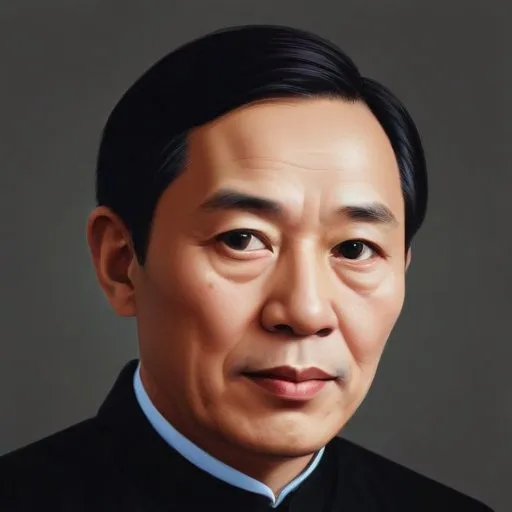
A pioneering economist and reformer who introduced groundbreaking policies to stabilize the economy and reduce poverty in 11th-century China, leaving a lasting legacy in Chinese history.
Wang Anshi, a renowned Chinese economist, philosopher, poet, and politician, is best known for his bold and far-reaching socioeconomic reforms during the Song Dynasty, which aimed to revolutionize the country's economy, government, and society. His innovative ideas, collectively known as the "New Policies," continue to influence Chinese politics and economy to this day.
Wang Anshi was born on December 8, 1021, in Linchuan, Fuzhou, Jiangxi province, to a family of distinguished scholars. He excelled in his studies, earning a jinshi degree in 1042 and placing fourth in the palace exam. This marked the beginning of his illustrious career in the Song bureaucracy.
Wang Anshi's early assignments included serving as a secretary in the office of the assistant military commissioner in Huainan, Yangzhou, Jiangsu province, and later as district magistrate in Yinxian, Ningbo, Zhejiang province. It was during this period that he demonstrated his administrative prowess, reorganizing hydrological projects for irrigation and providing credits to peasants.
Wang Anshi's crowning achievement was the implementation of the New Policies, a comprehensive package of reforms that sought to transform the Song Dynasty's economy and government. These reforms were guided by his philosophical beliefs, which drew inspiration from the Rites of Zhou and Legalism.
In addition to his economic reforms, Wang Anshi also implemented significant changes to the military and government structures.
Wang Anshi's innovative policies and reforms earned him rapid promotion, and he eventually became chancellor in 1069. However, his rising star was soon eclipsed by opposition from conservative forces, led by Chancellor Sima Guang. Wang Anshi's reforms were perceived as too radical, and he eventually fell out of favor with the emperor.
Despite his eventual downfall, Wang Anshi's contributions to Chinese history are undeniable. His New Policies and reforms continue to influence Chinese politics, economy, and society, earning him a place alongside the greatest visionaries of the Song Dynasty.
Today, Wang Anshi is remembered as a courageous and forward-thinking leader who dared to challenge the status quo and push the boundaries of what was possible. His legacy serves as a testament to the power of innovation and the importance of visionary leadership.
Born in 1130
A leading figure in Confucianism, he synthesized Confucian classics into a coherent philosophical system, influencing East Asian thought for centuries. His teachings emphasized moral cultivation and self-reflection.
