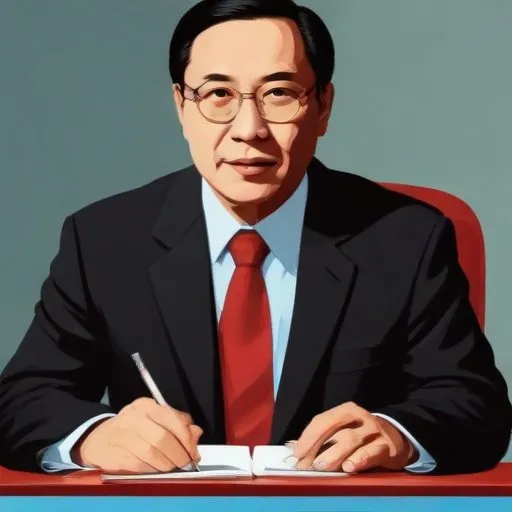
Wan Li: The Pioneering Chinese Communist Revolutionary and Politician
Wan Li, a renowned Chinese Communist revolutionary and politician, is best known for his instrumental role in shaping China's modern political landscape. As a dedicated reformer, he advocated for constitutional reforms, strengthened legislative institutions, and abolished lifelong terms for top political leaders, earning him a revered position in China's history.
Early Life and Education
Born on December 1, 1916, in Zhoucheng Subdistrict, Dongping County, Shandong province, Wan Li hailed from an impoverished family. Despite the humble beginnings, he aspired to become educated and was admitted to a provincial-run teachers' college in Qufu in 1939. During his time at the college, Wan founded a book club to study Marxist-Leninist works, which would eventually become the foundation of his revolutionary ideals.
Rise to Prominence
After joining the Chinese Communist Party in 1936, Wan led revolutionary and wartime resistance activities in Shandong province. Following the founding of the communist state in 1949, he served in various government ministries and as a member of the municipal leadership in Beijing. However, his career was briefly derailed during the Cultural Revolution, when he was purged from his positions.
Rehabilitation and Reform
After his rehabilitation, Wan worked as the party chief of Anhui province, where he implemented successful agrarian reforms centered on the household responsibility system. This achievement catapulted him into the ranks of China's top leadership, and he became a leading moderate reformer in the 1980s.
Key Contributions and Career Highlights
- Advocated for constitutional reforms, strengthening legislative institutions, and abolishing lifelong terms for top political leaders.
- Served as the Chairman of the Standing Committee of the National People's Congress (NPC) from 1988 to 1993.
- Played a crucial role in implementing successful agrarian reforms in Anhui province.
- Worked as a member of the Chinese Communist Party (CCP) Secretariat and its Politburo.
- Served as Vice Premier of the People's Republic of China.
Legacy and Impact
Wan Li's contributions to China's political landscape have been far-reaching and profound. His advocacy for reform and his commitment to strengthening legislative institutions have left a lasting impact on the country's governance. His legacy serves as a testament to the power of dedication and perseverance in shaping the course of a nation's history.
Personal Milestones and Key Life Events
- Joined the Chinese Communist Party in 1936.
- Purged during the Cultural Revolution.
- Rehabilitated and returned to work as party chief of Anhui province.
- Served as the Chairman of the Standing Committee of the National People's Congress (NPC) from 1988 to 1993.
- Retired in 1993.
Quotes and Memorable Sayings
Wan Li's quotes and sayings are a testament to his commitment to reform and his vision for a better China:
- "The reforms we are implementing are not just about economic development, but about building a more just and equitable society."
- "The key to our success lies not in our ability to control, but in our ability to empower the people."
Historical Context and Legacy
Wan Li's life and career are set against the backdrop of China's tumultuous 20th century. From the Japanese invasion to the Cultural Revolution, Wan Li navigated the complexities of China's political landscape, emerging as a champion of reform and progress. His legacy continues to inspire generations of Chinese leaders and citizens alike, serving as a beacon of hope for a brighter future.
FAQ
What was Wan Lis role in Chinese politics?
Wan Li was a prominent Chinese politician who served as the 4th Vice Premier of the Peoples Republic of China from 1985 to 1993. During his tenure, he oversaw Chinas economic reform and opening-up policy, which led to rapid economic growth and development.
What were Wan Lis early years like?
Wan Li was born in 1916 in Shandong Province, China, and grew up in a family of modest means. He became involved in the Chinese Communist Party at a young age and rose through the ranks during the Chinese Civil War.
What were Wan Lis contributions to Chinese education?
Wan Li was a strong advocate for education and played a key role in reforming Chinas education system. He introduced policies aimed at increasing access to education, improving teacher training, and promoting science and technology.
What awards did Wan Li win?
Wan Li was awarded the Medal of the Republic in 1956 and was elected as an academician of the Chinese Academy of Sciences in 1991.
How did Wan Lis legacy impact Chinas development?
Wan Lis legacy had a profound impact on Chinas development, as his economic reforms and education initiatives helped to lay the foundation for Chinas rapid economic growth and emergence as a global superpower.