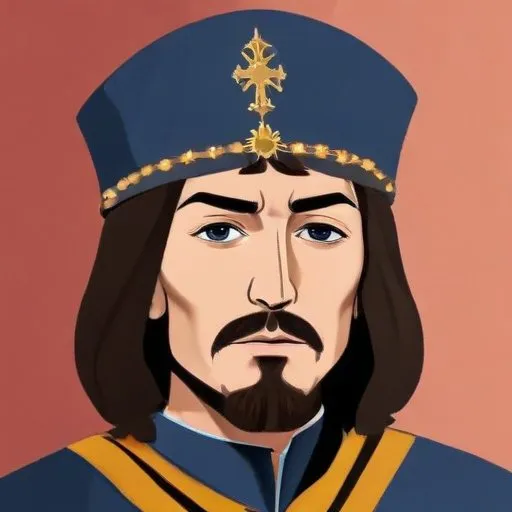
The Brief yet Turbulent Reign of Wenceslaus III of Bohemia
Wenceslaus III, also known as Václav III, was the King of Hungary and Croatia from 1301 to 1305 and the King of Bohemia and Poland from 1305 until his untimely death in 1306. He is infamous for being the last male ruler of the Přemyslid dynasty, which had dominated Bohemia for over two centuries.
A Childhood Marked by Royal Intrigue
Born on October 6, 1289, in Prague, Wenceslaus was the second son of Wenceslaus II, King of Bohemia, and his wife Judith of Habsburg. His elder brother had died before his birth, making him the only surviving son. Tragedy struck again in 1297 when his mother Judith passed away, leaving Wenceslaus to navigate the intricacies of royal politics at a tender age.
Rise to Power and the Hungarian Throne
In 1301, Wenceslaus was betrothed to Elizabeth, the sole daughter of Andrew III of Hungary. Following Andrew's death, the majority of Hungarian lords and prelates elected Wenceslaus as king, despite opposition from Pope Boniface VIII, who supported Charles Robert of Naples. Wenceslaus was crowned king of Hungary on August 27, 1301, signing charters under the name Ladislaus. However, his rule was largely nominal, with powerful lords controlling large territories in the kingdom.
Fall from Power and the Bohemian Throne
Realizing Wenceslaus' precarious position, his father Wenceslaus II brought him back to Bohemia in August 1304. Upon his father's death on June 21, 1305, Wenceslaus succeeded him as King of Bohemia and Poland. He abandoned his claim to Hungary in favor of Otto III of Bavaria on October 9, 1305.
A Troubled Reign and Untimely Demise
Wenceslaus' rule in Bohemia was marked by granting large parcels of royal domains to his young friends. Meanwhile, Władysław the Elbow-high, a local claimant to the Polish throne, captured Kraków in early 1306. Wenceslaus planned to invade Władysław's territories but was murdered before he could set out, bringing an abrupt end to his reign and the Přemyslid dynasty.
Legacy and Impact
Wenceslaus III's tumultuous reign had far-reaching consequences. His demise led to a power vacuum, allowing foreign rulers to vie for control of Bohemia and Poland. Despite his short tenure, Wenceslaus III's legacy serves as a testament to the complex web of alliances and rivalries that defined medieval European politics.
Personal Milestones and Key Life Events
- Born on October 6, 1289, in Prague
- Betrothed to Elizabeth, daughter of Andrew III of Hungary, in 1301
- Crowned King of Hungary on August 27, 1301
- Returned to Bohemia and succeeded his father as King of Bohemia and Poland on June 21, 1305
- Abandoned claim to Hungary in favor of Otto III of Bavaria on October 9, 1305
- Murdered in 1306 at the age of 16
Trivia and Fun Facts
- Wenceslaus III was the last male ruler of the Přemyslid dynasty, which had ruled Bohemia for over 200 years.
- He was only 16 years old when he died, making him one of the youngest monarchs in European history.
- Wenceslaus III's nickname "Ladislaus" was used during his reign in Hungary.
FAQ
What was Wenceslaus III of Bohemias reign like?
Wenceslaus III of Bohemias reign was marked by internal power struggles and conflicts with neighboring kingdoms, ultimately leading to his assassination in 1306.
What was Wenceslaus III of Bohemias relationship with the Holy Roman Empire?
Wenceslaus III of Bohemia was a vassal of the Holy Roman Empire, but he sought to assert his independence and protect Bohemias sovereignty.
What were Wenceslaus III of Bohemias achievements?
Wenceslaus III of Bohemia implemented several reforms, including the establishment of a new coinage system and the promotion of trade and commerce in Bohemia.
What was Wenceslaus III of Bohemias family life like?
Wenceslaus III of Bohemia was the son of Wenceslaus II of Bohemia and Judith of Habsburg, and he married Elizabeth Richeza of Poland, but his marriage was childless.
How did Wenceslaus III of Bohemia die?
Wenceslaus III of Bohemia was assassinated in 1306, allegedly by a group of nobles who opposed his rule.