


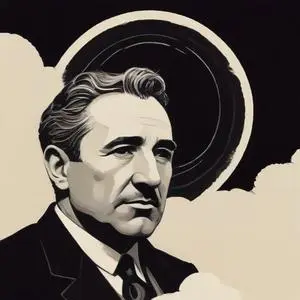
Developed a form of psychotherapy that emphasized the release of physical tension, and discovered a supposed universal life force called "orgone energy."
Wilhelm Reich, a renowned Austrian-American psychoanalyst and doctor of medicine, is best known for his groundbreaking work on character analysis, orgone energy, and the connection between psychological and social liberation. His influential books, such as The Impulsive Character (1925), The Function of the Orgasm (1927), and The Mass Psychology of Fascism (1933), have shaped the development of psychoanalysis and inspired generations of intellectuals.
Born on March 24, 1897, in Dobrzanica, Galicia, Austria-Hungary (now Ukraine), Reich graduated in medicine from the University of Vienna in 1922. He went on to become the deputy director of Sigmund Freud's outpatient clinic, the Vienna Ambulatorium, and later established the first sexual advisory clinics in Vienna with Marie Frischauf.
Reich's work on character analysis led to the development of the concept of "muscular armor," which posits that the personality is expressed through bodily movements and tension. This idea influenced the development of body psychotherapy, Gestalt therapy, bioenergetic analysis, and primal therapy. During his time in Oslo, Reich coined the term "orgone energy" to describe the notion of life energy, which he claimed could be harnessed and beneficial for cancer patients.
In 1939, Reich accepted a position as Assistant Professor at the New School of Social Research in New York, where he continued to develop his ideas on orgone energy and its applications. However, his work sparked controversy, and he was eventually arrested and jailed in 1955 for violating FDA regulations related to his orgone accumulators. Reich died on November 3, 1957, while serving a two-year prison sentence.
Reich's ideas have had a profound impact on modern society and culture. His concept of the "sexual revolution" has influenced generations of intellectuals and activists, and his work has been cited as an inspiration by many, including the 1960s student movement. His name was even scrawled on walls and his books were thrown at police during the 1968 student uprisings in Paris and Berlin.
Reich's words continue to inspire and challenge us today. Some of his notable quotes include:
Despite the controversy surrounding his work, Wilhelm Reich's contributions to psychoanalysis, character analysis, and our understanding of human liberation have had a lasting impact on modern society. His ideas continue to inspire and influence new generations of thinkers, activists, and practitioners.
As we reflect on Reich's life and work, we are reminded of the importance of challenging convention, embracing radical ideas, and striving for human liberation. His legacy serves as a testament to the power of courageous thinking and the potential for individual transformation to shape a better world.
Born in 1856
Pioneering psychoanalyst who developed theories on the subconscious mind, childhood experiences, and the structure of personality, revolutionizing our understanding of human behavior and psychology.
Born in 1875
Developed the concept of collective unconscious and archetypes, and founded analytical psychology, which emphasizes the integration of opposites and the process of individuation.
Born in 1900
A German psychologist and sociologist who developed the concept of "social character" and explored the relationship between psychology and society, known for his humanistic and socialist approach.
Born in 1898
A critical theorist who challenged traditional notions of freedom, democracy, and consumerism, arguing that modern society is oppressive and dehumanizing.
Born in 1911
A countercultural figure of the 1960s, known for his anarchist and pacifist views, which influenced the anti-war movement and the development of the modern American left. His writings often explored the intersection of psychology, politics, and culture.
Born in 1926
A leading figure of the Beat Generation, known for his poetry that explores themes of nonconformity, free expression, and social justice. His iconic poem "Howl" is a classic of American literature.
Born in 1922
Pioneering figure of the Beat Generation, known for spontaneous, confessional, and poetic writings that captured the essence of American counterculture in the 1950s and 60s.
Born in 1920
A pioneer in the counterculture movement, he advocated for the therapeutic use of psychedelic drugs and became a symbol of the 1960s rebellion. His ideas continue to influence modern thought on consciousness and personal freedom.
