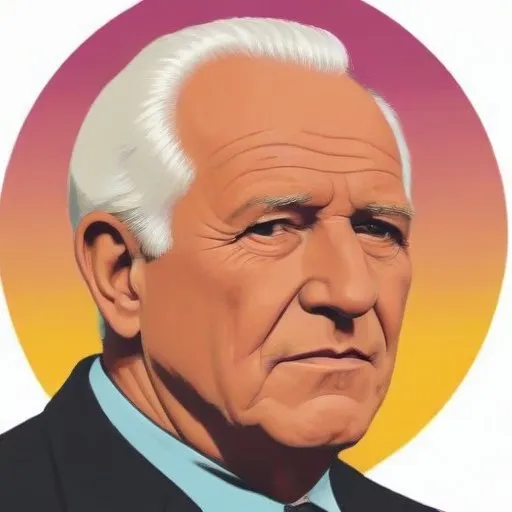
Herbert Marcuse: The Critical Theorist of the New Left
A Critical Thinker in Turbulent Times
Herbert Marcuse was a renowned German-American philosopher, social critic, and political theorist who left an indelible mark on the intellectual landscape of the 20th century. He is best known for his scathing critiques of capitalism, modern technology, and popular culture, as well as his role as a prominent figure in the Frankfurt School of critical theory.
Early Life and Education
Born on July 19, 1898, in Berlin, Germany, Marcuse was raised in a Jewish family that was well-integrated into German society. He received his early education at Mommsen Gymnasium and later at the Kaiserin-Augusta Gymnasium in Charlottenburg. In 1916, he was drafted into the German Army, but served only in horse stables in Berlin during World War I.
The Frankfurt School and Critical Theory
After the war, Marcuse studied at the Humboldt University of Berlin and later at Freiburg, where he received his Ph.D. in 1922. He became a key figure in the Frankfurt-based Institute for Social Research, which later became known as the Frankfurt School. Alongside theorists like
Theodor Adorno,
Max Horkheimer, and
Erich Fromm, Marcuse developed a critical theory that sought to understand the ways in which capitalism and modern technology shaped society and individual experience.
Critiques of Modern Society
Marcuse's written works, such as
Eros and Civilization (1955) and
One-Dimensional Man (1964), are characterized by their trenchant critiques of modern society. He argued that advanced industrial societies had created new forms of social control, which stifled individual freedom and creativity. In
One-Dimensional Man, he famously coined the term "one-dimensional man" to describe the ways in which people were reduced to mere consumers, stripped of their autonomy and critical thinking abilities.
The New Left and Student Movements
In the 1960s and 1970s, Marcuse became a prominent figure in the New Left and student movements in West Germany, France, and the United States. His Marxist scholarship inspired many radical intellectuals and activists, who saw him as a beacon of hope for social change. Some even regarded him as the "Father of the New Left."
Influence on Modern Society
Marcuse's ideas had a profound impact on modern society, shaping the contours of contemporary debates on technology, culture, and politics. His critiques of capitalism and modern technology anticipated many of the concerns of the environmental and anti-globalization movements. Additionally, his emphasis on individual freedom and autonomy continues to influence contemporary discussions on human rights and social justice.
Philosophical Contributions and Beliefs
At the heart of Marcuse's philosophy was a commitment to critical thinking and a distrust of dominant ideologies. He believed that individuals had the capacity for free thought and action, but that this capacity was often stifled by the dominant social and economic structures. Marcuse's work was deeply influenced by Marxist thought, but he also drew on the ideas of
Friedrich Nietzsche,
Sigmund Freud, and
Martin Heidegger.
Personal Milestones and Key Life Events
- 1922: Received Ph.D. from the University of Freiburg
- 1943-1950: Worked in U.S. government service for the Office of Strategic Services (predecessor of the Central Intelligence Agency)
- 1955: Published Eros and Civilization
- 1964: Published One-Dimensional Man
- 1960s-1970s: Became a prominent figure in the New Left and student movements
- July 29, 1979: Passed away in Starnberg, West Germany
Quotes and Memorable Sayings
- "The people recognize themselves in their commodities; they find their soul in their automobile, hi-fi set, and split-level home."
- "The new totalitarianism is not a brutal and blatant dictatorship, but rather a technological and bureaucratic one."
Legacy and Impact
Herbert Marcuse's legacy is complex and multifaceted. While some have criticized his ideas as overly pessimistic or dogmatic, others have hailed him as a visionary thinker who grasped the essence of modern society. Today, his work remains a powerful testament to the importance of critical thinking and individual autonomy in the face of overwhelming social and economic forces.
FAQ
What were Herbert Marcuses main philosophical ideas?
Herbert Marcuses main philosophical ideas centered around critical theory, Marxism, and the critique of modern capitalist society. He argued that technology and mass media were used to control and manipulate individuals, leading to a loss of individual freedom and autonomy.
How did Herbert Marcuses philosophical ideas influence the New Left?
Herbert Marcuses philosophical ideas had a significant influence on the New Left movement of the 1960s and 1970s. His critiques of capitalist society and advocacy for individual freedom and autonomy resonated with student activists and anti-war protesters.
What was Herbert Marcuses role in the Frankfurt School?
Herbert Marcuse was a key figure in the Frankfurt School, a group of German philosophers and social theorists who critiqued modern capitalist society. He worked alongside other prominent thinkers, including Theodor Adorno and Max Horkheimer.
How did Herbert Marcuses experiences in Nazi Germany shape his philosophical ideas?
Herbert Marcuses experiences in Nazi Germany had a profound impact on his philosophical ideas. He fled Germany in the 1930s and witnessed the rise of fascist regimes, which informed his critiques of modern capitalist society and the dangers of totalitarianism.
What was Herbert Marcuses legacy in philosophy?
Herbert Marcuses legacy in philosophy is as a prominent critical theorist who challenged the dominant ideologies of his time. His work continues to influence contemporary debates on capitalism, technology, and individual freedom.