


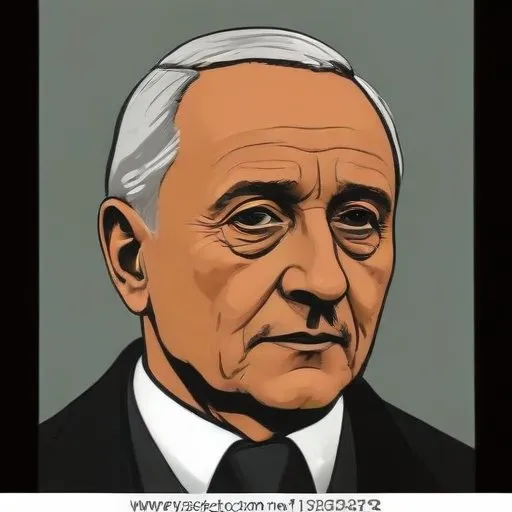
A 19th-century German historian and academic who wrote influential works on medieval history, particularly the "History of the German Empire" series. His writings shaped the field of medieval studies and remain valuable resources for historians today.
Wilhelm von Giesebrecht was a renowned German historian, known for his groundbreaking contributions to the field of historical research and his meticulous documentation of Germany's medieval past. He is particularly celebrated for his magnum opus, Geschichte der deutschen Kaiserzeit, a five-volume masterpiece that showcased his exceptional scholarship and mastery of historical sources.
Wilhelm von Giesebrecht was born on March 5, 1814, in Berlin, Germany, to Karl Giesebrecht, a civil servant, and his wife. He came from a family of intellectuals, with his uncle, Ludwig Giesebrecht, being a poet. Young Wilhelm's fascination with history led him to pursue higher education under the guidance of Leopold von Ranke, one of the most prominent historians of the time.
Giesebrecht's academic prowess was evident from the outset. His first significant work, Geschichte Ottos II, was published in 1837-1840 as part of Ranke's Jahrbücher des deutschen Reichs unter dem sächsischen Hause. This work demonstrated his exceptional analytical skills and marked the beginning of his distinguished career as a historian.
In 1841, he published Jahrbücher des Klosters Altaich, a reconstruction of the lost Annales Altahenses, a medieval source that was previously unknown. The accuracy of his work was remarkable, and it wasn't until 1867, when the original chronicle was discovered, that his work was proven to be substantially correct.
Giesebrecht's other notable works include De litterarum studiis apud italos primis mediiaevi seculis (1845), a study on the survival of culture in Italian cities during the Middle Ages, and his translation of Gregory of Tours' Historiae (1851), which became the standard German translation.
Giesebrecht's Geschichte der deutschen Kaiserzeit, published between 1856 and 1888, is considered one of the most significant works of German historiography. This magnum opus not only showcased his mastery of historical sources but also contributed to the development of a new era of scientific research methods. The work's patriotic tone and inherent merit made it incredibly popular, particularly during the formation of the new German empire.
Throughout his career, Giesebrecht held prestigious academic positions, including professor ordinarius at the University of Königsberg (1857) and successor to Heinrich von Treitschke at the University of Berlin (1862). He inspired a generation of historians and scholars, leaving an indelible mark on the field of historical research.
Giesebrecht's personal life was marked by simplicity and a strong work ethic. He dedicated himself to his research and writing, and his passion for history only grew stronger with time. He passed away on December 17, 1889, leaving behind a rich legacy that continues to inspire historians and scholars to this day.
Wilhelm von Giesebrecht's contributions to German historiography are immeasurable. His commitment to academically rigorous research and his dedication to preserving Germany's medieval heritage have made him an iconic figure in the world of historical scholarship. His work continues to influence contemporary historians, ensuring that his legacy endures for generations to come.
Born in 1795
A pioneering historian who revolutionized the field by emphasizing empirical research and primary sources, known for his meticulous and objective approach to historical writing.
Born in 1817
A 19th-century German historian and politician who pioneered the modern historical method, emphasizing objective research and accuracy, and served as a key figure in shaping Germany's national identity.
Born in 1817
A renowned historian and scholar who wrote extensively on ancient Rome, earning a Nobel Prize in Literature for his monumental work "The History of Rome".
Born in 1814
A pioneering archaeologist and historian who uncovered the rich history of ancient Greece, shedding light on its art, architecture, and culture. His works remain a cornerstone of classical studies.
Born in 1866
A German lawyer and politician who served as the Mayor of Marburg, known for his contributions to the city's development and governance. He played a significant role in shaping the city's infrastructure and policies.
