


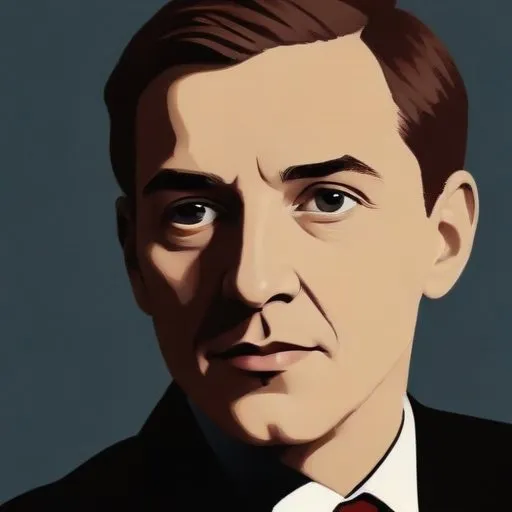
A poet and journalist who wrote about rural life and the struggles of the common man, particularly in his famous poem "Over the Hill to the Poorhouse".
Will Carleton, the celebrated American poet, is best known for his sentimental and humorous verses that reflected his rural upbringing and the plight of the common man. His poems, which often explored the struggles and joys of everyday life, catapulted him to literary prominence, earning him a special place in the hearts of Americans.
Carleton was born on October 21, 1845, in rural Lenawee County, Hudson, Michigan, to John Hancock and Celeste Smith Carleton. He was the fifth child in a family of modest means. Carleton's early life was marked by simplicity and hard work, which would later influence his poetic style.
He graduated from Hillsdale College in 1869, where he was an active member of the Delta Tau Delta fraternity. During his college years, Carleton developed a passion for poetry, which he wrote regularly. His poem, "Rifts in the Cloud," delivered at his college graduation, showcased his talent and foreshadowed his future success.
After graduating from college, Carleton worked as a newspaper journalist in Hillsdale, where he continued to write poetry in his spare time. His poem, "Betsey and I Are Out," a humorous verse about a divorce, was first published in the Toledo Blade and later reprinted by Harper's Weekly. This marked his breakthrough into the literary world.
Carleton's most famous poem, "Over the Hill to the Poor House," published in 1872, brought him national attention. This powerful piece exposed the struggles of the aged and those with indifferent families, resonating with readers across America.
Carleton's poetry was characterized by its simplicity, humor, and emotional depth. His works often explored themes of rural life, poverty, and the human condition. His unique voice and style captured the essence of American life, making him a beloved poet of his time.
In 1878, Carleton married Anne Goodell, and the couple moved to Boston, a hub of literary and publishing activity. Later, they relocated to New York City, where Carleton remained active in his college fraternity and served as president of the New York City Delta Tau Delta alumni chapter.
In 1907, Carleton returned to Hudson, Michigan, where he was welcomed as a celebrated poet. His legacy continued to grow, with his poetry being taught in schools and widely quoted across America.
The Michigan legislature honored Carleton's legacy by requiring teachers to teach at least one of his poems in school. October 21, his birthday, was officially declared Will Carleton Day in Michigan.
Schools in Michigan, including Will Carleton Academy in Hillsdale and Will Carleton Middle School in Sterling Heights, were named in his honor, a testament to his enduring impact on American literature and culture.
Will Carleton's poetry remains a cherished part of American literary heritage, offering a unique window into the country's rural past and the human experience. His legacy continues to inspire and delight readers to this day.
Born in 1819
A celebrated poet, essayist, and journalist who revolutionized American literature with his collection "Leaves of Grass", known for his free verse style and celebration of the human spirit.
Born in 1807
A celebrated poet and educator, known for his lyrical and narrative poems that often explored American history and culture, including the iconic "Paul Revere's Ride".
Born in 1803
A leading figure in the Transcendentalist movement, he advocated for individualism, self-reliance, and nature-inspired spirituality through his essays and poetry. His ideas continue to influence American thought and culture.
Born in 1835
Witty writer of classics like "The Adventures of Tom Sawyer" and "The Adventures of Huckleberry Finn", known for humor and social commentary.
Born in 1809
A master of dark and atmospheric storytelling, crafting haunting tales of mystery and horror that continue to captivate readers to this day.
Born in 1819
Author of epic sea tales and philosophical explorations, including the iconic "Moby-Dick", which continues to influence literature and popular culture.
Born in 1830
A reclusive poet who crafted innovative, enigmatic, and emotionally charged verse that continues to captivate readers with its unique style and profound insights.
Born in 1817
A 19th-century thinker who advocated for simple living, civil disobedience, and individualism, inspiring generations to reevaluate their relationship with nature and society.
