


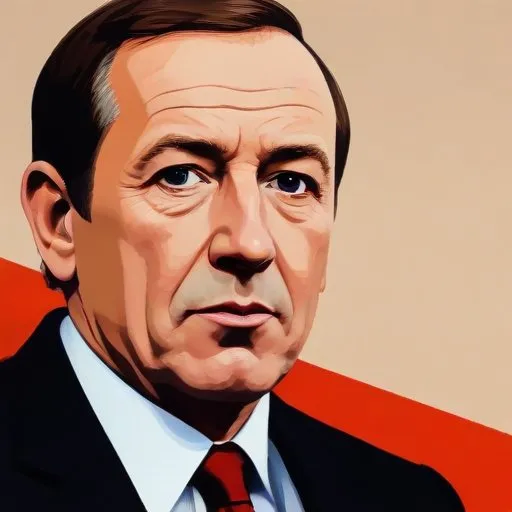
A pioneering Labour Party politician and trade unionist who fought for workers' rights and improved social conditions, particularly in the East End of London.
Will Crooks, a luminary of the late 19th and early 20th centuries, is renowned for his unwavering commitment to eradicating poverty and inequality. As a prominent trade unionist, politician, and member of the Fabian Society, Crooks dedicated his life to improving the welfare of the working class and fostering a more just society.
Born on April 6, 1852, in Shirbutt Street, Poplar, London, Crooks was the third son of George Crooks, a ships stoker, and Caroline Elizabeth Coates, a seamstress. His family's struggle to make ends meet, including a stint in the Poplar workhouse in 1861, had a profound impact on Crooks' views on poverty and social inequality.
After completing his education at a local poor law school, Crooks worked as a grocer's errand boy, blacksmith's laborer, and apprentice cooper. His voracious appetite for reading and learning led him to discover the works of reformers such as Richard Cobden and John Bright. This exposure inspired Crooks to advocate for the rights of his fellow workers, ultimately leading to his dismissal as a "political agitator."
Undeterred, Crooks joined the Coopers' Union in 1867, a membership he maintained until his death in 1921. His oratory skills, honed outside the East India Dock gates, proved instrumental in raising funds for the 10,000 striking dockers during the 1889 London Dock Strike.
In 1889, Crooks became one of the first labor members on the London County Council, and later, the first working-class member and chairman of the Poplar Board of Guardians. With the support of his friend and fellow member George Lansbury, Crooks implemented reforms at the local workhouse, creating a model for other poor law authorities. His tireless efforts led to numerous local improvements, earning him recognition as a prominent local politician.
Crooks' commitment to social justice and equality was deeply rooted in his philosophical beliefs. He advocated for the empowerment of the working class, recognizing the inherent value of their labor and the need for fair treatment. Through his work, Crooks demonstrated that poverty and inequality are not inevitable, but rather, the result of systemic failures that can be addressed through collective action and progressive policies.
Will Crooks' remarkable life and achievements continue to inspire generations of social reformers, trade unionists, and politicians. His unwavering dedication to eradicating poverty and promoting social justice has left an indelible mark on British history, cementing his place as a trailblazer in the struggle for a more equitable society.
As a testament to his enduring legacy, Will Crooks' life serves as a powerful reminder of the importance of collective action, social responsibility, and the unwavering pursuit of a more just and equitable society.
Born in 1856
A pioneering figure in the UK labor movement, fighting for workers' rights and social justice, and instrumental in founding the Labour Party.
Born in 1858
A pioneering social reformer and co-founder of the London School of Economics, known for her groundbreaking work on poverty, labor, and social welfare. Her research and writings greatly influenced British social policy and the development of the welfare state.
Born in 1866
A Scottish journalist and politician who served as the first Labour Party Prime Minister of the United Kingdom, leading the country through significant economic and social reforms. He is also known for his efforts to maintain peace in Europe during the interwar period.
Born in 1883
Led the Labour Party to a landslide victory in 1945, implementing significant social and economic reforms, including the creation of the National Health Service. He played a crucial role in shaping post-war Britain.
Born in 1871
Prolific writer of historical novels and adventure stories, also a talented landscape painter.
