


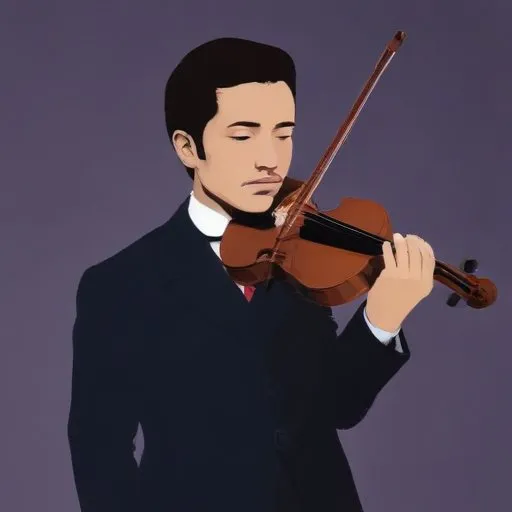
A pioneering African American composer and violinist, known for blending classical music with African American folk and spiritual traditions, creating a unique sound that paved the way for future generations.
Will Marion Cook, an American composer, violinist, and choral director, is best known for his groundbreaking contributions to the world of music, particularly in the realm of African American music. His iconic Broadway musicals, such as Clorindy, or The Origin of the Cakewalk (1898) and In Dahomey (1903), showcased the talents of African American creators, producers, and casts, paving the way for future generations of artists.
Born William Mercer Cook on January 27, 1869, in Washington, D.C., Cook grew up in a family that valued education and the arts. His parents, John Hartwell Cook and Isabel, were free people of color before the Civil War, and his father was one of the first black lawyers to practice in Washington. After his father's death in 1879, Cook's mother struggled to provide for her family, and Cook was sent to live with his maternal grandparents in Chattanooga, Tennessee.
In Chattanooga, Cook was exposed to the rich cultural heritage of African American music, which would later inspire his compositions. He described this period as his "soul period," during which he was immersed in "real Negro melodies and folk music."
Cook's musical talent was evident from an early age, and he went on to study under the renowned composer Antonín Dvořák. In 1919, he took his New York Syncopated Orchestra (also known as the Southern Syncopated Orchestra) on a tour of England, culminating in a command performance for King George V.
As musical director of the George Walker-Bert Williams Company, Cook worked on several successful musicals, including Clorindy and In Dahomey, which toured the United States and the United Kingdom for four years. These productions not only showcased African American talent but also shattered racial barriers in the entertainment industry.
Will Marion Cook's contributions to African American music and theater are immeasurable. He was a trailblazer who paved the way for future generations of artists, including notable figures such as Duke Ellington and Eubie Blake. Cook's music and legacy continue to inspire and influence artists today, ensuring his place as one of the most important figures in American musical history.
"I have always tried to preserve the Negro's natural musical gifts, and to develop them in a manner that would be acceptable to the Caucasian."
Will Marion Cook's legacy is a testament to his dedication to promoting African American music and talent, and his contributions continue to inspire and influence artists today.
Born in 1899
A legendary jazz pianist, composer, and bandleader who revolutionized the genre with his unique style and iconic compositions, such as "Take the A Train" and "Mood Indigo".
Born in 1887
A renowned pianist and composer, he was a leading figure in the development of ragtime music, creating iconic songs like "Memories of You" and "I'm Just Wild About Harry".
Born in 1873
The "Father of the Blues" revolutionized American music by codifying and popularizing blues music, creating a unique sound that influenced generations of musicians.
Born in 1868
A pioneering figure in American music, known for creating iconic ragtime pieces like "The Maple Leaf Rag" and "The Entertainer", which evoke a nostalgic, carefree era.
Born in 1922
A pioneering African American composer, he broke racial barriers in classical music, winning the Pulitzer Prize for Music in 1996 for his work "Lilacs."
