


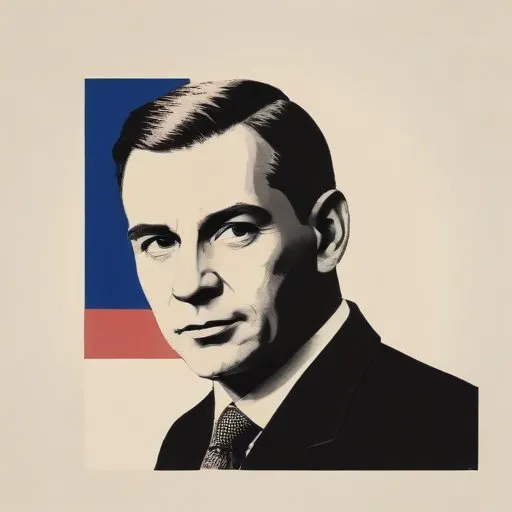
A Dutch politician and historian who served as Prime Minister of the Netherlands from 1948 to 1958, leading the country's post-war reconstruction and social reform efforts. He's known for his progressive policies and strong leadership during a pivotal period in Dutch history.
Willem Drees, the Dutch politician and historian, is renowned for his remarkable leadership as the Prime Minister of the Netherlands from 1948 to 1958. During his tenure, he championed social reforms, economic growth, and international cooperation, leaving an indelible mark on the country's history.
Born on July 5, 1886, in Amsterdam, Netherlands, Drees began his political journey as a member of the Social Democratic Workers' Party (SDAP). He was elected to the House of Representatives in 1933 and rapidly rose through the ranks, becoming the party leader in 1940. His commitment to social justice and equality earned him widespread respect and admiration.
In 1946, Drees co-founded the Labour Party (PvdA), which would become a dominant force in Dutch politics. As the party's first leader, he played a pivotal role in shaping its ideology and policies, focusing on social welfare, employment, and economic development.
Drees' leadership skills and vision propelled him to the office of Prime Minister in 1948. During his three consecutive terms, he formed four cabinets, each marked by significant achievements. His governments implemented far-reaching social reforms, including the introduction of old-age pensions, expansion of healthcare, and improvement of working conditions.
He also played a crucial role in post-war international cooperation, actively participating in the formation of the European Coal and Steel Community and the European Economic Community.
Drees was known for his exceptional ability to build and maintain effective teams. His cabinets were praised for their cohesion and collaborative spirit, allowing for productive policy-making and implementation.
Willem Drees' legacy extends beyond his remarkable political career. He inspired generations of politicians, policymakers, and social reformers. His commitment to social justice, equality, and international cooperation continues to shape the Netherlands' social and economic landscape.
Drees married Catharina Wilhelmina spee in 1910, and they had two daughters, Wilhelmina and Maria. He passed away on May 14, 1988, at the age of 101, leaving behind a legacy of public service, compassion, and vision.
In conclusion, Willem Drees' remarkable life and achievements serve as a testament to his unwavering dedication to creating a more just and equitable society. His leadership, vision, and humanitarian spirit continue to inspire generations, solidifying his place as one of the most influential figures in Dutch history.
Born in 1902
The 36th Prime Minister of the Netherlands, a Dutch academic and politician, served as a leader during post-WWII reconstruction and played a key role in shaping the country's modern identity. He's also known for his efforts in establishing the European Coal and Steel Community, a precursor to the EU.
Born in 1894
A Dutch cartographer, engineer, and politician who served as Prime Minister of the Netherlands, known for leading the country's post-WWII reconstruction efforts. He played a crucial role in shaping the country's modern landscape.
Born in 1919
A Dutch journalist, economist, and politician who served as Deputy Prime Minister of the Netherlands, known for his progressive policies and efforts to reduce economic inequality. He played a key role in shaping the country's social and economic landscape.
95 Years Old
A Dutch journalist and politician who served as Deputy Prime Minister of the Netherlands, known for his progressive views and leadership in the Democrats 66 party. He played a key role in shaping the country's social and economic policies.
