


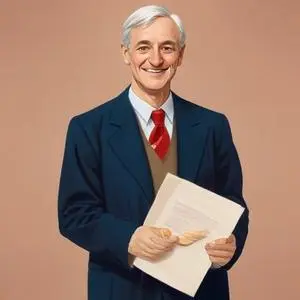
Designed the welfare state and social security system in the UK, revolutionizing social services and poverty alleviation.
William Beveridge, a renowned British economist and Liberal politician, is best known for designing the British welfare state, a comprehensive social security system that has been the cornerstone of the country's social policy since the mid-20th century. His 1942 report, Social Insurance and Allied Services, commonly referred to as the Beveridge Report, laid the foundation for the universal welfare state, providing a safety net for all citizens.
Born on March 5, 1879, in Rangpur, British India (now Bangladesh), Beveridge was the eldest son of Henry Beveridge, an Indian Civil Service officer and District Judge, and Annette Ackroyd, a scholar and social reformer. His mother, a pioneer in education, had co-founded the Working Women's College in London in 1864. Beveridge was educated at Charterhouse, a leading public school in Surrey, and later at Balliol College, University of Oxford, where he studied Mathematics and Classics.
Beveridge's career was marked by a series of significant appointments and achievements. He served as the Director of Labour Exchanges, Permanent Secretary of the Ministry of Food, and Director of the London School of Economics and Political Science (1919-1937). He was also elected as the Master of University College, Oxford (1937-1944).
In 1942, Beveridge's landmark report, Social Insurance and Allied Services, proposed a comprehensive social security system, which became the basis for the British welfare state. The report advocated for a universal system of social insurance, covering all citizens, and introduced the concept of "cradle to grave" welfare provision. The report's recommendations were implemented by the Labour government elected in 1945, revolutionizing the country's social policy landscape.
Beveridge was a strong advocate for social reform and believed in the importance of collective responsibility and social justice. He was also an ardent supporter of eugenics, a controversial ideology that aimed to improve the human race through selective breeding. Although his eugenicist views have been widely criticized, they reflect the complex and often contradictory nature of his beliefs.
Beveridge was a prolific writer and published several influential works, including:
Beveridge's contribution to the development of the British welfare state is unparalleled. His work has had a lasting impact on social policy, shaping the country's approach to social security, healthcare, and education. His ideas continue to influence policy-makers and scholars, ensuring his legacy as a pioneering thinker in the field of social reform.
Today, Beveridge is remembered as a visionary who dared to challenge the status quo, pushing the boundaries of social policy and inspiring generations of reformers and policymakers.
Born in 1883
A pioneering economist who revolutionized modern economic theory with his groundbreaking ideas on government intervention and fiscal policy, shaping global economic policies.
Born in 1882
Led the United States through the Great Depression and World War II, implementing a series of reforms known as the New Deal and helping to establish the country as a global superpower.
Born in 1871
Prolific writer of historical novels and adventure stories, also a talented landscape painter.
Born in 1883
Led the Labour Party to a landslide victory in 1945, implementing significant social and economic reforms, including the creation of the National Health Service. He played a crucial role in shaping post-war Britain.
Born in 1906
Leader of the Labour Party who opposed Britain's entry into the European Economic Community and advocated for a more socialist Britain, known for his strong leadership and economic policies.
Born in 1897
Founder of the UK's National Health Service (NHS), credited with providing universal healthcare to all citizens. A pioneer in socialized medicine, his legacy continues to shape healthcare policies worldwide.
Born in 1885
Won the 1952 Olympic Games marathon in Helsinki, Finland, and held the world record in the marathon from 1952 to 1953.
73 Years Old
The former Prime Minister of the United Kingdom who led the country through a transformative period, including the Iraq War, and is known for his charismatic leadership and controversial decisions.
