


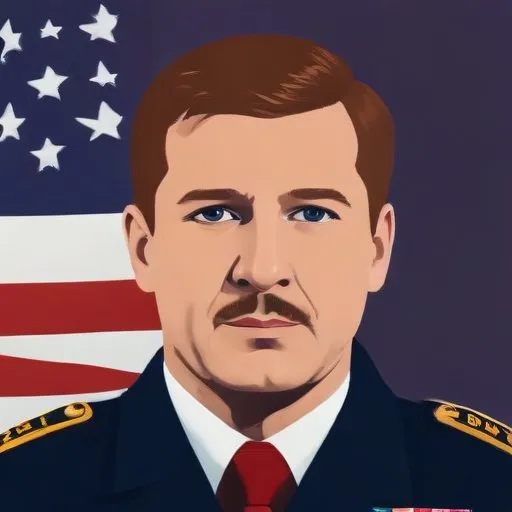
Commander of the Space Shuttle Columbia on its final mission, STS-107, tragically lost in a catastrophic accident upon re-entry into the Earth's atmosphere.
In the annals of space exploration, few names evoke a sense of tragedy and heroism as profoundly as William C. McCool. As the pilot of Space Shuttle Columbia's ill-fated STS-107 mission, McCool's life was cut short in a catastrophic accident that shocked the world on February 1, 2003.
McCool's journey began on September 23, 1961, in San Diego, California. Raised by a naval aviator stepfather, McCool was instilled with a sense of duty and adventure from an early age. He became an Eagle Scout, and later graduated from the United States Naval Academy with a degree in Applied Science.
McCool's impressive career was marked by numerous achievements, including designation as a Naval Aviator in 1986 and graduation from the United States Naval Test Pilot School in 1991. He was also an accomplished aeronautical engineer, holding a Master's degree from the U.S. Naval Postgraduate School.
In 2002, McCool was selected as the pilot for the STS-107 mission, a 16-day scientific research expedition aboard Space Shuttle Columbia. The mission's primary objective was to conduct experiments in microgravity, with a focus on astronomy, biology, and materials science.
Tragically, on February 1, 2003, Columbia disintegrated during reentry into the Earth's atmosphere, claiming the lives of McCool and the entire seven-member crew. The accident was met with widespread shock and grief, and an investigation later revealed that a piece of foam insulation had broken off during launch, damaging the shuttle's heat shield.
Posthumously, McCool was awarded the Congressional Space Medal of Honor, the highest honor bestowed upon an astronaut. His bravery and sacrifice will forever be remembered as a testament to the spirit of exploration and the pursuit of scientific discovery.
McCool's legacy extends beyond his astronautical achievements. He was a devoted husband and father of three sons, and his love for music was exemplified by his favorite song, "Imagine" by John Lennon, which was played during the STS-107 mission.
William C. McCool's story serves as a poignant reminder of the risks and sacrifices made by those who dare to venture into the unknown. His legacy continues to inspire generations of scientists, engineers, and explorers, ensuring that his memory will endure long after the echoes of the STS-107 mission have faded.
95 Years Old
First person to walk on the Moon during the Apollo 11 mission, marking a historic milestone in space exploration.
96 Years Old
Second man to walk on the Moon during the Apollo 11 mission, a pioneering astronaut and advocate for space exploration.
95 Years Old
Led the third manned mission to land on the Moon, Apollo 12, and became the third person to walk on its surface. Known for his bold and fearless approach to space exploration.
Born in 1926
One of the original seven astronauts in NASA's Project Mercury, a decorated military pilot, and a pioneer in space exploration, known for being the second American in space and commanding the first manned Gemini mission.
97 Years Old
American baseball player who pitched in the Major Leagues from 1965 to 1975, known for being a four-time All-Star and winning the American League ERA title in 1968.
Born in 1923
First American in space, commanded Apollo 14 mission, and walked on the Moon.
98 Years Old
Commander of the Apollo 13 mission, known for his heroic efforts in saving his crew after an explosion occurred on board. He's an iconic figure in space exploration history.
92 Years Old
The last person to walk on the Moon, a naval aviator, and astronaut who commanded the Apollo 17 mission, leaving behind a legacy in space exploration.
