


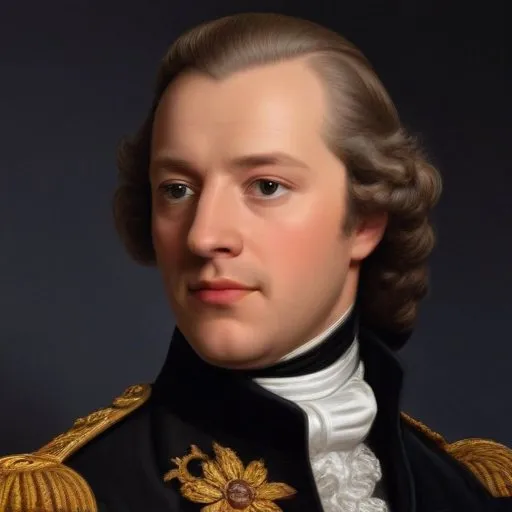
A prominent Royalist military commander and playwright, known for his role in the English Civil War and his literary works, including plays and poems.
William Cavendish, 1st Duke of Newcastle, was a true Renaissance man - a renowned horse breeder, patron of the arts, and a prominent figure in 17th-century English politics. He was a devoted supporter of King Charles I and played a significant role in the English Civil War, earning himself the title of Royalist Captain-General in Northern England.
Born on December 16, 1593, at Handsworth, South Yorkshire, William Cavendish was the eldest surviving son of Sir Charles Cavendish and Catherine Ogle. He was a grandson of the formidable Bess of Hardwick and courtier William Cavendish. His younger brother, Charles, would remain a close friend and confidant throughout his life.
In 1618, Cavendish was created a Knight of the Bath in recognition of his service to the crown. However, it was his military service during the English Civil War that would cement his reputation as a loyal and dedicated Royalist. Despite his own reservations about the conflict, he financed much of the war effort himself, claiming to have spent over £1,000,000.
Cavendish was a passionate supporter of the arts, and his patronage extended to some of the most prominent figures of the time. He was a close friend and patron of the playwright Ben Jonson and was instrumental in promoting the work of the intellectual group known as the Welbeck Circle.
In 1618, Cavendish married Elizabeth Howard, with whom he had five children. After her death in 1643, he married Margaret Lucas, a natural philosopher and writer, in 1645. Margaret would go on to become a popular writer of plays, poetry, and fiction, earning the nickname "Mad Madge" for her extravagant style and affected manner.
After the Restoration in 1660, Cavendish was created Duke of Newcastle in 1665, but he remained on the fringes of the court, becoming increasingly critical of King Charles II. He died on December 25, 1676, and was buried in Westminster Abbey.
In conclusion, William Cavendish, 1st Duke of Newcastle, was a complex and multifaceted figure, whose contributions to 17th-century England extended far beyond his military service. His legacy as a patron of the arts, a devoted husband, and a loyal Royalist continues to inspire and fascinate to this day.
Born in 1599
Leader of the Parliamentarian forces during the English Civil War, who later ruled England, Scotland, and Ireland as a republican dictator, known for his military victories and radical reforms.
Born in 1676
The first Prime Minister of the United Kingdom, serving from 1721 to 1742, known for establishing the office of Prime Minister and setting important precedents for the role. He is also recognized for his skill in managing Parliament and his role in shaping British politics.
Born in 1694
The Prime Minister who led Britain through a period of relative peace and stability, and is often credited with being the first Prime Minister in the modern sense, holding office from 1743 to 1754.
