


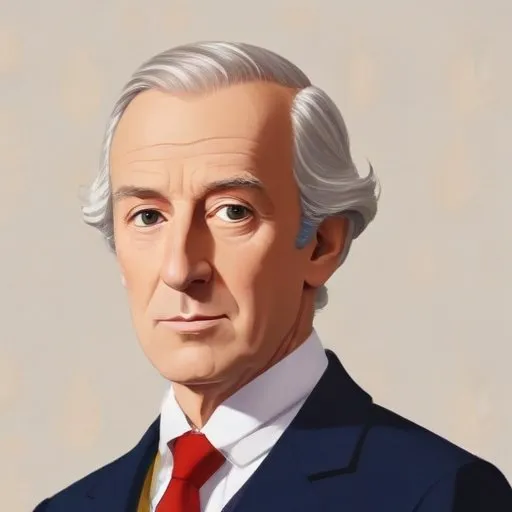
A British aristocrat and politician who served as Lord Chamberlain of the Household, overseeing the royal household and ceremonies. He's known for his lavish lifestyle and extravagant parties.
William Cavendish, 6th Duke of Devonshire, is known for being a prominent Whig politician, courtier, and English peer, as well as for his remarkable contributions to gardening and horticulture. His legacy is forever etched in history as the namesake of the Cavendish banana, a testament to his enduring impact on the world of botany.
Born on May 21, 1790, in Paris, France, Devonshire was the son of William Cavendish, 5th Duke of Devonshire, and Lady Georgiana, daughter of John Spencer, 1st Earl Spencer. He received his education at Harrow and Trinity College, Cambridge, setting the stage for his future success.
Following in the Whig family tradition, Devonshire supported Catholic emancipation, the abolition of slavery, and reduced factory working hours. He served as Lord Chamberlain of the Household under George Canning and Lord Goderich between 1827 and 1828, and again under Lord Grey and Lord Melbourne between 1830 and 1834. In 1827, he was sworn of the Privy Council and made a Knight of the Garter. Devonshire's political career was marked by his commitment to progressive ideals and his dedication to public service.
A lesser-known but equally fascinating aspect of Devonshire's life was his passion for gardening and horticulture. He devoted himself tirelessly to the care and nurture of his vast estates, undertaking ambitious projects such as the wholesale rebuilding of the village of Edensor and significant improvements to his stately houses and their gardens. His friendship with Sir Joseph Paxton, a renowned horticulturist, further solidified his reputation as a connoisseur of botany.
Despite being afflicted with deafness from an early age, which limited his participation in public life, Devonshire remained an influential figure in British society. He held the office of Lord Lieutenant of Derbyshire between 1811 and 1858 and carried the globus cruciger at George IV's coronation. Devonshire's private life was marked by his bachelor status, earning him the nickname "The Bachelor Duke."
William Cavendish, 6th Duke of Devonshire, left an indelible mark on British history, politics, and horticulture. His commitment to progressive ideals, his dedication to public service, and his passion for botany have cemented his place as a notable figure of the 19th century. The Cavendish banana, a testament to his enduring impact, remains a cherished symbol of his lasting legacy.
Born in 1759
Prime Minister of the United Kingdom from 1783 to 1801 and 1804 to 1806, known for leading the country through the French Revolutionary and Napoleonic Wars.
Born in 1749
A prominent 18th-century politician who championed individual liberties and opposed British imperialism, known for his charismatic oratory skills and influential foreign policy decisions.
Born in 1770
A skilled lawyer and politician who served as Prime Minister of the United Kingdom, known for his strong oratory skills and brief but influential tenure in office.
Born in 1762
The only British Prime Minister to be assassinated, he served from 1809 to 1812 and is known for his strong leadership during the Napoleonic Wars.
Born in 1788
A British politician who served as Prime Minister and is credited with establishing the modern police force and repealing the Corn Laws, a major trade restriction. He's also known for his role in shaping the Conservative Party.
