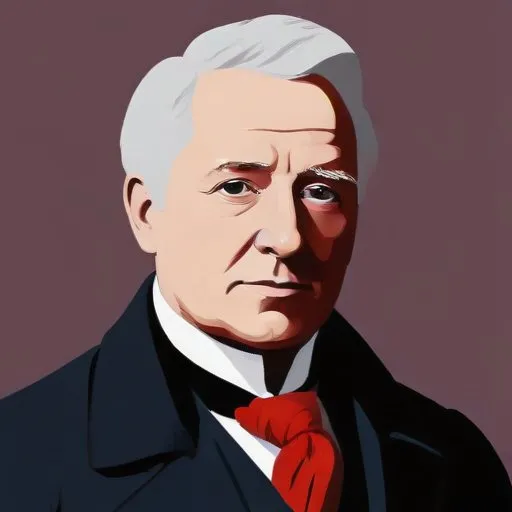
William Cobbett

William Cobbett

William Cobbett was born on March 9th, 1763

Full Name: William Cobbett
Place of Birth: Farnham, England
Profession: English Journalist and Author
Known For: Rural Rides
Nationality: English
Birth Year: 1763
Death Year: 1835
Occupation: Journalist and Author

A pioneering journalist and author who championed rural life and social reform through his writings, particularly in his book "Rural Rides".

Written by: Penelope Wildwood Penelope Wildwood

The Radical Reformer: William Cobbett's Fight for justice and Agrarian Reform

William Cobbett, a prominent English radical, pamphleteer, journalist, politician, and farmer, is renowned for his tireless efforts to reform Parliament, abolish rotten boroughs, and ease poverty among farm laborers and small land holders. His writings and activism played a significant role in shaping the Reform Act of 1832, earning him a seat in Parliament for the borough of Oldham.

Early Life and Upbringing

Rise to Prominence

In 1783, Cobbett joined the 54th West Norfolk Regiment of Foot and was stationed in New Brunswick, Canada, where he improved his knowledge of English grammar in his spare time. Upon his return to England, he worked as a clerk and later began writing pamphlets, criticizing the English government and advocating for reform.

Notable Works and Contributions

  • Rural Rides (1830): Cobbett's most famous book, in which he argued against Malthusianism, proposing that economic betterment could support global population growth.
  • Paper Against Gold (1810): A pamphlet that criticized the British government's decision to abandon the gold standard.
  • The Parliamentary History of England (1806-1820): A 36-volume work that chronicled the history of the English parliament.

Philosophical Contributions and Beliefs

Cobbett was a staunch advocate for agrarian reform, believing that the key to economic prosperity lay in the improvement of agriculture. He opposed the enclosure movement, which he saw as a means of disenfranchising small landholders, and advocated for lower taxes, saving, and the return to the gold standard.

Influence on Modern Society

Cobbett's radical ideas and activism played a significant role in shaping the Reform Act of 1832, which aimed to redistribute electoral seats and reduce corruption. His writings also influenced the development of the labor movement and the struggle for democracy in England.

Personal Milestones and Key Life Events

  • 1783: Cobbett joined the 54th West Norfolk Regiment of Foot and was stationed in New Brunswick, Canada.
  • 1802: He was imprisoned for two years for criticizing the government's handling of a mutiny in the British Navy.
  • 1832: Cobbett was elected to Parliament for the borough of Oldham, a testament to his dedication to reform.

Legacy and Historical Context

William Cobbett's tireless efforts to reform Parliament, advocate for agrarian reform, and promote democracy left an indelible mark on English history. His writings and activism served as a catalyst for change, paving the way for future generations of reformers and social justice advocates.

Timeline
1763
Born in Farnham
William Cobbett was born in Farnham, England, and would go on to become a prominent journalist and author.
1783
Enlists in British Army
Cobbett enlisted in the British Army, where he served for several years before becoming disillusioned with military life.
1792
Publishes Political Register
Cobbett founded the Political Register, a weekly newspaper that became a platform for his radical views on politics and social justice.
1820
Writes Rural Rides
Cobbett published Rural Rides, a series of essays on rural life and politics in England.
1835
Dies in Normandy
William Cobbett passed away in Normandy, France, leaving behind a legacy as a pioneering journalist and author.
William Cobbett

William Cobbett Quiz

What was the primary focus of William Cobbett's book "Rural Rides"?

Score: 0/5
FAQ
What was William Cobbetts role in shaping British politics?
William Cobbett was a prominent English journalist and author who played a significant role in shaping British politics in the early 19th century. He was a vocal critic of government corruption and advocated for social reform.
What is William Cobbetts most famous work?
William Cobbetts most famous work is Rural Rides, a series of essays that describe his travels through rural England and critique the social and economic conditions of the time.
What were William Cobbetts views on social reform?
William Cobbett was a passionate advocate for social reform, particularly in the areas of agricultural labor and poverty relief. He believed that the government had a responsibility to protect the welfare of its citizens and promote social justice.
How did William Cobbetts writing style influence journalism?
William Cobbetts writing style, which was marked by its clarity, simplicity, and humor, influenced a generation of journalists and writers. He is credited with helping to establish the format of modern journalism.
What is William Cobbetts legacy in British history?
William Cobbett is remembered as a pioneering journalist and social reformer who helped to shape British politics and culture in the early 19th century. His writing remains widely read and studied today.

Related People:

Thomas Paine

Born in 1737

A founding father of American democracy, he penned influential writings that fueled the American Revolution and shaped modern democracy. His ideas still resonate in contemporary politics.

John Wilkes

Born in 1725

A pioneering advocate for press freedom and a vocal critic of government corruption, known for his fearless journalism and radical politics.

Charles James Fox

Born in 1749

A prominent 18th-century politician who championed individual liberties and opposed British imperialism, known for his charismatic oratory skills and influential foreign policy decisions.

William Pitt the Younger

Born in 1759

Prime Minister of the United Kingdom from 1783 to 1801 and 1804 to 1806, known for leading the country through the French Revolutionary and Napoleonic Wars.

George III of the United Kingdom

Born in 1738

The British monarch who ruled during the American Revolution, losing the colonies, and later suffered a mental illness that led to a regency crisis. He's also known for his cultural and artistic patronage.

Napoleon Bonaparte

Born in 1769

A French military leader who rose to prominence during the French Revolution and became Emperor of France, known for his military conquests and reorganization of Europe. He is also famous for his Napoleonic Code, which remains a foundation of modern law.

Samuel Johnson

Born in 1846

A Nigerian priest and historian who wrote the first comprehensive history of the Yoruba people, providing valuable insights into their culture and traditions.

Edmund Burke

Born in 1729

An 18th-century thinker who shaped modern conservatism, advocating for gradual social change and warning against the dangers of radical revolution. He's also known for his philosophical writings on aesthetics and the sublime.