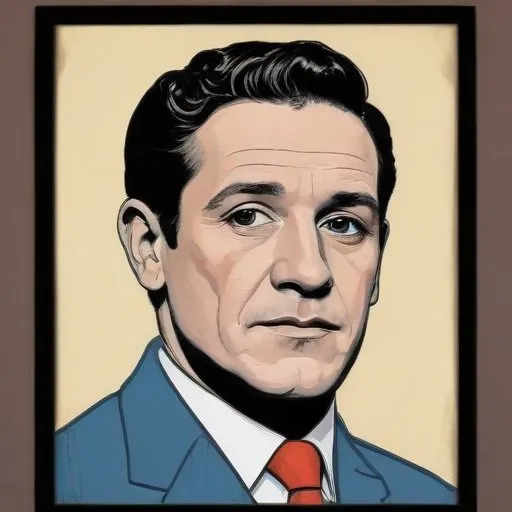
William Congdon: The American Painter Who Captivated Europe
A Life Devoted to Art
William Congdon, an American painter, is renowned for his captivating artistry, which earned him recognition in New York City in the 1940s. As an artist, Congdon's work was characterized by its unique blend of abstraction and figuration, which continue to inspire art enthusiasts to this day.
Early Life and Education
Born on April 15, 1912, in Providence, Rhode Island, Congdon was the second child of Gilbert Maurice Congdon and Caroline Rose Grosvenor. His family's affluent background, with his father's dealings in iron, steel, and metals, and his mother's family's textile manufacturing business, provided him with a privileged upbringing. Congdon's education at St. Mark's School of Southborough, Massachusetts, laid the foundation for his future academic pursuits. He then went on to study English literature at Yale University, graduating in 1934.
Artistic Development
Congdon's artistic journey began in Provincetown, where he took painting lessons with Henry Hensche for three years. He further honed his skills with George Demetrios in Boston and Gloucester, and later at the Pennsylvania Academy of the Fine Arts in Philadelphia.
Wartime Experience and Inspirations
During World War II, Congdon served as a volunteer ambulance driver with the American Field Service, committing three years of service. His experiences during the war, including his time with the British 9th Army in Syria, the British 8th Army in North Africa and Italy, and his encounter with the Nazi death camp of Bergen Belsen, deeply influenced his art.
Artistic Career
Congdon's artistic career spanned several decades, during which he produced an impressive body of work that showcased his unique style. His paintings often featured abstract forms, vibrant colors, and a sense of spontaneity. Despite spending most of his life in Europe, Congdon's work remained deeply rooted in his American heritage.
Philosophical Contributions and Beliefs
Congdon's art was not only aesthetically pleasing but also carried deep philosophical undertones. His work often explored the human condition, reflecting his thoughts on existence, morality, and the human experience.
Influence on Modern Society
Congdon's contributions to the art world have had a lasting impact on modern society. His innovative approach to art has inspired generations of artists, and his work continues to be celebrated in exhibitions and collections around the world.
Personal Milestones and Key Life Events
- 1912: Born in Providence, Rhode Island
- 1934: Graduated from Yale University
- 1942: Signed a one-year contract as a volunteer ambulance driver with the American Field Service
- 1945: Witnessed the liberation of the Nazi death camp of Bergen Belsen
- 1998: Passed away on April 15, at the age of 86
Legacy
William Congdon's remarkable life and artistic career have left an indelible mark on the world of art. His unique style, philosophical insights, and wartime experiences have cemented his place as one of the most fascinating American artists of the 20th century.
FAQ
What type of art did William Congdon create?
Congdon was an American-Italian painter and sculptor, known for his abstract and figurative works, which often blended elements of Cubism, Surrealism, and Expressionism.
How did William Congdons travels influence his art?
Congdons extensive travels to Europe, Africa, and Asia exposed him to diverse artistic traditions and inspired his own unique style. He drew inspiration from the landscapes, cultures, and people he encountered.
What was William Congdons approach to art education?
Congdon believed in the importance of artistic expression and exploration. He taught art in various institutions, emphasizing the development of individual creativity and vision.
How did William Congdons art reflect his spiritual beliefs?
Congdons art often expressed his deep spiritual convictions, reflecting his interests in mysticism, symbolism, and the human condition. His works frequently featured abstracted forms, mystical symbols, and allusions to sacred texts.
What is William Congdons legacy in modern art?
Congdons innovative style, which blended international influences and artistic traditions, has influenced generations of artists, solidifying his position as a vital contributor to modern art.