


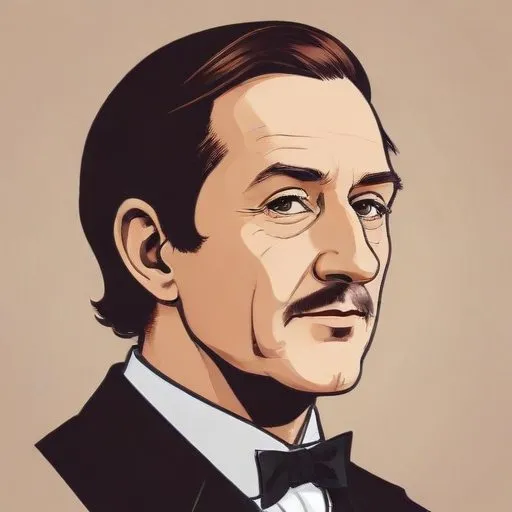
Developed pioneering work in radio communication, contributing significantly to the development of radio telephony and broadcasting. His innovations paved the way for modern wireless communication systems.
William Henry Eccles, a British physicist, is renowned for his groundbreaking contributions to the development of radio communication, earning him a place among the pioneers of this field. His work laid the foundation for the understanding of the Earth's atmosphere, paving the way for modern radio communication systems.
Born on August 23, 1875, in Barrow-in-Furness, Lancashire, England, Eccles graduated from the Royal College of Science, London, in 1898. He went on to receive his doctorate from the same institution in 1901.
Eccles was a strong advocate of Oliver Heaviside's theory that a conducting layer of the upper atmosphere could reflect radio waves around the curvature of the Earth, enabling their transmission over long distances. This region of the Earth's atmosphere, initially known as the Kennelly-Heaviside layer, later became known as the ionosphere. Eccles' work on the ionosphere led him to suggest that solar radiation was responsible for the observed differences in radio wave propagation during the day and night.
Eccles' inventions and discoveries had a significant impact on the development of radio communication. He coined the term "diode" to describe an evacuated glass tube containing two electrodes, an anode and a cathode. Additionally, he carried out experiments on atmospheric disturbances of radio waves, using wave detectors and amplifiers in his work.
In 1918, Eccles collaborated with F.W. Jordan to patent the flip-flop circuit, which became the basis of electronic memory in computers. This innovation revolutionized the field of electronics and paved the way for the development of modern computers.
After World War I, Eccles' primary focus shifted to electronic circuit development. He played a crucial role in the design of the first long-wave radio station and was involved in the early work of the British Broadcasting Company (BBC) following its establishment in 1922. Eccles served as the vice-chairman of the Imperial Wireless Committee in 1919.
Eccles was a Fellow of the Royal Society (FRS) and held several prestigious positions, including President of the Physical Society (1928-1930), President of the Institution of Electrical Engineers (IEE) in 1926, and President of the Radio Society of Great Britain (RSGB) in 1923-1924.
William Eccles' work had a profound impact on the development of radio communication, electronics, and computer science. His innovative contributions, including the discovery of the ionosphere and the invention of the flip-flop circuit, continue to influence modern technology. Eccles passed away on April 29, 1966, in Oxford, leaving behind a legacy that shapes the world of communication today.
William Eccles' remarkable achievements and contributions have left an indelible mark on the world of science and technology. His work continues to inspire and influence generations of scientists, engineers, and innovators.
Born in 1874
Developer of the first practical wireless telegraph, pioneering radio communication and earning a Nobel Prize in Physics. Known for revolutionizing long-distance communication.
Born in 1851
Developed key theories on electromagnetic radiation and invented the first wireless telegraph, paving the way for modern communication systems.
Born in 1831
Developed groundbreaking theories that unified electricity and magnetism, and predicted the existence of radio waves, revolutionizing our understanding of the physical world.
Born in 1857
A pioneer in the field of electromagnetism, he discovered radio waves and proved James Clerk Maxwell's theories, paving the way for modern wireless communication. His experiments led to the development of radio, television, and mobile phones.
Born in 1856
A pioneering engineer who harnessed the power of alternating current (AC) to transform the world's electrical systems, and is credited with developing groundbreaking technologies like radio communication and X-ray imaging.
Born in 1847
A pioneer in innovation, credited with developing groundbreaking inventions that revolutionized the way people live and communicate, including the light bulb and phonograph.
Born in 1849
Developed the first practical vacuum tube, known as the diode, which revolutionized electronics and paved the way for modern technology.
