


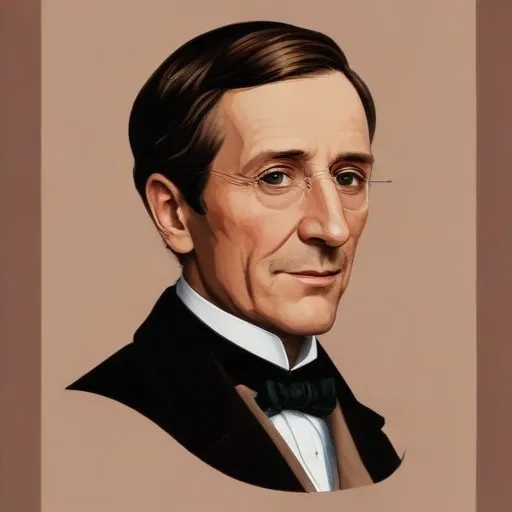
A mathematician and academic who made significant contributions to the development of mathematics, particularly in the fields of geometry and trigonometry, and wrote influential textbooks on these subjects.
William Emerson, an English mathematician, is famously known for his groundbreaking works in the field of mathematics, particularly in the study of fluxions, and his innovative designs for machines and mechanisms. His publication, "The Doctrine of Fluxions" in 1748, showcased his remarkable understanding of mathematical concepts and his ability to apply them to real-world problems.
Born on May 14, 1701, in Hurworth, near Darlington, William Emerson was the son of Dudley Emerson, a mathematician and teacher. Growing up in an environment that fostered a love for learning, Emerson developed a strong foundation in mathematics, which would later become the cornerstone of his life's work.
Emerson's most notable contribution to mathematics is his work on fluxions, a precursor to calculus. His book, "The Doctrine of Fluxions," presented a comprehensive treatment of the subject, showcasing his exceptional mathematical skills and innovative thinking. Emerson's work in this area laid the foundation for later mathematicians, including Isaac Newton, to build upon.
Emerson's curiosity and creativity extended beyond mathematics to the realm of machines and mechanisms. He designed a wind-powered vehicle, depicted in his book "The Principles of Mechanics" (1754), which showcased his ingenuity and problem-solving skills. This innovative design featured a vertically mounted propeller that provided direct power to the front wheels via a system of cogs.
Despite his remarkable achievements, Emerson lived a simple and frugal life. He was known for his uncouth manners, dressing in old clothes, and his unconventional habits, such as wearing his shirt back to front and wrapping his legs in sacking to protect them from the fire. Emerson's humility and lack of concern for material possessions are a testament to his focus on knowledge and personal growth.
William Emerson's contributions to mathematics and innovation have left a lasting impact on the scientific community. Although he declined an offer to become a Fellow of the Royal Society (FRS) due to the cost, his work continues to inspire and influence mathematicians and scientists to this day. His unique personality and story have also captured the imagination of writers, including Thomas Pynchon, who featured him in his novel "Mason and Dixon."
William Emerson's remarkable life and achievements serve as a testament to the power of innovation, creativity, and a passion for learning. His legacy continues to inspire and influence future generations of mathematicians, scientists, and thinkers.
Born in 1656
Predicted celestial events, including the return of a comet that bears his name, and made significant contributions to navigation, astronomy, and mathematics.
Born in 1736
Developed calculus, number theory, and celestial mechanics, making significant contributions to the fields of mathematics and astronomy.
Born in 1749
Developed nebular hypothesis of the origin of the solar system and formulated Laplace's equation, a fundamental concept in mathematics and physics. He's considered the founder of celestial mechanics.
Born in 1752
Developed the theory of elliptic integrals, and his work on number theory laid the foundation for modern cryptography.
Born in 1777
A pioneer in mathematics and physics, he made major contributions to number theory, algebra, and electromagnetism, shaping our understanding of the natural world.
Born in 1806
Developed the De Morgan's laws, which are fundamental principles in logic and set theory, and made significant contributions to the development of modern mathematics.
