


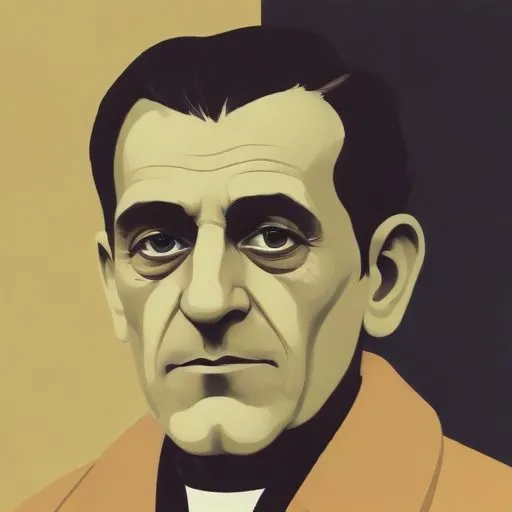
Developed a moral philosophy that emphasized the importance of moral principles and values, and was a prominent figure in the development of analytic philosophy. 21
William Frankena was a renowned American moral philosopher, best known for his profound contributions to the field of ethics and his 41-year tenure at the University of Michigan's department of philosophy. His work had a significant impact on modern moral philosophy, shaping the way scholars think about ethics and morality.
Frankena was born on June 21, 1908, in Manhattan, Montana, to Dutch immigrant parents. He grew up in small Dutch communities in Montana and western Michigan, speaking West Frisian and Dutch fluently. After graduating from Holland Christian High School in 1926, he went on to pursue a Bachelor's degree in English and philosophy from Calvin College, a liberal arts college of the Christian Reformed Church.
Frankena's academic journey continued at the University of Michigan, where he earned an M.A. in 1931. He then moved to Harvard University, earning another M.A. and a Ph.D. in 1937. During his time at Harvard, he studied under the guidance of prominent philosophers, including C. I. Lewis, Ralph Barton Perry, and Alfred North Whitehead. His doctoral dissertation, "Recent Intuitionism in British Ethics," focused on the work of G.E. Moore.
Frankena's academic career spanned over four decades, during which he taught at the University of Michigan's department of philosophy. He served as the chair of the department for 14 years, from 1947 to 1961. His work centered around moral philosophy, ethics, and value theory. He published numerous papers and books, including "Ethics" (1963) and "Thinking about Morality" (1980).
Frankena's philosophical contributions were significant, and he is often credited with helping to shape the field of moral philosophy. He was known for his work on moral intuitionism, which posits that moral truths are known through intuition rather than reason. His work also explored the nature of moral judgments, the concept of moral responsibility, and the relationship between morality and human well-being.
Frankena received several awards and honors for his contributions to philosophy. He was a fellow of the American Academy of Arts and Sciences and a member of the National Academy of Education. In 1967, he was awarded the Aquinas Medal by the American Catholic Philosophical Association.
Frankena's personal life was marked by tragedy, including the loss of his mother at the age of nine. He remained close to his family and was known as "Bill" to his friends and colleagues. Throughout his life, he was committed to his faith, serving as an elder in the Christian Reformed Church in North America.
William Frankena's legacy extends beyond his academic achievements. He was a mentor to many students, including several prominent philosophers, and his work continues to influence moral philosophy today. His commitment to his faith and his community serves as an inspiration to scholars and individuals alike.
Frankena's philosophical insights are often quoted and remembered. One of his most notable quotes is: "Morality is a thing of the heart, not of the head." This quote encapsulates his emphasis on moral intuitionism and the importance of emotional engagement in moral decision-making.
Through his work and legacy, William Frankena continues to inspire new generations of philosophers and scholars. His contributions to moral philosophy have left an indelible mark on the field, ensuring his place as one of the most important moral philosophers of the 20th century.
Born in 1921
Developed the concept of "justice as fairness" and argued that a just society should be based on principles that would be agreed upon by rational individuals behind a "veil of ignorance".
87 Years Old
A renowned philosopher who challenged traditional notions of justice, morality, and the role of government, known for his influential book "Anarchy, State, and Utopia".
97 Years Old
A philosopher who challenged modern moral philosophy by arguing that morality is rooted in tradition and community, and that we need to revive the Aristotelian concept of virtues to live a good life.
79 Years Old
A renowned philosopher and author, known for her work on ethics, politics, and human emotions, particularly in the areas of feminism, liberalism, and animal rights. Her writings have explored the complexities of human experience and the importance of empathy and compassion.
80 Years Old
A prominent ethicist and animal rights advocate, known for his influential ideas on effective altruism and the obligation to help those in need.
89 Years Old
A prominent philosopher and academic who challenged traditional views on consciousness, morality, and the nature of reality, known for his provocative and influential writings on the human experience.
97 Years Old
A moral philosopher who challenged traditional ethics and explored the complexities of human identity, known for his critiques of moral theory and advocacy for a more nuanced understanding of human experience.
Born in 1905
Russian-born American novelist and philosopher who wrote influential novels like "The Fountainhead" and "Atlas Shrugged", promoting individualism and capitalism.
