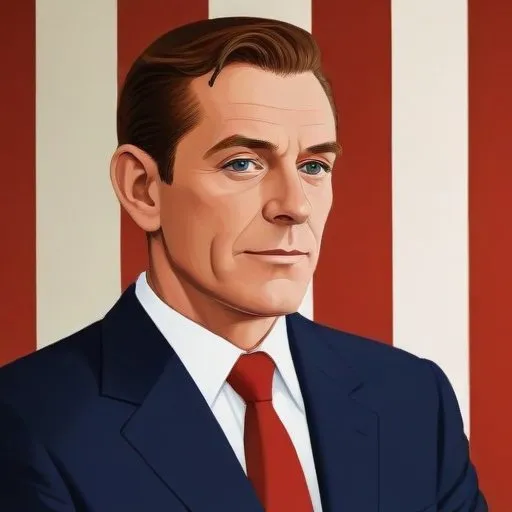
William H. Osborn: The Railroad Tycoon Turned Philanthropist
A Legacy of Steel and Art
William H. Osborn was a man of immense influence, whose name is synonymous with the golden age of American railroads. As the head of the Illinois Central Railroad and later the Chicago, St. Louis and New Orleans Railroad, he became one of the most prominent railroad leaders in the United States. With a career spanning over three decades, Osborn left an indelible mark on the nation's transportation landscape.
The Early Years
Born on December 21, 1820, in Salem, Massachusetts, Osborn was the son of William Osborn and Lucy ne Bowditch Osborn. His family's roots in America dated back to 1684, when his first paternal American ancestor, William Osborn, settled in Salem from England. Osborn's maternal family, the Bowditches, were also notable, with
Nathaniel Bowditch, a renowned navigator, being a probable ancestor.
A Career on the Rails
Osborn's career began with the Boston East India shipping company, but it was his stint in Manila as a junior partner in the firm of Peel, Hubbell & Co. that laid the foundation for his future success. In 1854, he took a financial interest in the Illinois Central Railroad, which was on the verge of bankruptcy due to the Schuyler frauds. Osborn's leadership and business acumen helped turn the railroad around, and he eventually became its president in 1855, a position he held until 1865.
Philanthropy and Art
Osborn's love for art was evident in his patronage of the painter
Frederic Edwin Church, whose works he avidly collected. His Rhenish-style home, Castle Rock, in Garrison, New York, was a testament to his appreciation for beauty and aesthetics.
Legacy and Impact
Osborn's legacy extends beyond the world of railroads. His two sons, William Church Osborn and Henry Fairfield Osborn, went on to become presidents of prominent museums in New York City – the Metropolitan Museum of Art and the American Museum of Natural History, respectively. His philanthropic efforts, particularly in the Hudson Highlands, continue to inspire generations.
Personal Milestones and Key Life Events
- December 21, 1820: Born in Salem, Massachusetts
- 1841: Goes to Manila as a junior partner in the firm of Peel, Hubbell & Co.
- 1854: Takes a financial interest in the Illinois Central Railroad
- 1855: Becomes president of the Illinois Central Railroad
- 1865: Steps down as president of the Illinois Central Railroad
- 1875-1882: Involved with the Chicago, St. Louis and New Orleans Railroad
- 1882: Retires from the railroad business to concentrate on philanthropy
- March 2, 1894: Passes away
Quirks and Facts
- Osborn's Rhenish-style home, Castle Rock, was purchased in 1859 and became a hub for his philanthropic activities.
- He was an avid art collector and patron of the arts, particularly Frederic Edwin Church.
- Osborn's family has a long history in America, dating back to 1684.
A Lasting Impact
William H. Osborn's life was a testament to the power of hard work, innovation, and philanthropy. As a railroad tycoon, he played a crucial role in shaping America's transportation landscape. As a patron of the arts and a philanthropist, he left a lasting impact on the cultural and social fabric of the nation. His legacy continues to inspire generations, a reminder of the transformative power of vision and leadership.
FAQ
What was William H. Osborns role in American business?
William H. Osborn was an American businessman who played a significant role in the development of American industry, particularly in the areas of transportation and shipping.
What companies did William H. Osborn found?
Osborn founded several companies, including the Illinois Central Railroad and the Chicago, Burlington, and Quincy Railroad.
What was William H. Osborns involvement in the Chicago, Burlington, and Quincy Railroad?
Osborn was a key figure in the development of the Chicago, Burlington, and Quincy Railroad, which became one of the largest and most successful railroads in the United States.
What philanthropic activities was William H. Osborn involved in?
Osborn was involved in various philanthropic activities, including supporting education and healthcare initiatives.
What legacy did William H. Osborn leave behind?
Osborns legacy is that of a pioneering businessman who contributed significantly to the growth and development of American industry.