


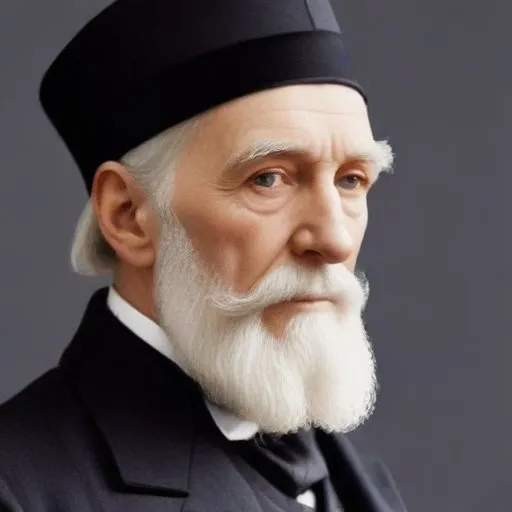
Discovered the first synthetic dye, mauveine, and pioneered the development of synthetic dyes, revolutionizing the textile industry. His work had a significant impact on fashion, art, and industry.
Sir William Henry Perkin is best known for his serendipitous discovery of the first commercial synthetic organic dye, mauveine, made from aniline. This groundbreaking finding at the tender age of 18 catapulted Perkin to fame and changed the face of the fashion industry forever.
Perkin was born on March 12, 1838, in the East End of London, as the youngest of seven children to George Perkin, a successful carpenter, and Sarah, of Scottish descent. His early years were marked by a strong inclination towards science, which was nurtured by his teacher, Thomas Hall, at the City of London School.
In 1853, Perkin entered the Royal College of Chemistry, where he began his studies under the renowned chemist August Wilhelm von Hofmann. Hofmann had published a hypothesis on synthesizing quinine, a natural substance used to treat malaria. Perkin, determined to crack the code, conducted a series of experiments, but it was during one of these attempts that he stumbled upon mauveine.
The discovery was a happy accident, and Perkin soon realized the potential of his finding. He set up a factory to produce the dye on a large scale, and mauveine quickly became a sensation in the fashion world.
Perkin's discovery had far-reaching consequences, transforming the fashion industry and paving the way for the development of modern synthetic materials. His work also had significant economic and social impacts, creating new job opportunities and changing the way people lived and dressed.
Perkin was knighted in 1906 for his services to chemistry, a testament to his contributions to the field.
Sir William Henry Perkin's discovery of mauveine will always be remembered as a turning point in the history of chemistry and fashion. His legacy continues to inspire future generations of scientists, entrepreneurs, and fashion enthusiasts alike.
William Henry Perkin's story serves as a reminder that even the most unexpected events can lead to life-changing discoveries, and that perseverance and determination can take us farther than we ever thought possible.
Born in 1800
German chemist and academic who synthesized urea, debunking the theory of vitalism, and made significant contributions to organic chemistry. He is considered one of the founders of modern organic chemistry.
Born in 1818
Developed the theory of chemical structure and introduced the concept of synthetic chemistry, revolutionizing the field of organic chemistry.
Born in 1835
German chemist and Nobel laureate who synthesized barbituric acid and developed the theory of organic dyes, revolutionizing the textile industry. His work laid the foundation for modern dye chemistry.
Born in 1835
Developed theories on stereochemistry and introduced the concept of asymmetric carbon atoms, revolutionizing organic chemistry.
