


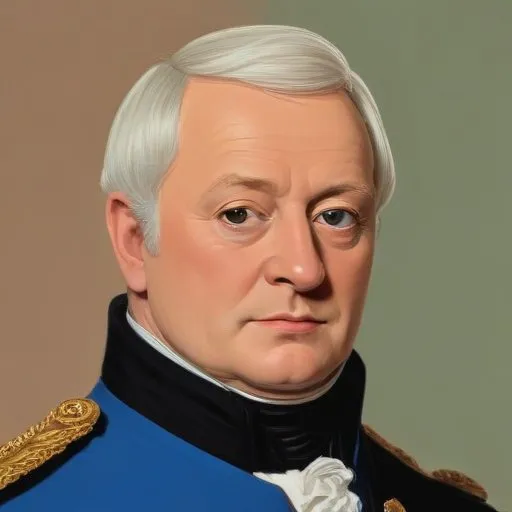
A 16th-century German nobleman who ruled Hesse-Kassel and was a prominent figure in the Protestant Reformation, known for his military campaigns and territorial expansions. He also supported the arts and architecture, commissioning notable buildings and projects.
William IV, also known as William the Wise, is renowned for his pioneering efforts in astronomy and his unwavering support for the Lutheran Reformation. As the first Landgrave of the Landgraviate of Hesse-Kassel, he left an indelible mark on the scientific and religious landscape of his time.
Born on June 24, 1532, in Kassel, Germany, William IV was the eldest son of Landgrave Philip the Magnanimous and Christine of Saxony. Following his father's death in 1567, he inherited the Landgraviate of Hesse-Kassel and dedicated his life to safeguarding the Lutheran Reformation and promoting scientific discovery.
William IV's passion for astronomy led to significant breakthroughs in the field. He was an avid patron of scholars and astronomers, and his court attracted some of the most prominent minds of the time. His interest in astronomy was reportedly inspired by Petrus Apianus's Astronomicum Caesareum.
One of his most notable achievements was the establishment of a sophisticated astronomical observatory in Kassel, where he employed expert astronomers to conduct precise observations. The instruments used in this observatory were among the most advanced of their time, influenced by the works of Tycho Brahe. The observations made in Hesse-Kassel were remarkably accurate, paving the way for future discoveries.
William IV's astronomical endeavors culminated in the creation of the Hessian Star Catalogue, a comprehensive and accurate compilation of celestial observations. This catalogue was a testament to his dedication to scientific progress and his role as a pioneer in astronomical research.
In addition to his scientific pursuits, William IV played a significant role in promoting the Lutheran Reformation. He took a leading part in uniting Protestant factions against Catholicism, although he was cautious in his approach, preferring dialogue over military force.
As an able administrator, William IV implemented numerous reforms, issuing ordinances and appointing expert officials to manage his slender finances. He also introduced a law of primogeniture to prevent the fragmentation of his land, ensuring the stability and prosperity of his Landgraviate.
William IV's contributions to astronomy, the Reformation, and administration have left a lasting impact on the world. He was a true Renaissance figure, whose passion for knowledge and faith inspired countless others to strive for excellence. His legacy continues to be felt, as a testament to the power of human ingenuity and dedication.
Born in 1504
A German nobleman who ruled Hesse from 1509 to 1567, known for being a champion of the Protestant Reformation and a key figure in the Schmalkaldic League.
Born in 1602
A 16th-century German nobleman who ruled Hesse-Kassel and played a significant role in the Protestant Reformation, known for his military campaigns and territorial expansions.
Born in 1602
A 16th-century German nobleman who ruled Hesse-Kassel and played a significant role in the Protestant Reformation, known for his military campaigns and territorial expansions.
