


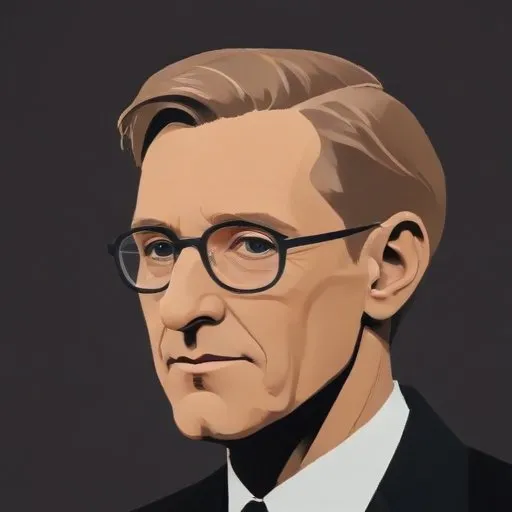
Developed influential theories on learning and memory, including the theory of stimulus sampling, which explains how we process and retain information.
William Kaye Estes, one of the most influential psychologists of the 20th century, is renowned for developing the Stimulus Sampling Theory, a groundbreaking concept that revolutionized our understanding of learning phenomena. Estes' work has had a lasting impact on the field of psychology, earning him a spot as the 77th most cited psychologist of the 20th century.
Estes was born on June 17, 1919, and grew up with an innate curiosity about the human mind. He pursued his undergraduate degree at the University of Minnesota, where he was mentored by Richard M. Elliott. Estes continued his graduate studies at the same institution, working under the guidance of B. F. Skinner, with whom he developed the conditioned suppression paradigm.
After completing his doctorate, Estes joined Skinner on the faculty of Indiana University, marking the beginning of a remarkable academic journey. His contributions to mathematical learning theory earned him recognition, and he went on to teach at Stanford University, Rockefeller University in New York, and Harvard University. During his tenure at Harvard, Estes played a pivotal role as the first editor of Psychological Science, a publication of the Association for Psychological Science. He also served as editor of Psychological Review from 1977 to 1982.
Estes' most notable contribution to learning theory is the Stimulus Sampling Theory, which posits that learning involves establishing associations between hypothetical stimulus elements randomly drawn from a pool of elements characteristic of a particular learning situation. This theory predicts probability matching, a phenomenon observed in numerous studies.
Estes' remarkable contributions to psychology earned him numerous awards and honors. He was elected as a member of the National Academy of Sciences, the American Academy of Arts and Sciences, and the American Philosophical Society.
William Kaye Estes' work has had a profound impact on our understanding of human learning and behavior. His Stimulus Sampling Theory continues to influence research in psychology, education, and neuroscience. Estes' legacy extends beyond his academic contributions, inspiring generations of scholars to pursue careers in psychology.
Estes' academic pursuits were intertwined with his personal life. He married his wife, Janet, in 1942, and they had three children together. After retiring from Harvard, Estes returned to Bloomington, Indiana, where he remained active in academics, becoming a professor emeritus at Indiana University.
Estes' wisdom extends beyond his academic contributions. One of his most memorable quotes is, "Learning is a process of accumulating distinct stimulus-response pairings."
Estes' work was influenced by the intellectual climate of his time, which saw a growing interest in mathematical and statistical approaches to psychology. His legacy is a testament to the power of interdisciplinary approaches to understanding human behavior.
Estes' contributions to psychology are often compared to those of his contemporaries, such as B. F. Skinner and Clark Hull. While each of these scholars made significant contributions to the field, Estes' work stands out for its emphasis on mathematical and statistical approaches.
Estes' relationships with his mentors and colleagues played a significant role in shaping his academic career. His collaboration with B. F. Skinner, in particular, was instrumental in developing the conditioned suppression paradigm.
William Kaye Estes passed away on August 17, 2011, leaving behind a rich legacy of contributions to psychology and education. His work continues to inspire researchers, educators, and scholars around the world.
Born in 1904
Developed the theory of operant conditioning, which explores the relationship between behavior and environment, and invented the "Skinner box" to study learning and behavior.
Born in 1636
A Catholic courtier who served under King Charles II, known for his involvement in the Popish Plot, a fabricated conspiracy that led to widespread anti-Catholic hysteria in England.
Born in 1879
Founded the school of behaviorism, which focused on observable behaviors rather than internal thoughts or feelings, and is known for his controversial "Little Albert" experiment.
Born in 1849
A Russian physiologist and physician who discovered the concept of classical conditioning, where he demonstrated that animals can learn to associate stimuli with a particular response, revolutionizing our understanding of behavior. His work laid the foundation for behavioral psychology and continues to influence fields like education and advertising.
Born in 1856
Pioneering psychoanalyst who developed theories on the subconscious mind, childhood experiences, and the structure of personality, revolutionizing our understanding of human behavior and psychology.
Born in 1896
Developed groundbreaking theories on child cognitive development and learning, emphasizing active discovery and hands-on experience. His work has shaped modern education and parenting practices.
