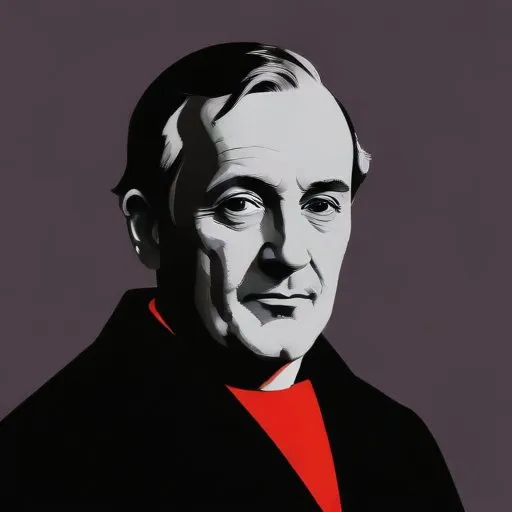
William Kneale

William Kneale

William Kneale was born on June 22nd, 1906

Nationality: English
Profession: Logician Philosopher
Place of Birth: Liverpool England
Zodiac Sign: Scorpio
Known For: Modal Logic
Notable Work: The Development of Logic
Academic Career: Oxford University
Years Active: 1920-1962

A prominent figure in the development of modern logic, known for his work on modal logic, probability, and the foundations of mathematics. His philosophical ideas have had a lasting impact on the field of logic.

Written by: Aisha Patel Aisha Patel

William Kneale: The Pioneering Logician and Philosopher

A Historian of Logic

William Kneale is renowned for his magnum opus, The Development of Logic, a comprehensive history of logic from Ancient Greece to the mid-20th century. Co-authored with his wife Martha Kneale, this seminal work has been a standard reference in the field of logic for decades.

Early Life and Education

Born on June 22, 1906, in England, William Kneale was educated at the Liverpool Institute High School for boys. He later became a fellow of Exeter College, Oxford, where he developed his interest in logic and philosophy.

The Legacy of George Boole

Kneale's early work focused on the legacy of George Boole, the 19th-century logician. His 1948 paper, "Boole and the Revival of Logic," published in the philosophy journal Mind, marked the beginning of his significant contributions to the history of logic.

A Collaborative Masterpiece

From 1947 to 1957, Kneale worked with his wife Martha to create The Development of Logic, a meticulous and exhaustive history of logic. The 800-page tome, published in 1962, covers the development of logic from ancient Greece to the mid-20th century. Martha Kneale was responsible for the chapters on ancient Greek logic, making it a truly collaborative effort.

A Standard Work in the History of Logic

The Development of Logic was the only major history of logic available in English in the mid-20th century and the first major history of logic in English since A. T. Shearman's The Development of Symbolic Logic in 1906. This treatise has been a standard work in the history of logic for decades, earning the nickname "Kneale and Kneale" in academic circles.

Philosophical Contributions

Kneale's philosophical contributions extend beyond his work on the history of logic. He wrote papers on philosophical logic, particularly on the nature of truth for natural languages and the role of linguistic concepts in the treatment of logical paradoxes. His work on probability and induction further demonstrated his expertise in the field of philosophy.

Personal Life and Legacy

In 1938, Kneale married Martha Hurst, with whom he had two children, George (born 1942) and Jane (born 1946). He succeeded J. L. Austin as the Whites Professor of Moral Philosophy in 1960 and retired in 1966. William Kneale passed away on June 24, 1990, leaving behind a lasting legacy in the realm of logic and philosophy.

Impact on Modern Society

Kneale's work on the history of logic has had a profound impact on modern society. His meticulous research and collaboration with his wife have shaped our understanding of logic and its development over the centuries. His contributions to philosophical logic and probability theory have influenced scholars and researchers across various disciplines.

Awards and Honors

Kneale's contributions to the field of logic and philosophy have been recognized through various awards and honors. His work, The Development of Logic, has undergone multiple reprints and editions, cementing its status as a seminal work in the field.

Quotes and Memorable Sayings

While Kneale's work is characterized by its rigor and depth, he has left us with a few memorable quotes that capture the essence of his philosophy:

Historical Context and Legacy

Kneale's work must be viewed in the context of the mid-20th century, when logic and philosophy were undergoing significant transformations. His contributions to the field of logic have left an indelible mark on the development of modern philosophy, making him a pioneering figure in the history of logic.
Timeline
1906
Born in Liverpool, England
William Kneale was born on June 22, 1906, in Liverpool, England. He would go on to become a prominent logician and philosopher.
1928
Earned PhD from Oxford University
Kneale earned his PhD from Oxford University in 1928, where he studied philosophy.
1937
Published first book, Probability and Induction
Kneale published his first book, Probability and Induction, in 1937, which explored the concepts of probability and induction in philosophy.
1954
Became Professor of Logic at Oxford
Kneale became the Professor of Logic at Oxford University in 1954, a position he held until his retirement.
1990
Died at age 84
William Kneale died on June 24, 1990, at the age of 84.
William Kneale

William Kneale Quiz

What area of mathematics did William Kneale significantly contribute to?

Score: 0/5
FAQ
What were William Kneales contributions to philosophy?
William Kneale made significant contributions to philosophy, particularly in the areas of logic, metaphysics, and epistemology. He was known for his work on the nature of negation and the concept of modality.
What was William Kneales work on modal logic?
William Kneales work on modal logic led to the development of a new system of modal logic, which has had a lasting impact on the field. He argued that modality should be understood in terms of possibility and necessity.
What were William Kneales views on philosophical logic?
William Kneale believed that philosophical logic should be grounded in a rigorous and systematic approach to argumentation. He argued that logic should be used to clarify and evaluate philosophical arguments.
What was William Kneales teaching career like?
William Kneale had a distinguished teaching career at Oxford University, where he taught philosophy for over 30 years. He was known for his clear and engaging teaching style, which inspired many students.
What is William Kneales legacy in philosophy?
William Kneales legacy in philosophy is that of a pioneering logician and philosopher who made significant contributions to the development of modal logic and philosophical logic. His work continues to influence philosophers and logicians to this day.

Related People:

Bertrand Russell

Born in 1872

A renowned thinker who made significant contributions to mathematics, philosophy, and social commentary, known for his influential writings on logic, ethics, and politics. He's a prominent figure in shaping modern intellectual thought.

Ludwig Wittgenstein

Born in 1889

A philosopher who challenged traditional philosophy by emphasizing the importance of language and its limits, and is famous for his philosophical ideas on logic, reality, and the nature of meaning.

Gottlob Frege

Born in 1848

Developed a formal system of logic and introduced modern mathematical notation, laying the groundwork for modern logic, mathematics, and computer science.

Alfred North Whitehead

Born in 1861

Developed groundbreaking philosophical concepts, such as process philosophy, and contributed significantly to mathematics, particularly in the fields of logic and geometry.

Frank Ramsey

95 Years Old

A pioneering basketball coach who led the 1960s Boston Celtics to multiple championships, revolutionizing the game with his innovative strategies and player development techniques.

John Maynard Keynes

Born in 1883

A pioneering economist who revolutionized modern economic theory with his groundbreaking ideas on government intervention and fiscal policy, shaping global economic policies.