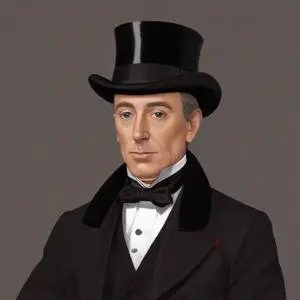
William Lamb, 2nd Viscount Melbourne: The Whig Politician Who Shaped Queen Victoria's Reign
A Legacy of Politics and Scandal
William Lamb, 2nd Viscount Melbourne, is best known for his two non-consecutive terms as Prime Minister of the United Kingdom, during which he played a significant role in shaping the early reign of
Queen Victoria. His tenure was marked by political scandals, controversy, and a complex relationship with the young monarch, earning him a lasting reputation as a shrewd and influential politician.
Early Life and Education
Born on March 15, 1779, in London, William Lamb was the son of Peniston and Elizabeth Lamb, although his paternity was often questioned due to his resemblance to George Wyndham, 3rd Earl of Egremont. Lamb received an excellent education at Eton, Trinity College, Cambridge, and the University of Glasgow, where he was a resident pupil of Professor John Millar.
A Rise to Power
Lamb's entry into politics began with his election to the House of Commons in 1806, where he quickly rose through the ranks as a member of the Whig party. He served as Home Secretary from 1830 to 1834 and was appointed Prime Minister for the first time in 1834. However, his first term was short-lived, as he was dismissed by King William IV in November of the same year, making him the last British prime minister to be removed by a monarch.
A Second Chance
Just five months later, Lamb was reappointed as Prime Minister, a position he held until 1841. During this period, he played a crucial role in guiding Queen Victoria, who was just 18 years old when she ascended to the throne. He acted as her private secretary, advising her on matters of state and politics, and earning the moniker "the Queen's mentor."
Scandals and Controversies
Lamb's relationship with Queen Victoria was not without controversy. He was accused of exerting undue influence over the monarch, and his close proximity to her sparked rumors of an improper relationship. Additionally, his involvement in several political scandals, including the Bedchamber Crisis and the Mordaunt Divorce Case, tarnished his reputation and contributed to his eventual resignation.
Legacy and Impact
Despite the controversies that surrounded him, Lamb's legacy as Prime Minister is significant. He played a crucial role in shaping the early years of Queen Victoria's reign and establishing the monarch's role in British politics. His commitment to reform and his support for the abolition of slavery have endured as lasting testaments to his impact on British history.
Personal Life and Anecdotes
- Lamb was known for his wit and charm, earning him a reputation as a skilled conversationalist and host.
- He was a member of the influential Whig party, which advocated for liberal reforms and the abolition of slavery.
- Lamb's personal relationships were often tumultuous, and he was involved in several high-profile scandals throughout his career.
Quotes and Memorable Sayings
- "I wish I could be as confident of the happiness of the country as I am of the happiness of the Queen." – William Lamb, 2nd Viscount Melbourne
Historical Context andLegacy
William Lamb, 2nd Viscount Melbourne, played a significant role in shaping the course of British history during the 19th century. His commitment to reform, his support for the abolition of slavery, and his influence on Queen Victoria's reign have endured as lasting testaments to his impact on British politics. Despite the controversies that surrounded him, Lamb remains an important figure in British history, and his legacy continues to be felt to this day.
FAQ
What was William Lambs role in the British government?
William Lamb, 2nd Viscount Melbourne, played a key role in the British government, serving as Prime Minister of the United Kingdom and leading the Whig party.
How did William Lambs government impact the British economy?
William Lambs government implemented several reforms that impacted the British economy, including the reform of the Corn Laws and the establishment of the Poor Law Commission.
What was William Lambs relationship like with Queen Victoria?
William Lamb had a close and influential relationship with Queen Victoria, serving as her trusted advisor and guiding her through the early years of her reign.
How did William Lambs government address the issue of slavery?
William Lambs government took steps to address the issue of slavery, including the abolition of slavery in the British Empire and the establishment of a committee to oversee the emancipation of slaves.
What is William Lambs legacy in British history?
William Lambs legacy in British history is that of a significant figure in the development of the British government and economy, and a key advisor to Queen Victoria during a time of great change and reform.