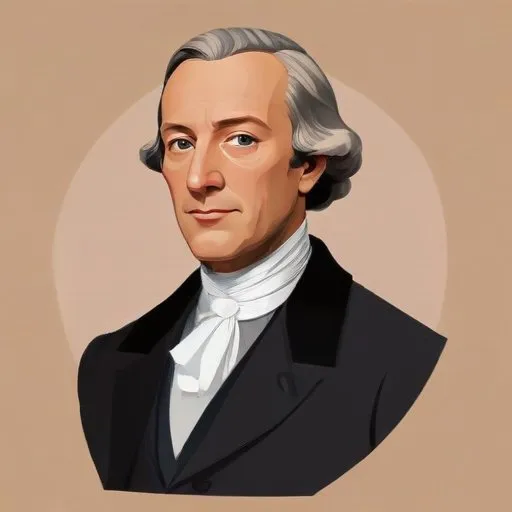
William Livingston: The Unyielding Patriot and Founding Father
A Legacy of Leadership and Principle
William Livingston, the first governor of New Jersey, was a prominent figure in the American Revolutionary War, signing both the Continental Association and the United States Constitution. His unwavering dedication to the patriot cause earned him a revered place among the Founding Fathers of the United States and New Jersey.
Early Life and Education
Born on November 30, 1723, in Albany, Province of New York, Livingston was the son of
Philip Livingston, the 2nd Lord of Livingston Manor, and Catherine Van Brugh. His family's influential background and strong values instilled in him a sense of duty and responsibility that would shape his future. Livingston received his early education from local schools and tutors, and at the age of 13, he went to live with Anglican missionary catechist Henry Barclay to prepare for college. He later enrolled at Yale in 1737 and graduated in 1741, followed by law studies in New York City.
Career Highlights and Major Works
Livingston's legal career began in 1748, and he quickly made a name for himself in New York City. In 1752, he co-founded the
Independent Reflector, a weekly journal, with fellow Presbyterian lawyers
William Smith Jr. and John Morin Scott. This publication was the first of its kind in British North America, showcasing Livingston's commitment to free speech and intellectual discourse. His journalistic endeavors earned him recognition as part of "The Triumvirate," a group of influential writers and thinkers.
Influence on Modern Society
Livingston's contributions to the American Revolution were instrumental in shaping the nation's early years. As a governor, he played a crucial role in rallying support for the Continental Army and navigating the complexities of war. His leadership and diplomatic skills helped maintain unity among the states, paving the way for a stronger, more cohesive nation.
Personal Milestones and Key Life Events
- Graduated from Yale College in 1741
- Became a lawyer in 1748
- Co-founded the Independent Reflector in 1752
- Served as governor of New Jersey from 1776 to 1790
- Signed the Continental Association and the United States Constitution
Philosophical Contributions and Beliefs
Livingston's strong Presbyterian roots and commitment to education cultivated a deep sense of moral responsibility and justice. He believed in the importance of individual liberty, limited government, and the rule of law. These core values guided his decisions as a leader and informed his contributions to the Continental Congress.
Legacy and Historical Context
William Livingston's remarkable life and achievements have left an indelible mark on American history. As a Founding Father, his dedication to the patriot cause and his commitment to governance have inspired generations. His legacy serves as a testament to the power of leadership, principle, and conviction in the face of adversity.
Awards and Honors
- Founding Father of the United States
- Founding Father of New Jersey
- Signer of the Continental Association and the United States Constitution
William Livingston's extraordinary life and accomplishments continue to captivate historians and Americans alike, serving as a powerful reminder of the importance of leadership, principle, and dedication to the pursuit of liberty.
FAQ
Who was William Livingston?
William Livingston was an American lawyer, politician, and diplomat who served as the 1st Governor of New Jersey, playing a key role in the American Revolution and the early years of the United States.
What was William Livingstons role in the American Revolution?
William Livingston was a strong supporter of the American Revolution, serving as a delegate to the Continental Congress and helping to draft the New Jersey State Constitution.
How did William Livingstons governorship shape New Jersey?
William Livingstons governorship of New Jersey was marked by efforts to rebuild and develop the state after the American Revolution, including the establishment of a new state government and infrastructure.
What was William Livingstons relationship like with George Washington?
William Livingston was a close friend and ally of George Washington, and the two men worked together closely during the American Revolution and beyond.
What is William Livingstons legacy in American history?
William Livingstons legacy in American history is one of patriotism, statesmanship, and public service, and he is remembered as a founding father of the United States.