


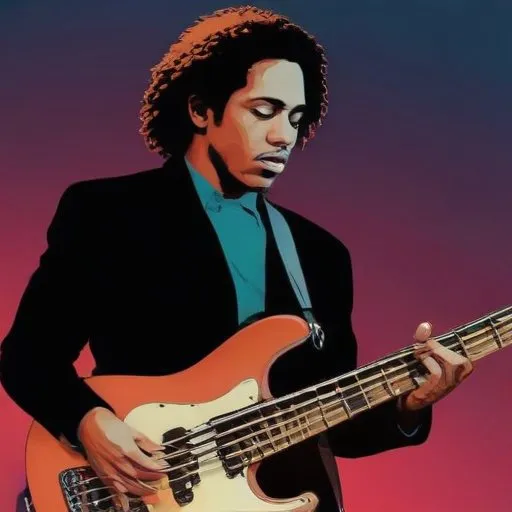
American jazz bassist known for his innovative playing style and influential work with musicians such as Count Basie and Duke Ellington. He helped shape the sound of swing and bebop music.
Regarded as the father of the slap style of double bass playing, William Manuel "Bill" Johnson was an American jazz musician who revolutionized the way the instrument was played. His innovative technique, which involved slapping the strings of his bass, added a new dimension to jazz music and paved the way for future generations of bass players.
Born in New Orleans, Johnson grew up surrounded by the city's vibrant jazz scene. He began his music career playing banjo and double bass in local bands, including the Eagle Band and the Excelsior Brass Band. It was during this time that he developed his signature slap bass style, which originated from an accident on the road with his band in northern Louisiana in the early 1910s.
In the 1910s, Johnson founded and managed the Original Creole Orchestra, the first jazz band to leave New Orleans and tour widely. The band's performances, which included vaudeville skits centered around the "Uncle" character, took them to the Midwest, Northwest, and Canada. This exposure helped to spread Johnson's slap bass style across the country, influencing other New Orleans string bass players who adopted and adapted the technique.
In 1915, Johnson brought the Creole Band to Chicago, where they became a staple of the city's jazz scene. He played an instrumental role in establishing Royal Gardens, later known as Lincoln Gardens, as one of the great jazz clubs in Chicago. The band's residency at Royal Gardens, which began in 1918, helped to cement Johnson's reputation as a virtuoso bass player.
In the early 1920s, Johnson assembled King Oliver's Creole Jazz Band, considered one of the best early ensemble-style jazz bands. During this period, he taught his slap bass style to younger Chicago musicians, including Milt Hinton. Johnson's mentorship and influence helped to shape the sound of jazz in the 1920s and beyond.
Johnson made many recordings in Chicago in the late 1920s, including the iconic "Dippermouth Blues" with King Oliver's Creole Jazz Band in 1923. It was during this session that Johnson uttered the famous phrase "Oh, play that thing!" into the horn, which has become an enduring symbol of his enthusiasm and passion for music.
Throughout the 1930s and 1940s, Johnson continued to play with various jazz bands and orchestras, sometimes working under other names. He also became involved in the import-export business along the Mexico-United States border. Johnson's younger half-brother, Ollie "Dink" Johnson, was also a noted musician.
William Manuel Johnson's innovative slap bass style and his role in popularizing jazz music beyond New Orleans have left an indelible mark on the genre. His influence can be heard in the playing styles of many jazz bassists who followed in his footsteps, and his legacy continues to inspire new generations of musicians.
Through his virtuosic playing, innovative technique, and mentorship, William Manuel "Bill" Johnson has earned his place as one of the most important figures in jazz history. His legacy continues to inspire and delight audiences to this day.
Born in 1899
A legendary jazz pianist, composer, and bandleader who revolutionized the genre with his unique style and iconic compositions, such as "Take the A Train" and "Mood Indigo".
Born in 1904
A legendary jazz pianist and bandleader who led a iconic orchestra, blending swing and blues to create a unique sound that influenced generations of musicians. Known for his distinctive "less-is-more" style and hits like "April in Paris" and "One O'Clock Jump".
Born in 1897
A pioneering figure in early jazz, leading a renowned orchestra and composing innovative arrangements that influenced generations of musicians.
Born in 1917
A virtuosic jazz vocalist known for her pure, expressive tone, impeccable phrasing, and incredible scat singing abilities. She won 13 Grammy Awards and recorded over 200 albums.
Born in 1901
A legendary jazz musician who revolutionized the genre with his unique trumpet playing and raspy vocals, leaving an indelible mark on American music.
Born in 1909
A virtuosic clarinetist and bandleader, known as the "King of Swing," who revolutionized jazz music with his energetic and sophisticated style, leading a racially integrated orchestra in the 1930s.
Born in 1910
A virtuosic clarinetist and innovative bandleader, he revolutionized the swing era with his unique sound and iconic hits like "Begin the Beguine" and "Stardust".
Born in 1904
A pioneering jazz musician who revolutionized the saxophone's role in jazz, creating a rich, full-bodied sound that influenced generations of musicians.
