


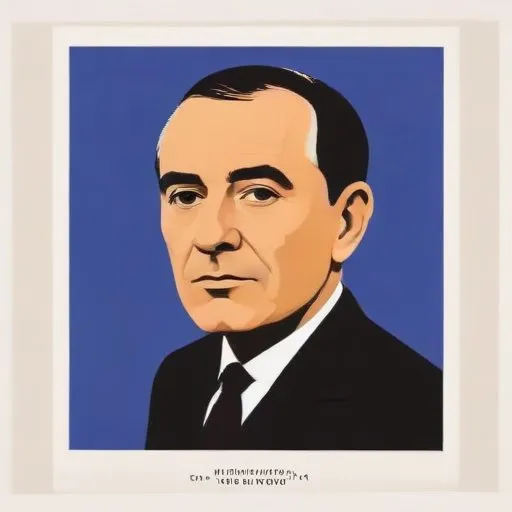
A British Labour Party politician who served as Shadow Secretary of State for Defence and held various cabinet positions, known for his contributions to the country's defence and foreign policy.
William Rodgers, Baron Rodgers of Quarry Bank, is renowned for his tireless advocacy for social justice and human rights, leaving an indelible mark on British politics. As a member of the Labour Party, Rodgers dedicated his life to promoting equality, tackling poverty, and protecting the rights of marginalized communities.
Born on October 28, 1928, in Quarry Bank, Lancashire, Rodgers grew up in a family of modest means. He was educated at St. John's School, Pendlebury, and later attended Oxford University, where he studied Philosophy, Politics, and Economics. During his time at Oxford, Rodgers became deeply involved in student politics, laying the foundation for his future career in public service.
Rodgers was deeply committed to the principles of social democracy, believing in the importance of a mixed economy, social justice, and individual liberty. He was a strong advocate for human rights, both domestically and internationally, and actively supported organizations such as Amnesty International.
In 1955, Rodgers married his wife, Silvia, and together they had two children. He was elevated to the peerage in 1992, becoming Baron Rodgers of Quarry Bank.
Rodgers' dedication to social justice and human rights has had a lasting impact on modern British society. His tireless advocacy for marginalized communities has inspired generations of politicians and activists, cementing his legacy as a champion of progressive politics.
"The struggle for social justice is a lifelong journey, requiring patience, perseverance, and a commitment to the values of equality and fairness."
Rodgers' life and work must be understood within the context of post-war British politics, marked by significant social and economic change. His contributions to the Labour Party and the SDP have helped shape the political landscape, leaving a lasting legacy that continues to inspire and inform contemporary political discourse.
Rodgers' commitment to social justice and human rights places him alongside other prominent figures of his time, such as Harold Wilson and Shirley Williams. While sharing similar values and principles, Rodgers' unique perspective and approach to politics have contributed to a rich tapestry of progressive thought in Britain.
Rodgers was known for his warm and engaging personality, earning him the respect and admiration of his colleagues and contemporaries. His ability to build bridges across party lines and inspire cross-party cooperation has been widely acknowledged, making him a respected figure in British politics.
Rodgers' work has had a profound impact on the development of social policy and human rights in Britain. His advocacy has inspired a new generation of politicians and activists, ensuring that the values of equality, justice, and fairness remain at the forefront of British politics.
In recognition of his outstanding contributions to public service, Rodgers was appointed a Knight Bachelor in 1983 and later elevated to the peerage in 1992.
Rodgers' career was marked by a commitment to integrity and transparency, earning him a reputation as a principled and dedicated public servant. His life and work serve as an inspiration, demonstrating the importance of staying true to one's values and principles in the face of adversity.
Rodgers was actively involved with various charitable organizations, including the British Red Cross and Oxfam, demonstrating his commitment to social justice and human rights beyond the realm of politics.
Rodgers' life and work serve as a powerful reminder of the importance of staying true to one's values and principles. His dedication to social justice and human rights has inspired countless individuals, demonstrating the potential for positive change and the impact one person can have on the world.
Born in 1925
The first female Prime Minister of the United Kingdom, serving from 1979 to 1990, known for her conservative policies and leadership during the Falklands War.
73 Years Old
The former Prime Minister of the United Kingdom who led the country through a transformative period, including the Iraq War, and is known for his charismatic leadership and controversial decisions.
75 Years Old
The Prime Minister of the United Kingdom from 2007 to 2010, known for his key role in shaping the country's economy and response to the 2008 global financial crisis.
60 Years Old
The former Prime Minister of the United Kingdom who led the country from 2010 to 2016, known for his role in the Brexit referendum and austerity measures.
83 Years Old
A former Prime Minister of the United Kingdom, he led the country from 1990 to 1997, playing a key role in shaping the nation's economy and foreign policy during a tumultuous period.
84 Years Old
A Welsh politician who served as Vice-President of the European Commission, known for his efforts to reform the European Union and promote social democracy. He's a prominent figure in British politics, leading the Labour Party in the 1980s.
73 Years Old
A British politician who played a key role in the Northern Ireland peace process and served in various UK cabinet positions, known for his diplomatic efforts and Labour Party leadership.
76 Years Old
A pioneering female politician who championed women's rights and social justice, serving as Deputy Leader of the Labour Party and Acting Leader of the Opposition.
