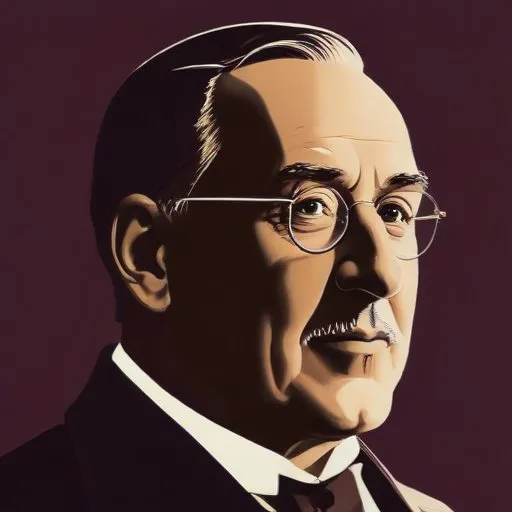
William Standish Knowles: The Nobel Laureate who Revolutionized Asymmetric Synthesis
The Pioneer of Enantioselective Hydrogenation
William Standish Knowles is renowned for his groundbreaking work in asymmetric synthesis, which earned him the Nobel Prize in Chemistry in 2001. He shared the prestigious award with Ryji Noyori for their pioneering efforts in developing chirally catalyzed hydrogenation reactions, a breakthrough that has had a profound impact on the field of chemistry.
Early Life and Education
Born on June 1, 1917, in Taunton, Massachusetts, Knowles grew up with an innate curiosity for chemistry. He attended Berkshire School in Sheffield, Massachusetts, where he excelled academically and was admitted to Harvard University. Feeling too young to start college, Knowles spent a year at Phillips Academy in Andover, Massachusetts, where he won his first chemistry award, the 50 Boylston Prize.
After completing his undergraduate degree in chemistry from Harvard in 1939, Knowles pursued his graduate studies at Columbia University. His academic excellence and passion for chemistry laid the foundation for his future success.
Contributions to Asymmetric Synthesis
Knowles' most significant contribution to chemistry was the development of one of the first asymmetric hydrogenation catalysts. By replacing achiral triphenylphosphine ligands in Wilkinson's catalyst with chiral phosphine ligands, he created an experimental catalyst that achieved a modest 15% enantiomeric excess. This innovative approach enabled the enantioselective synthesis of complex molecules, paving the way for the development of more efficient and environmentally friendly chemical processes.
Awards and Honors
Knowles' accomplishments have been recognized with several prestigious awards, including:
- 1983 Chemical Pioneer Award from the American Institute of Chemists
- 2001 Nobel Prize in Chemistry
- 2008 Peter H. Raven Lifetime Achievement Award from the Academy of Science, St. Louis
Legacy and Impact
Knowles' work has had a profound impact on the field of chemistry, enabling the development of more efficient and cost-effective methods for the production of pharmaceuticals, agrochemicals, and other complex molecules. His pioneering efforts in asymmetric synthesis have inspired generations of chemists and have paved the way for breakthroughs in fields such as medicine, materials science, and biotechnology.
Personal Milestones and Key Life Events
Knowles' dedication to chemistry was matched only by his passion for his family and his love for music. He married his wife, Nancy, in 1943, and together they had two children. Knowles was an accomplished pianist and enjoyed playing chamber music in his spare time.
Historical Context and Legacy
Knowles' work in asymmetric synthesis was a crucial milestone in the development of modern chemistry. His innovations have enabled the creation of more efficient and sustainable chemical processes, which have had a significant impact on the environment and human health. As a Nobel laureate, Knowles' legacy continues to inspire and motivate scientists around the world, ensuring that his contributions to chemistry will be remembered for generations to come.
William Standish Knowles passed away on June 13, 2012, but his groundbreaking work in asymmetric synthesis will forever be remembered as a testament to his genius and dedication to the pursuit of scientific excellence.
FAQ
What was William Standish Knowles contribution to chemistry?
William Standish Knowles was awarded the Nobel Prize in Chemistry for his work on the development of chiral synthesis, a process used to create complex molecules.
What was William Standish Knowles research focus?
William Standish Knowles research focused on the development of new methods for synthesizing complex organic compounds, particularly those with chiral properties.
What was William Standish Knowles role in the development of pharmaceuticals?
William Standish Knowles work on chiral synthesis had significant implications for the development of pharmaceuticals, enabling the creation of more effective and targeted medicines.
What awards did William Standish Knowles receive for his work?
William Standish Knowles received several awards for his work, including the Nobel Prize in Chemistry and the National Medal of Science.
What is William Standish Knowles legacy in chemistry?
William Standish Knowles legacy is as a pioneering chemist who made significant contributions to our understanding of chiral synthesis and its applications in pharmaceutical development.