


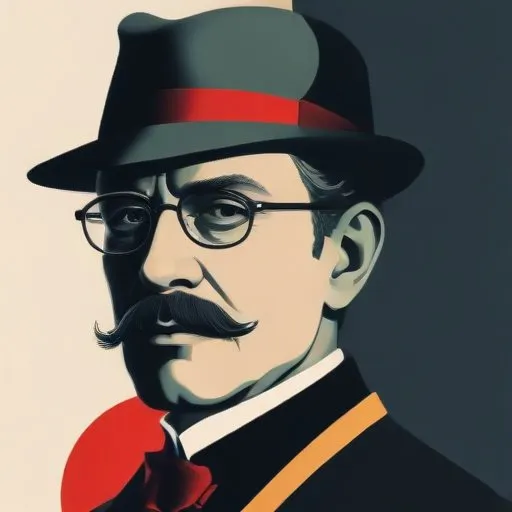
Designed iconic locomotives that transformed British railways, including the legendary Flying Scotsman, and played a crucial role in shaping the country's transportation landscape.
William Stanier is renowned for his pioneering work as Chief Mechanical Engineer of the London, Midland and Scottish Railway (LMS), where he introduced modern and powerful locomotive designs that revolutionized the railway industry. His iconic creations, such as the Black 5 and the 8F locomotives, remain an integral part of Britain's railway heritage.
Born on May 27, 1876, in Swindon, Stanier was exposed to the world of railways from a young age, with his father working as the Chief Clerk of the Great Western Railway (GWR). He received his education at Swindon High School and later attended Wycliffe College for a year. Stanier's fascination with engineering led him to embark on a career with the GWR in 1891, starting as an office boy and later becoming an apprentice in the workshops.
Stanier's talent and dedication earned him a promotion to the Drawing Office as a draughtsman in 1897. He continued to climb the ranks, becoming Inspector of Materials in 1900 and later serving as Assistant to the Divisional Locomotive Superintendent in London. In 1912, he returned to Swindon as the Assistant Works Manager and was eventually promoted to the post of Works Manager in 1920.
In 1931, Stanier was headhunted by Sir Josiah Stamp, Chairman of the LMS, to become the Chief Mechanical Engineer. Stanier's appointment marked a significant turning point in the history of the LMS, as he brought with him a wealth of experience and innovative ideas. During his tenure, he designed and built some of the most iconic locomotives in British railway history, including the Princess Coronation Class, which set a new British speed record of 114 mph.
During World War II, Stanier worked as a consultant for the Ministry of Supply, utilizing his expertise to support the war effort. In recognition of his contributions, he was knighted on February 9, 1943. Stanier was also elected a Fellow of the Royal Society, a rare honor bestowed upon only three locomotive engineers, including Edward Bury and Robert Stephenson.
Stanier's legacy extends far beyond his impressive designs and innovations. He played a pivotal role in shaping the future of British railways, leaving an indelible mark on the industry. His work has inspired generations of engineers, and his creations continue to captivate railway enthusiasts to this day.
William Stanier's remarkable life and career serve as a testament to his unwavering dedication to the railway industry. His innovative spirit and contribution to British railway heritage will continue to inspire generations to come.
Born in 1806
A visionary engineer who revolutionized transportation with innovative designs, including the iconic Clifton Suspension Bridge, which transformed urban landscapes.
Born in 1781
Designed the Liverpool and Manchester Railway, a pioneering feat that revolutionized transportation and paved the way for modern rail networks.
Born in 1771
Built steam-powered locomotives, revolutionizing land transportation, and pioneered the use of steam engines in mines.
Born in 1791
A pioneer in computer science, credited with inventing the first mechanical computer, the Difference Engine, and conceptualizing the Analytical Engine, a precursor to modern computers.
Born in 1791
Pioneering scientist who discovered electromagnetic induction, formulated the laws of electrolysis, and invented the first electrical generator, revolutionizing our understanding of electricity and its applications.
Born in 1736
Improved steam engine efficiency, revolutionizing industry and transportation. Known for his innovative designs and patents that transformed the Industrial Revolution.
Born in 1856
A pioneering engineer who harnessed the power of alternating current (AC) to transform the world's electrical systems, and is credited with developing groundbreaking technologies like radio communication and X-ray imaging.
Born in 1846
Developed innovative braking systems for trains, revolutionizing rail safety and transforming the industry. Founded a company that dominated the market for over a century.
