


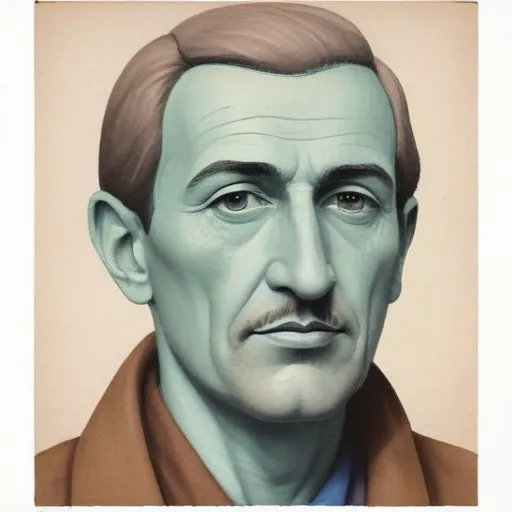
A Lithuanian-American artist who explored Cubism and abstraction in his sculptures and paintings, creating vibrant, expressive works that blended modernist styles with folk art influences.
William Zorach, a renowned American sculptor, painter, printmaker, and writer, was at the forefront of introducing European modernist styles, particularly cubism, to the United States. His prolific career, spanning over six decades, left an indelible mark on American modernism, earning him the prestigious Logan Medal of the Arts in 1927.
Born on February 28, 1889, in Jurbarkas, Lithuania (then part of the Russian Empire), Zorach Gorfinkel was the eighth of ten children in a Lithuanian Jewish family. In 1894, his family immigrated to the United States, settling in Cleveland, Ohio, where they adopted the surname Finkelstein. A teacher renamed him William, a decision that would stick for the rest of his life.
Zorach's artistic pursuits began early, with an apprenticeship in lithography as a teenager. He then studied painting with Henry G. Keller at the Cleveland School of Art from 1905 to 1907. In 1908, he moved to New York to enroll in the National Academy of Design, further honing his skills.
In 1910, Zorach traveled to Paris, joining fellow Cleveland artist and lithographer Elmer Brubeck, to continue his artistic training at the La Palette art school. It was during this period that he met Marguerite Thompson, an American art student, whom he married on December 24, 1912, in New York City. The couple adopted the surname Zorach, his original given name.
Zorach's return to the United States marked the beginning of a prolific period of artistic experimentation, influenced by cubism and fauvism. Alongside his wife, Marguerite, he explored various media, including sculpture, painting, and printmaking. Their work was showcased in the historic Armory Show in 1913, introducing their avant-garde style to the American public.
Zorach's innovative approach and technique earned him recognition as one of the premier artists to introduce European modernism to America. Throughout his career, he continued to push boundaries, creating a distinctive body of work that spanned multiple mediums.
William Zorach's pioneering spirit and artistic contributions have left an enduring impact on American modernism. As a sculptor, painter, and printmaker, he inspired generations of artists to experiment with new forms and techniques. His marriage to Marguerite Thompson Zorach, also an artist, resulted in a unique collaboration that showcased the power of artistic partnership.
Zorach's work can be found in prominent museum collections, including the Metropolitan Museum of Art, the Museum of Modern Art, and the Whitney Museum of American Art. His legacy serves as a testament to the power of innovation and creative exploration.
William Zorach's remarkable life, marked by artistic innovation, personal milestones, and a passion for creative expression, has left an indelible mark on American art history. His story serves as a testament to the power of imagination, creativity, and dedication to one's craft.
Born in 1865
A pioneering figure in American art, known for advocating for a more spontaneous and expressive approach to painting, and for teaching and mentoring many notable artists.
Born in 1867
A pioneering figure in the Ashcan School, known for vivid, gritty depictions of urban life and its struggles. His bold, expressive brushstrokes captured the essence of early 20th-century America.
Born in 1873
A pioneering figure in American Impressionism, capturing the beauty of urban and natural landscapes with vibrant colors and loose brushstrokes. Known for his dreamy, ethereal depictions of everyday life.
Born in 1892
A pioneering American modernist, blending cubism and abstract expressionism to create vibrant, jazz-inspired paintings that explored the intersection of art and everyday life.
Born in 1882
A renowned artist of the early 20th century, known for his vivid, symbolic, and often provocative paintings and illustrations that explored the human condition, as well as his work in book design and travel writing.
