


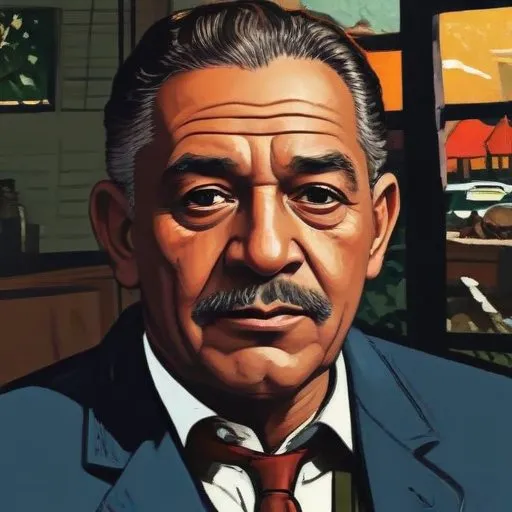
A pioneering figure in American Impressionism, capturing the beauty of urban and natural landscapes with vibrant colors and loose brushstrokes. Known for his dreamy, ethereal depictions of everyday life.
Ernest Lawson was a renowned Canadian-American painter, known for his captivating landscapes and urban scenes that blended the principles of Impressionism and realism. As a member of the American group The Eight, Lawson's work protested the narrowness of taste and restrictive exhibition policies of the conservative National Academy of Design.
Born on March 22, 1873, in Halifax, Nova Scotia, Lawson came from a prominent family and moved to the United States in 1888, settling in Kansas City. In 1891, he enrolled in classes at the Art Students League in New York, where he studied under John Twachtman, who introduced him to Impressionism.
Lawson's formative years were greatly influenced by Twachtman and J. Alden Weir, under whom he continued to study at their Cos Cob, Connecticut summer art school in the 1890s. This period had a profound impact on his style, which was further shaped by his visit to France in 1893, where he studied at the Académie Julian with Jean-Joseph Benjamin-Constant and Jean-Paul Laurens.
In France, Lawson practiced plein air painting in southern France and at Moret-sur-Loing, where he met the English Impressionist Alfred Sisley. He also shared a Paris studio with W. Somerset Maugham, who is believed to have used Lawson as the inspiration for the character Frederick Lawson in his 1915 novel Of Human Bondage.
Upon his return to the United States in 1896, Lawson began to develop his own aesthetic, which was characterized by a unique blend of Impressionism and realism. His work was further encouraged by his marriage to his former art teacher, Ella Holman.
Lawson's painting style was heavily influenced by the art of John Henry Twachtman, J. Alden Weir, and Alfred Sisley. Though considered a Canadian-American Impressionist, Lawson's work fell stylistically between Impressionism and realism, making him a true original of his time.
Ernest Lawson's contribution to the art world was immense, as he played a significant role in shaping the development of American art in the early 20th century. His work continues to inspire artists and art lovers alike, serving as a testament to his enduring legacy.
Lawson's work was recognized and celebrated during his lifetime, with numerous exhibitions and awards to his credit. He was also a member of the National Academy of Design and the American Watercolor Society.
Born in 1865
A pioneering figure in American art, known for advocating for a more spontaneous and expressive approach to painting, and for teaching and mentoring many notable artists.
Born in 1858
An American Post-Impressionist painter and art instructor, known for vibrant, expressive depictions of urban leisure activities and landscapes. His work bridges the gap between Impressionism and Fauvism.
Born in 1867
A pioneering figure in the Ashcan School, known for vivid, gritty depictions of urban life and its struggles. His bold, expressive brushstrokes captured the essence of early 20th-century America.
Born in 1870
American painter and illustrator known for capturing the vibrant spirit of urban life in the early 20th century through his bold, colorful depictions of city streets and everyday people.
