


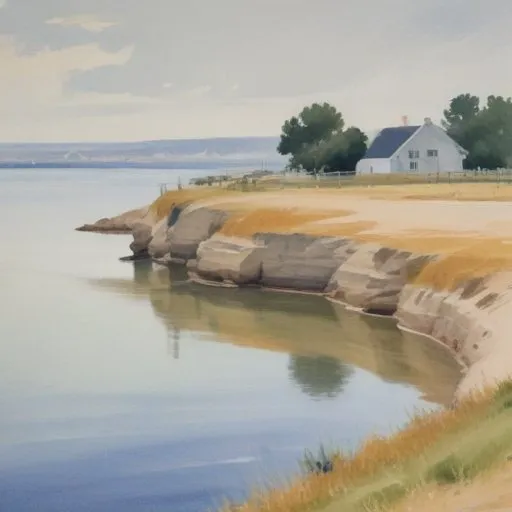
An American Impressionist painter, etcher, and academic, known for his dreamy, softly focused landscapes and innovative printmaking techniques. His work often captured the quiet beauty of everyday life.
John Henry Twachtman, an American painter, left an indelible mark on the art world with his captivating impressionist landscapes that continue to inspire and influence artists to this day. Known for his bold and experimental approach, Twachtman's unique style blended the traditional with the avant-garde, earning him a spot among the prominent figures of American Impressionism.
Born on August 4, 1853, in Cincinnati, Ohio, Twachtman's artistic journey began with early training under the guidance of Frank Duveneck. This foundation laid the groundwork for his later exploration of European art traditions. In 1875, Twachtman enrolled in the Academy of Fine Arts in Munich, where he honed his skills and developed a deep appreciation for the city's rich artistic heritage.
Twachtman's travels took him to Venice in 1878, where he was accompanied by Duveneck and William Merritt Chase. This exposure to the city's breathtaking landscapes and architecture significantly influenced his style, which began to take on a more impressionistic tone. His landscapes from this period are characterized by loose brushstrokes and a focus on capturing the fleeting effects of light and atmosphere.
In 1883, Twachtman moved to Paris to study at the prestigious Académie Julian. During this period, his palette underwent a significant transformation, adopting a softer, more muted tone with a focus on gray and green hues. This stylistic shift is evident in works such as Arques-la-Bataille (circa 1885), now housed in the Metropolitan Museum of Art, and
In 1898, Twachtman became a member of The Ten, a group of American artists who broke away from traditional art organizations to showcase their work as a unified collective. This association not only solidified his position within the American art scene but also provided a platform for him to experiment and innovate alongside fellow artists.
In 1886, Twachtman returned to America and settled in Greenwich, where he established a farm and continued to paint. His presence in the Cos Cob art colony, which he frequented with Julian Alden Weir, played a significant role in shaping the community's artistic identity. Twachtman's introspective nature and creative energy made him a beloved figure among his contemporaries.
Today, John Henry Twachtman's legacy extends far beyond his own works, influencing generations of artists and cementing his place as a pioneer of American Impressionism. His innovative approach and dedication to his craft continue to inspire, and his contribution to the art world remains an enduring testament to the power of creative expression.
Twachtman's trailblazing spirit and artistic genius continue to captivate audiences, ensuring his place in the annals of American art history.
Born in 1859
An American Impressionist painter and illustrator, known for capturing the essence of urban life and landscapes, particularly in his iconic flag-themed works.
Born in 1849
A prominent figure in American art, he was a master of Impressionism and a devoted teacher, shaping the development of American art through his work and students.
Born in 1865
A pioneering figure in American art, known for advocating for a more spontaneous and expressive approach to painting, and for teaching and mentoring many notable artists.
Born in 1856
A renowned portrait painter, capturing the essence of high society with his stunning watercolors and oils, leaving an indelible mark on the art world.
Born in 1844
An American Impressionist painter and educator, she created intimate, tender portraits of women and children, capturing the quiet beauty of everyday life. Her artwork often explored the complexities of motherhood and femininity.
Born in 1836
A renowned artist capturing American life and landscapes through his evocative paintings and illustrations, particularly focusing on the Civil War and coastal scenes.
Born in 1844
A pioneering American artist who explored the human form through realistic and psychologically complex works, capturing the spirit of his subjects with unflinching honesty.
96 Years Old
A pioneer of pop art, creating enigmatic works that explore the relationship between perception, reality, and meaning, often using common images like flags and targets.
