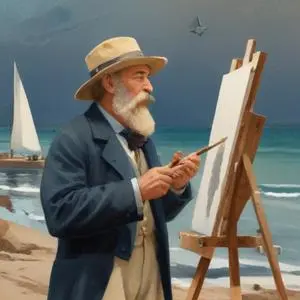
Winslow Homer: The Maritime Master of American Art
A Life of Artistic Expression
Winslow Homer was a renowned American landscape painter and illustrator, celebrated for his captivating depictions of the marine world. His impressive oeuvre, characterized by bold brushstrokes and vivid colors, has cemented his status as one of the most revered artists of 19th-century America.
Early Life and Inspiration
Born on February 24, 1836, in Boston, Massachusetts, Homer was the second of three sons to Charles Savage Homer and Henrietta Maria Benson Homer. His mother, a gifted amateur watercolorist, played a significant role in nurturing his artistic talents from a young age. The close bond between Homer and his mother instilled in him her quiet, strong-willed nature, dry sense of humor, and artistic flair.
Apprenticeship and Early Career
At the age of 19, Homer began his artistic journey as an apprentice to J. H. Bufford, a Boston commercial lithographer. Although this experience was formative, it was also repetitive, with Homer working on sheet music covers and other commercial projects for two years. By 1857, he had transitioned to a freelance career, marking the beginning of his illustrious journey as an artist.
Rise to Prominence
Homer's big break came in 1859 when he moved to New York City and began working as a freelance illustrator for various publications, including
Harper's Weekly. His illustrations of the American Civil War and its aftermath earned him widespread recognition, and he soon became a sought-after artist.
Maritime Masterpieces
In the 1870s, Homer's fascination with the sea and its power began to dominate his artwork. His iconic marine paintings, such as
The Gulf Stream (1899) and
Northeaster (1895), showcased his unique ability to capture the drama and beauty of the ocean. These works solidified his position as a preeminent figure in American art.
Innovative Techniques
Homer's artistic style was marked by experimentation and innovation. He pioneered the use of oil paint, exploiting its density and weight to create rich, textured works. Additionally, his prolific watercolor output, characteristically fluid and spontaneous, captured the essence of his working vacations.
Awards and Recognition
Throughout his career, Homer received numerous awards and accolades, including medals from the World's Columbian Exposition (1893) and the Exposition Universelle (1900). He was also elected a member of the National Academy of Design in 1874.
Legacy and Impact
Winslow Homer's contributions to American art are immeasurable. He has inspired generations of artists, and his work continues to captivate audiences today. As a testament to his enduring legacy, Homer's paintings can be found in prominent museums and collections worldwide, including the Metropolitan Museum of Art and the National Gallery of Art.
Personal Milestones
- 1836: Born on February 24th in Boston, Massachusetts
- 1857: Began freelance career
- 1859: Moved to New York City
- 1874: Elected a member of the National Academy of Design
- 1910: Passed away on September 29th
Trivia and Fun Facts
- Homer was known to be a private person, and little is known about his personal life.
- He was a prolific artist, producing over 1,000 paintings and illustrations throughout his career.
- Homer's artwork is characterized by his use of earth tones, blues, and grays, which evoke a sense of calm and serenity.
In Conclusion
Winslow Homer's remarkable body of work continues to captivate art enthusiasts today. His innovative techniques, his captivating depictions of the marine world, and his enduring legacy have solidified his position as one of the greatest artists of 19th-century America.
FAQ
What art movement was Winslow Homer associated with?
Winslow Homer was a prominent figure in the American Realism movement, which focused on depicting everyday life in a realistic and accurate manner.
What was the significance of Winslow Homers marine art?
Winslow Homers marine art, which depicted scenes of the sea and coastlines, is renowned for its dramatic and expressive use of light and color. His works in this genre are considered some of the most iconic in American art.
How did Winslow Homers experience in the Civil War impact his art?
Winslow Homers experience as a war correspondent during the American Civil War had a profound impact on his art, influencing his depiction of landscapes and people.
What was Winslow Homers contribution to American illustration?
Winslow Homer was a prolific illustrator, producing hundreds of illustrations for publications such as Harpers Weekly. His work in this field helped to establish him as a leading figure in American art.
What is Winslow Homers most famous painting?
Winslow Homers most famous painting is The Gulf Stream, which depicts a dramatic scene of a shipwreck in the Gulf Stream. The painting is considered one of the most important works of American art.